
Human interleukin (IL) ELISA kits are indispensable tools for studying immune responses, inflammation, and a wide range of diseases. These kits typically use a double‑antibody sandwich enzyme‑linked immunosorbent assay format: a specific anti‑human IL‑1α monoclonal antibody is pre‑coated on a high‑affinity microplate. Standards, test samples, and biotinylated detection antibodies are added to the wells. After incubation and washing, streptavidin‑HRP is added, followed by TMB substrate. The color intensity is proportional to the IL‑1α concentration, measured at 450 nm.
However, even the most carefully manufactured kit can produce unreliable results if the experimental samples are not handled properly. Sample storage and preparation are critical pre‑analytical steps that are often underestimated. In this article, we discuss the most common issues encountered when storing and processing specimens for human interleukin ELISA, and provide practical solutions. For researchers seeking a reliable ELISA test kit Manufacturer, Yanda Bio offers thousands of validated targets and rapid custom development services.
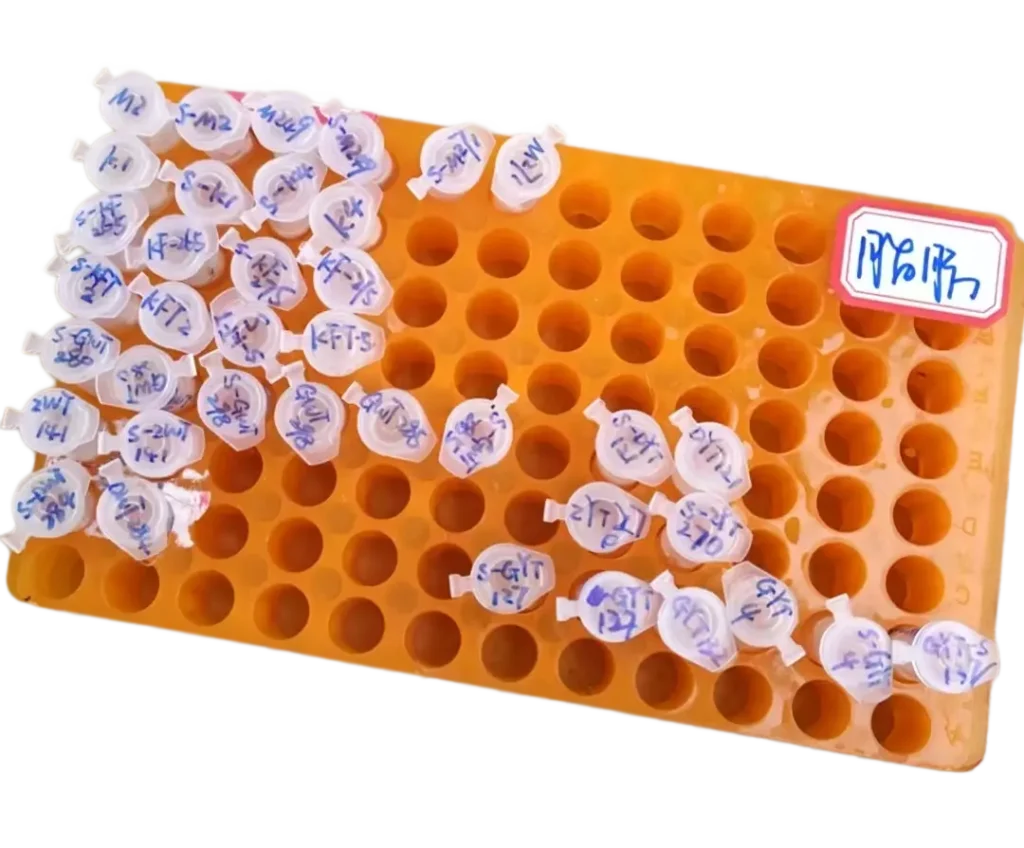
1. Improper Sample Storage
The problem:
Serum or plasma samples stored for too long, or under incorrect temperature conditions, can undergo structural changes. For example, IgG may polymerize, and alpha‑fetoprotein (AFP) can form dimers. In indirect ELISA formats, these aggregates can cause high background or even false‑positive results. Conversely, prolonged storage (especially at 4°C for more than a week) can weaken antigen or antibody activity, leading to false‑negative results.
Why it happens:
Proteins in biological fluids are not infinitely stable. Repeated freeze‑thaw cycles, or simply leaving samples at 4°C for extended periods, promotes denaturation, aggregation, and loss of epitope integrity.
Solutions:
- Use freshly collected samples whenever possible.
- If testing cannot be performed immediately, store serum/plasma at 4°C for up to 5 days.
- For longer storage (more than 1 week), aliquot samples and freeze at –20°C (or –80°C for long‑term).
- After thawing, mix gently by inversion or slow pipetting – never vortex, as this can cause protein aggregation and uneven distribution.
2. Hemolysis – The Hidden Interference
The problem:
Hemolysis, the rupture of red blood cells, releases hemoglobin into the serum or plasma. Hemoglobin possesses peroxidase‑like activity. In HRP‑based ELISA systems (the most common format), hemoglobin can directly catalyze the TMB substrate, producing a blue color independently of the specific antigen‑antibody reaction. This leads to non‑specific color development and often results in false‑positive readings.
Why it happens:
Hemolysis can be caused by:
- Using too small a needle during blood collection
- Vigorous mixing of blood tubes
- Delayed centrifugation
- Freezing whole blood instead of separated serum
Solutions:
- Inspect all samples visually before use. Hemolyzed serum appears pink to red. Discard severely hemolyzed specimens.
- Standardize blood collection and handling protocols to avoid mechanical stress.
- If mild hemolysis is unavoidable, run a sample control (e.g., a blank with hemolyzed matrix) to assess background contribution.
Tip: For researchers who frequently work with challenging samples, choosing a trusted elisa diagnostic kit supplier like Yanda Bio ensures that kits are validated against common interferences, including hemoglobin.
3. Incomplete Clotting (for Serum Samples)
The problem:
When collecting serum (without anticoagulants), blood normally clots within 30–120 minutes, and clotting is complete after 18–24 hours. However, in a rush to obtain results, some researchers centrifuge the blood before clotting is complete. The resulting serum still contains residual fibrinogen. During the ELISA incubation, this fibrinogen can form visible fibrin clots that trap detection antibodies, leading to false‑positive signals.
What happens next:
If the same sample is retested after full clotting (e.g., the next day), the fibrinogen is gone and the result becomes negative. This inconsistency can cause serious confusion.
Solutions:
- Always allow blood to clot completely at room temperature (usually 30–60 minutes) before centrifugation.
- Use serum separator tubes (containing a gel barrier) or add a clot activator to speed up the process without compromising quality.
- If you must centrifuge early, note the incomplete clotting in your records and interpret results with caution.
4. Interference from Tube Additives
The problem:
Blood collection tubes often contain additives such as anticoagulants (heparin, EDTA, citrate), enzyme inhibitors (e.g., sodium azide), or separator gels. Some of these substances can interfere with ELISA performance.
- Heparin can cause protein aggregation and may increase non‑specific binding.
- EDTA chelates metal ions; in HRP‑based ELISAs, EDTA can inhibit enzyme activity.
- Sodium azide is a potent HRP inhibitor – even trace amounts will abolish the signal.
- Separator gels may leach into the serum and affect antibody‑antigen interactions.
Solutions:
- Always check the ELISA kit manual for recommended sample types (e.g., “serum only” or “EDTA plasma validated”).
- When using plasma, choose the anticoagulant that matches the kit’s validation data. Lithium heparin is often preferred.
- Avoid using samples collected with sodium azide as a preservative; instead, use azide‑free collection tubes.
For researchers working with multiple species, a reliable rat elisa kit supplier or human kit supplier will provide clear guidance on compatible tube additives. Yanda Bio’s product datasheets include detailed sample preparation recommendations.
Summary of Best Practices for Sample Storage and Handling
| Issue | Consequence | Prevention |
|---|---|---|
| Prolonged storage (4°C >5 days) | False positives or negatives | Freeze at –20°C within 5 days |
| Repeated freeze‑thaw | Loss of activity, aggregation | Aliquot samples before freezing |
| Hemolysis | False positives (peroxidase interference) | Avoid vigorous mixing; centrifuge promptly |
| Incomplete clotting | Fibrin clots → false positives | Allow full clotting (30–60 min) before centrifugation |
| Tube additives (EDTA, azide, gel) | Signal inhibition or high background | Use kit‑validated tubes; avoid azide |
Why Choose Yanda Bio for Your Interleukin ELISA Needs?
At Yanda Bio, we understand that pre‑analytical variables are just as important as the assay itself. That is why our human interleukin ELISA kits are rigorously validated against common sample interferences, including hemolysis, lipemia, and various anticoagulants.
- Thousands of targets – From IL‑1α, IL‑6, TNF‑α to hundreds of other cytokines, chemokines, and biomarkers.
- Custom ELISA development – Need a kit for a novel target or a specific species? We can design and deliver a custom ELISA kit in as little as 5–7 business days.
- Uncompromising quality – Every lot is tested for precision (CV <10%), sensitivity, and recovery.
- Affordable pricing – Standard kits start at just $120, with bulk discounts available.
Whether you are a clinical researcher, a diagnostic lab, or a pharmaceutical company, Yanda Bio is your trusted ELISA test kit Manufacturer. Explore our extensive catalog for human, mouse, rat, and rabbit kits – including our popular rat elisa kit supplier options. For high‑throughput screening or routine diagnostics, rely on Yanda Bio as your go‑to elisa diagnostic kit supplier.
Final Thoughts
The quality of your human interleukin ELISA results depends not only on the kit but also on how you collect, store, and prepare your samples. By avoiding common pitfalls such as improper storage, hemolysis, incomplete clotting, and additive interference, you can greatly enhance the accuracy and reproducibility of your data.
For consistent, high‑performance ELISA kits and expert technical support, choose Yanda Bio. Visit our product pages [insert your internal link to ELISA product category], learn more about our custom services [insert internal link to custom ELISA page], or check out our troubleshooting blog posts [insert internal link to another blog]. With thousands of factors and fast turnaround, we are here to support your research every step of the way.