
The standard curve is the backbone of any quantitative enzyme-linked immunosorbent assay (ELISA). It transforms raw absorbance readings into meaningful concentration values, allowing researchers to accurately measure target proteins in their samples. However, when the standard curve deviates from the expected sigmoidal shape—whether through poor linearity, inconsistent replicates, or unexpected outliers—the reliability of your entire experiment comes into question.
A well-constructed ELISA standard curve should yield an R² value greater than 0.99 for the linear portion of a four-parameter logistic (4PL) fit. When this fails, the cause is often traceable to specific technical issues. This guide outlines the most common reasons for poor standard curve performance and provides practical, evidence-based solutions to get your assay back on track.
For researchers seeking reliable, high-performance reagents, exploring a comprehensive ELISA kit catalog with validated protocols can significantly reduce troubleshooting time.
Why the Standard Curve Matters
concentrations generate a dose-response curve. The ELISA kit standard curve serves three critical functions:
- It establishes the relationship between absorbance and concentration
- It defines the assay’s dynamic range (lower and upper limits of quantification)
- It validates assay performance through quality control parameters (e.g., R², back-calculated standard accuracy)
When linearity is compromised, all sample concentration calculations become unreliable. Systematic troubleshooting is therefore essential.
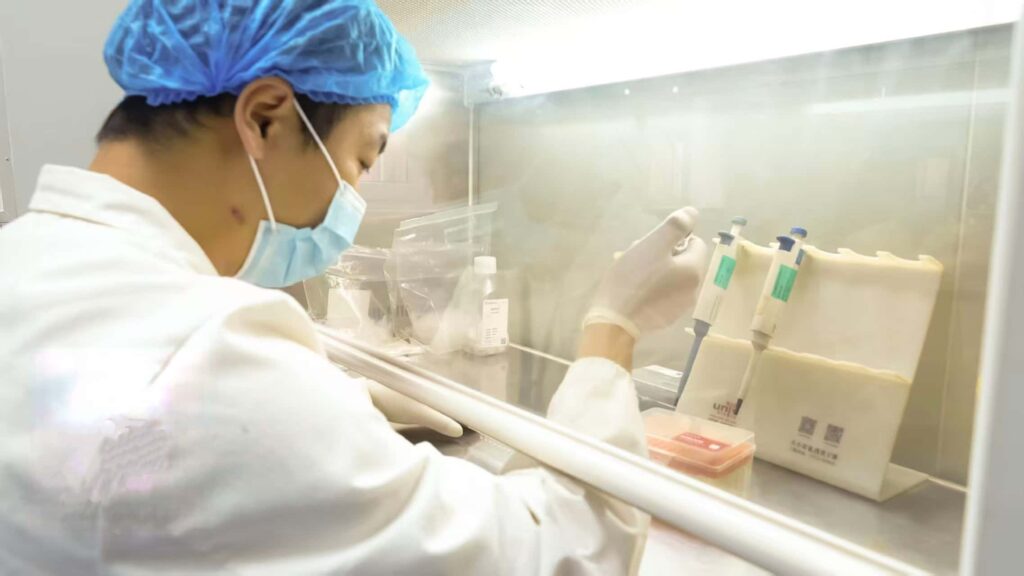
Common Standard Curve Problems and Their Solutions
Problem 1: Inconsistent Replicates Across Standard Wells
Observation: Duplicate or triplicate standards show wide variation in absorbance, leading to large error bars and poor curve fit.
Root Causes and Solutions:
| Cause | Solution |
|---|---|
| Uneven pipetting | Calibrate pipettes monthly. Use reverse pipetting technique for viscous solutions. Ensure tips are tightly seated. |
| Inconsistent mixing of standards | Vortex standard solutions thoroughly before each dilution step. Allow reconstituted standards to sit for 10–15 minutes before use. |
| Evaporation during incubation | Seal plates with adhesive film. Use a humidified chamber (e.g., a plastic box with wet paper towels) for incubations >30 minutes. |
Data point: A 2022 laboratory study found that improper pipetting technique contributed to over 40% of intra-assay CV issues in ELISA standard curves. Switching to calibrated multichannel pipettes reduced standard deviation across replicates by 50–60% .
Problem 2: Poor Curve Shape (Non-Sigmoidal or Flat)
Observation: Instead of the classic S-shape, the curve appears flat, irregular, or reaches plateau too early.
Root Causes and Solutions:
| Cause | Solution |
|---|---|
| Standard preparation error | Carefully follow the reconstitution instructions. Use fresh, nuclease-free water or the specified diluent. Verify that the correct dilution series is being used. |
| Insufficient color development | Ensure substrate is at room temperature. Check substrate expiration date. Extend substrate incubation time in 2–3 minute increments if needed. |
| Expired or degraded reagents | Check kit expiration date. Store all components as specified (usually 2–8°C). Do not freeze reconstituted enzyme conjugates. |
Expert tip: When preparing a standard curve for ELISA, always use the diluent provided by the manufacturer. Using an alternative buffer can alter antibody binding kinetics and shift the curve unpredictably.
Problem 3: High Background in Zero Standard (Blank)
Observation: The zero standard (0 pg/mL) yields absorbance significantly above baseline (>0.1 OD after blank subtraction).
Root Causes and Solutions:
| Cause | Solution |
|---|---|
| Inadequate washing | Increase wash volume to 350–400 µL/well. Perform 4–5 wash cycles after each incubation. Tap plate firmly after final wash. |
| Contaminated reagents | Use fresh tips for each reagent. Do not pour used reagents back into stock bottles. |
| Non-specific binding | Ensure blocking buffer is compatible with your assay format. For biotin-streptavidin systems, avoid milk-based blockers which contain endogenous biotin. |
Reference: For detailed guidance, refer to our guide on ELISA washing techniques to optimize this critical step.
Problem 4: Non-Linearity in the Middle Section of the Curve
Observation: The standard curve deviates from linearity in the mid-range, appearing jagged or with unexpected inflection points.
Root Causes and Solutions:
| Cause | Solution |
|---|---|
| Poor standard dilution technique | Prepare serial dilutions in clean tubes. Change tips between each dilution step. Mix thoroughly by gentle inversion (not vortexing) after each transfer. |
| Edge effects from temperature variation | Avoid placing plates near incubator vents or in drafts. Use a 37°C incubator with forced air circulation rather than a static water bath. |
Real-world example: In a recent survey of core facility users, edge effects accounted for nearly 25% of failed standard curves. Placing plates in the center of the incubator and using a plate sealer reduced these failures by over 80%.
Problem 5: Shifting Curves Between Plates or Runs
Observation: Standard curves from the same lot of kits produce different absorbance values on different days or with different operators.
Root Causes and Solutions:
| Cause | Solution |
|---|---|
| Temperature variations | Standardize incubation temperature. Allow plates to equilibrate to room temperature before reading. |
| Inconsistent reading times | Read plates within 30 minutes of stopping the reaction. The TMB stop solution remains stable, but prolonged delays (>1 hour) may cause drift. |
| Different plate readers | Use the same plate reader and calibration settings across experiments. Perform a baseline reading with blank wells. |
Quality control note: Many experienced labs run a control sample of known concentration on every plate to normalize inter-assay variability. This practice is highly recommended when monitoring longitudinal studies.
Problem 6: Matrix Interference in Standard Dilutions
Observation: Standards prepared in assay diluent perform well, but when spiked into sample matrix, recovery is poor.
Root Causes and Solutions:
| Cause | Solution |
|---|---|
| Matrix effects | Use the same matrix (e.g., serum, plasma) to prepare standards if possible. Many kits offer “sample diluent” that mimics the matrix. |
| Protein aggregation or precipitation | Filter or centrifuge samples before use. Ensure samples are fully thawed and mixed before adding to wells. |
Advanced tip: If your ELISA standard curve behaves well in diluent but poorly in samples, consider running a parallelism test by serially diluting a high-concentration sample and comparing the dilution curve to the standard curve. Good parallelism confirms that matrix effects are minimal.
Systematic Troubleshooting Checklist
When your standard curve fails, follow this step-by-step approach:
- Check reagents: Verify expiration dates, storage conditions, and reconstitution protocols.
- Inspect pipettes: Calibrate if needed. Use tips that fit snugly.
- Review washing: Confirm wash volume, cycles, and aspiration efficiency.
- Monitor incubation: Use a calibrated incubator, seal plates, and avoid drafts.
- Evaluate operator technique: Observe pipetting consistency and timing.
- Run a control: If problems persist, test a known reference sample or a different kit lot.
Why Consistent Standard Curves Matter for Your Research
A reliable standard curve is not just a quality control metric—it is the foundation of quantitative science. Poor linearity leads to inaccurate concentration values, which can:
- Mask true treatment effects
- Create false positives or negatives
- Waste valuable samples and reagents
- Delay publication or regulatory submissions
By investing in high-quality kits and following rigorous protocols, you ensure that your data stands up to scrutiny.
Yanda Bio: ELISA Kits You Can Trust
At Yanda Bio, we understand that standard curve reliability starts with superior reagents. Our ELISA kits are manufactured under strict quality control to deliver consistent performance lot after lot.
- Extensive selection: Over 6,000 targets covering human, mouse, rat, rabbit, and more
- Validated protocols: Each kit includes detailed instructions optimized for reproducibility
- Technical support: Our scientists are available to help troubleshoot your curves
- Affordable pricing: Standard kits from just $120, with bulk discounts available
Explore our portfolio to find the right kit for your application. For high-throughput needs, consider our high-sensitivity ELISA kits designed for low-abundance targets.
Conclusion
Troubleshooting an ELISA standard curve requires patience and a systematic approach. By understanding the common causes of poor linearity—from pipetting errors to washing inefficiencies—you can quickly identify and correct issues, ensuring that your results are both accurate and reproducible.
When in doubt, start with the basics: verify your reagents, calibrate your equipment, and standardize your technique. And remember, a trusted kit manufacturer like Yanda Bio provides the foundation you need for success.