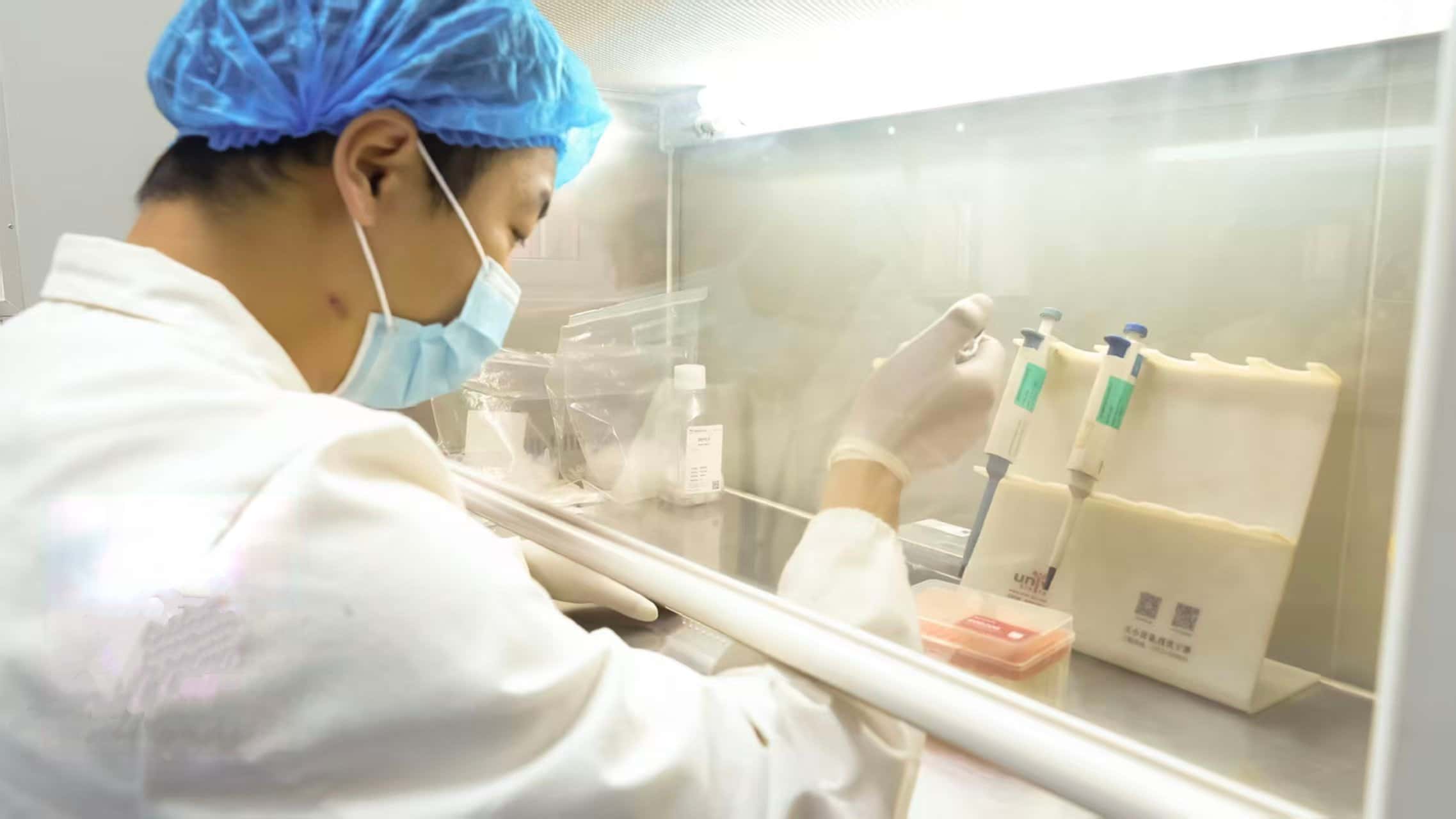
If you have ever run a mouse ELISA and found that all your samples fell outside the standard curve—either too high to quantify or too low to detect—you have experienced the critical importance of choosing the right sample dilution. There is no universal dilution factor that works for every target, every sample type, or every experimental condition. The optimal dilution depends primarily on the abundance of your target analyte in the sample matrix.
In this guide, we break down dilution strategies for mouse serum based on the type of analyte you are measuring, and we explain why using the correct sample diluent is just as important as choosing the right dilution factor. For researchers working with mouse models, selecting a reliable mouse ELISA kit from a trusted manufacturer can also make a significant difference in assay performance.
Why Sample Dilution Matters in Mouse ELISA
Mouse serum is a complex biological fluid containing thousands of proteins at concentrations spanning more than ten orders of magnitude. When you run an ELISA, the signal generated must fall within the linear range of the standard curve. If your sample concentration is too high, the signal will plateau and you will underestimate the true concentration. If it is too low, the signal may be indistinguishable from background, leading to false negatives.
Dilution serves two purposes:
- Bringing the analyte concentration into the assay’s measurable range
- Reducing matrix effects (interference from other serum components)
The challenge is that different analytes vary enormously in their serum concentrations. Let’s explore dilution strategies for three common categories of mouse serum analytes.
High‑Abundance Targets – Large Dilution Factors
Some proteins are naturally present in mouse serum at high concentrations, often in the microgram per milliliter (µg/mL) range. If you run these samples undiluted, the signal will exceed the top of the standard curve, giving you a false reading or no reading at all.
Examples of high‑abundance targets:
- Albumin
- Immunoglobulins (IgG, IgM, IgA)
- Acute phase proteins (e.g., haptoglobin, serum amyloid A)
- Some hormones (e.g., insulin, thyroid hormones in certain states)
Recommended dilution range:
- 1:100 to 1:10,000, depending on the specific target and the kit’s dynamic range
Why such a wide range?
A typical mouse serum albumin concentration is around 30–50 mg/mL. If your mouse albumin ELISA kit has a detection range of 0.1–10 ng/mL, you will need a dilution of at least 1:1,000,000 to fall within the curve. Always check the kit manual for the validated dilution range for serum samples.
Practical tip: For high‑abundance targets, it is often wise to perform a pilot dilution series (e.g., 1:100, 1:500, 1:1,000, 1:5,000) to identify the dilution that yields mid‑curve absorbance.
Cytokines and Inflammatory Mediators – Moderate Dilution
Cytokines and inflammatory markers are the workhorses of immunology research. Their concentrations in mouse serum vary widely depending on the physiological or pathological state of the animal.
Examples:
- Interleukin‑6 (IL‑6)
- Tumor necrosis factor‑alpha (TNF‑α)
- Interferon‑gamma (IFN‑γ)
- Interleukin‑1 beta (IL‑1β)
Baseline (healthy) mice:
In healthy, unchallenged mice, many cytokines are present at very low levels, sometimes near the detection limit of standard kits. For these samples, no dilution (neat) or a 1:2 to 1:5 dilution is often sufficient.
Post‑stimulation or disease models:
After immune challenge (e.g., LPS injection, viral infection, tumor implantation), cytokine levels can rise dramatically—sometimes by 100‑fold or more. In these cases, higher dilutions are required.
Recommended dilution range:
- Healthy mice: 1:1 (neat) to 1:5
- Stimulated or diseased mice: 1:5 to 1:50
Real‑world example:
In a mouse model of sepsis, serum IL‑6 levels can exceed 10,000 pg/mL, while the standard curve of a typical mouse IL‑6 ELISA kit might only go up to 1,000 pg/mL. In this case, a 1:20 or 1:50 dilution would be necessary.
Low‑Abundance Targets – Minimal or No Dilution
Some analytes are present in mouse serum at extremely low concentrations, often in the picogram per milliliter (pg/mL) range. Diluting these samples further risks pushing them below the detection limit.
Examples:
- Neurotrophic factors (e.g., BDNF, NGF)
- Certain chemokines (e.g., CXCL12, CCL2 in some contexts)
- Low‑level hormones and signaling molecules
Recommended dilution range:
- 1:1 (neat) to 1:2
If your expected concentration is near the lower limit of the kit’s detection range, avoid dilution entirely. For these low‑abundance targets, using a high‑sensitivity ELISA kit is often the best approach to ensure reliable detection.
The Critical Role of Sample Diluent
A common mistake in ELISA is using a generic buffer (e.g., PBS) to dilute samples instead of the sample diluent provided with the kit. This can lead to:
- Matrix effects: Proteins in mouse serum can interfere with antibody binding in unpredictable ways. The sample diluent is specifically formulated to minimize these effects.
- Non‑specific binding: Without the blocking agents present in the sample diluent, background signals can increase dramatically.
- Inconsistent results: Using a different diluent from the one used to prepare standards violates the principle of assay consistency.
Golden rule: Always use the sample diluent supplied with your ELISA kit. If you need to perform a pilot dilution series, use the same diluent for all dilutions.
How to Determine the Optimal Dilution for Your Experiment
If you are working with a new target, sample type, or experimental model, follow this simple workflow:
- Check the literature: Search for published studies using the same mouse model and target. Look for the dilution factors they used and the concentrations they reported.
- Consult the kit manual: Most ELISA kit manuals provide recommended dilution ranges for common sample types (e.g., mouse serum).
- Run a pilot dilution series:
- Select 2–3 representative samples (e.g., healthy and treated)
- Test dilutions across a range (e.g., 1:1, 1:5, 1:10, 1:20, 1:50)
- Choose the dilution that places the majority of samples in the mid‑range of the standard curve
- Validate with spike‑and‑recovery: Once you select a dilution, spike a known amount of standard into a sample diluted at that factor and confirm recovery is between 80–120%.
Why Choosing the Right Mouse ELISA Kit Matters
Even with the perfect dilution, your results are only as reliable as the kit you use. A poorly validated kit can produce inconsistent standard curves, high background, or poor recovery regardless of how carefully you dilute your samples.
At Yanda Bio, we offer an extensive range of mouse ELISA kits designed for accuracy and reproducibility:
- Wide target menu: Over 6,000 targets, including cytokines, chemokines, hormones, and acute phase proteins
- Validated for mouse serum: Each kit is tested with mouse serum to ensure reliable performance
- Multiple formats: One‑step, multi‑step, and competitive formats to suit different abundance levels
- High‑sensitivity options: Detect low‑abundance targets with confidence
For researchers working with challenging samples or novel targets, our custom ELISA development service can create a kit optimized specifically for your analyte and sample type.
Summary: Dilution Guidelines at a Glance
| Analyte Type | Examples | Typical Serum Concentration | Recommended Dilution |
|---|---|---|---|
| High‑abundance | Albumin, IgG, acute phase proteins | µg/mL – mg/mL | 1:100 – 1:10,000 |
| Cytokines/inflammatory | IL‑6, TNF‑α, IFN‑γ, IL‑1β | pg/mL – ng/mL (baseline); ng/mL (stimulated) | 1:1 – 1:5 (baseline); 1:5 – 1:50 (stimulated) |
| Low‑abundance | BDNF, chemokines, trace hormones | Low pg/mL | 1:1 – 1:2 |
Final Thoughts
There is no one‑size‑fits‑all dilution for mouse serum in ELISA. The optimal factor depends entirely on your target’s abundance and your experimental model. By understanding the categories outlined above and performing a simple pilot experiment, you can confidently select a dilution that yields accurate, reproducible results.
And remember—always use the sample diluent provided with your kit. It is specifically formulated to reduce matrix effects and ensure consistency between samples and standards.
For high‑quality, validated mouse ELISA kits, trust Yanda Bio. Whether you need a standard kit for routine cytokine analysis or a custom‑developed assay for a novel target, we are here to support your research.