
Let me state the conclusion first.International brands such as Thermo Fisher and Abcam offer regular monoclonal antibody ELISA kits at approximately $400. Chinese-made regular monoclonal antibody ELISA kits are priced between $130 and $150. Due to direct sales by Yanda Bio, the retail price of their monoclonal antibody one-step sandwich ELISA kits is between $120 and $130, and the wholesale price is between $70 and $90. All the above prices are the factory prices, excluding shipping fees.The price of ELISA kits is not fixed; it varies significantly based on factors such as brand, procurement channels, and the specific assay being tested. Prices span a wide range, from as low as $100 to several thousand dollars.
Below, we will detail the primary factors influencing pricing and provide some purchasing recommendations for your reference.
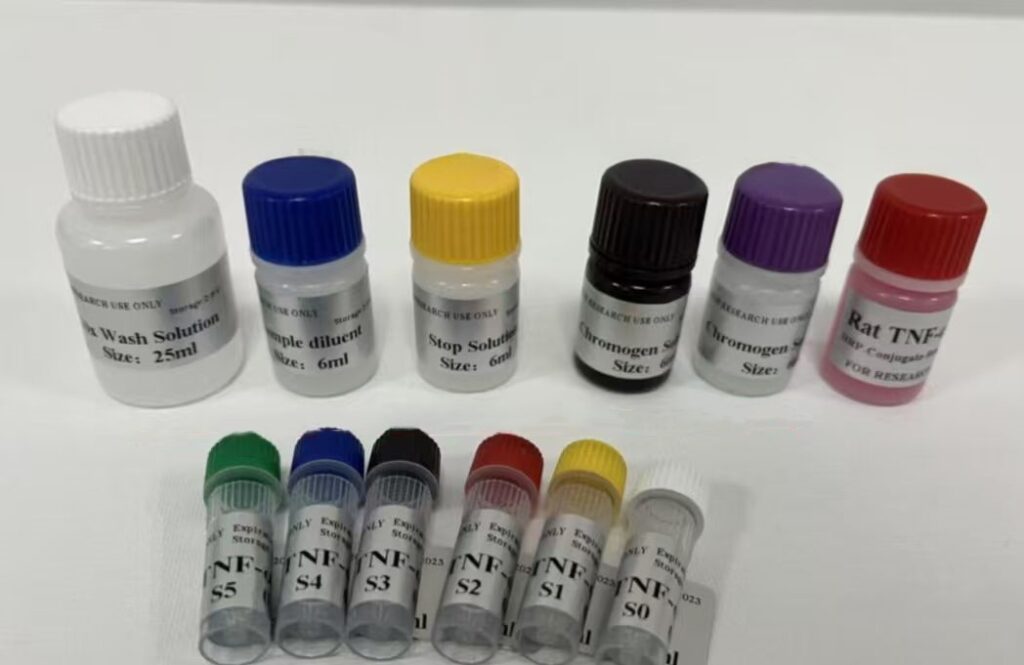
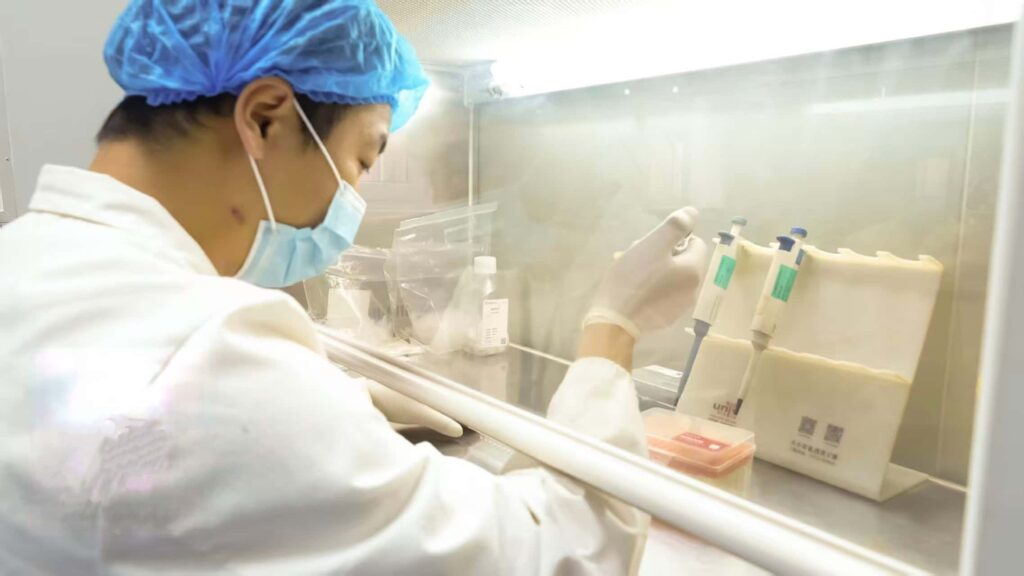
What are the primary factors affecting the price of ELISA kits?
Detection Target (Marker)
This is the most critical factor. Common markers like human IL-6, TNF-α, and VEGF face intense market competition, resulting in generally affordable prices. Conversely, kits for niche or newly discovered markers often come with a hefty price tag.For instance, the Mouse RASSF6 ELISA Kit. some other Elisa kits related to insects/microorganisms are usually priced at a higher level.Elisa test kits for plant/microorganism/fish and other subjects are usually quite expensive.However, at Yanda Bio, price is not an issue, and neither is the performance of the Elisa test kits. After just one collaboration, you will realize that we will be your long-term partner.
Species
Human: Most prevalent, typically the most affordable;
Mouse/Rat: Also common, priced similarly to human;
Other species (e.g., pig, cow, monkey): Due to lower usage and higher development costs, prices are usually significantly higher.
Brand
International premium brands: Such as R&D Systems, Thermo Fisher, Abcam, etc. Offer high product stability and thorough validation, but command the highest prices;
Well-known Chinese brands: Such as Lianke Bio, Xinbosheng, Yanda Bio, etc. Provide outstanding value for money and are the preferred choice for many laboratories;
Other Chinese brands: Offer the most competitive pricing, but quality may vary. Exercise caution when selecting these products.
Kit Types and Specifications
96T: Most common, typically quoted per full plate;
48T/24T: Lower total cost, but potentially higher per-well cost;
Performance Parameters
Sensitivity: Higher sensitivity means higher cost;
Detection Range: Wider ranges may command higher prices; higher sensitivity also increases cost. Yanda Bio’s ELISA kits offer customizable detection ranges and sensitivities to meet all client requirements.
Sample Types: Support for diverse samples (serum, plasma, cell supernatants, etc.) and effective mitigation of hook effects significantly impact pricing.
Custom ELISA Kits
Custom ELISA kits carry higher costs, allowing customization of both assay targets and detection sensitivity. Prices exceed standard kits without fixed quotations; contact suppliers for precise pricing. Yanda Bio offers custom ELISA kit services with fully customizable assay targets and sensitivity thresholds. For competitive pricing on customized kits, contact us directly.
How much does an Elisa kit cost?
Taking the 96T Human ELISA Kit as an example:
Domestic brands: Listed price $200–500, actual selling price around $120–300.
International brands (e.g., R&D Systems): Listed price approximately $500–800, actual selling price $350–500.
For cytokine assay kits targeting rare species, where only international brands are available, prices may reach $800–1500.
Ten years ago, most kits on the market were produced in the US, while Chinese-made ELISA kits were not highly accurate. After several years of research and development, the quality of Chinese-made ELISA kits has significantly improved. Yanda Bio has been engaged in kit R&D and sales in China for 7 years, selling tens of thousands of kits with an extremely low return rate. Some customers reported undetectable test factors, but when we tested their samples, the results consistently satisfied them.
How ELISA Kit Type Affects Price, Performance, and Workflow
Not all ELISA kits cost the same, and the price difference is rarely arbitrary. The type of ELISA format — classic sandwich, competitive, or one-step sandwich — fundamentally determines the reagent complexity, hands-on time, accuracy profile, and, yes, the final price tag. Understanding these differences ensures you don’t overpay for performance you don’t need, or worse, under-buy for the sensitivity your experiment demands.The following is only the price of ELISA kits available on the market. However, if you purchase ELISA kits from Yanda Bio, you will receive a price that is much lower than the market rate.
Here’s a side-by-side comparison of the three most common formats:
| Feature | Classic Sandwich ELISA | Competitive ELISA | One-Step Sandwich ELISA |
|---|---|---|---|
| Approximate Price (per 96-test kit) | $120–$350 | $150–$400 | $150–$450 |
| Analytical Sensitivity | High (signal-amplified by enzyme conjugate) | Moderate to High (depends on competitor affinity) | Moderate (no signal amplification step) |
| Specificity | Very High (two antibodies recognize different epitopes) | Moderate (may cross-react with structurally similar molecules) | High (dual-antibody recognition) |
| Quantitative Accuracy | Excellent (wide dynamic range, robust standard curve) | Good (narrower dynamic range; competitive binding can be matrix-sensitive) | Good (faster but can suffer from high-dose hook effect) |
| Typical Hands-On Time | 3–5 hours | 2–4 hours | 1.5–2.5 hours |
| Protocol Steps | Coated plate + sample + detection Ab + enzyme conjugate + substrate | Coated antigen + sample (competes with labeled antigen) + substrate | Pre-coated plate + sample + detection Ab-enzyme conjugate (added simultaneously) + substrate |
| Best For | Biomarker quantitation in complex samples; immunoglobulin profiling; longitudinal studies requiring high reproducibility | Small-molecule detection (haptens, hormones, drugs); targets with only one epitope | High-throughput screening; time-sensitive diagnostics; field applications |
| Limitations | More incubation and wash steps; requires optimized antibody pairs | Narrower linear range; less tolerant of matrix variability | Potential hook effect at very high analyte concentrations; typically less sensitive than classic sandwich |
Classic Sandwich ELISA: The Gold Standard for Quantitation
Classic sandwich ELISA uses a capture antibody, sample, detection antibody, and enzyme conjugate (or a biotin-streptavidin-HRP system) in sequential steps. Because two antibodies independently recognize different epitopes, specificity is exceptional. The signal amplification provided by the enzyme step yields high sensitivity and a wide dynamic range. These kits typically fall in the $120–$350 range for a 96-well plate.
Cost drivers: Production requires two validated, epitope-independent antibodies and multiple QC steps (standard curve linearity, dilution linearity, inter-assay precision). At Yanda Bio, a professional [elisa kit manufacturer], our classic sandwich kits — including our [Human Mu-type Opioid Receptor (OPRM1) ELISA Kit]and [Rabbit Type I Collagen (Col-I) ELISA Kit] — are manufactured at scale, allowing us to offer competitive wholesale pricing without sacrificing sensitivity or lot-to-lot consistency.
Competitive ELISA: Essential for Small Molecules
Competitive ELISA is the format of choice when the target analyte is too small to accommodate two antibodies simultaneously (e.g., steroids, drugs, haptens, small peptide hormones). In this format, sample analyte competes with a labeled antigen for limited antibody binding sites. Price is typically $150–$400 per kit — slightly higher than a classic sandwich because the production of a stable, labeled competitor antigen requires additional synthesis and purification steps. Sensitivity is good but the dynamic range is narrower, and matrix effects must be carefully controlled.
When to choose it: If your target is a single-epitope small molecule that simply cannot be detected by sandwich ELISA, the competitive format is non-negotiable. Yanda Bio offers competitive ELISA formats for select small-molecule targets and provides custom ELISA development services for novel small-molecule analytes.
One-Step Sandwich ELISA: Speed Without Sacrificing Specificity
One-step (or simultaneous) sandwich ELISA combines the detection antibody and enzyme conjugate in a single incubation with the sample on a pre-coated capture plate. This cuts the total assay time to 1.5–2.5 hours and reduces hands-on steps. Price points range from $150 to $450, reflecting the convenience and the additional optimization required to prevent antibody interference in the combined reagent.
Trade-off: The major limitation is the high-dose hook effect <ELISA Standard Curve Problems and Troubleshooting>— at very high analyte concentrations, excess analyte can saturate both capture and detection antibodies separately, preventing sandwich formation and producing a falsely low signal. One-step kits also tend to have slightly lower analytical sensitivity than classic sequential protocols because the enzyme amplification step is not isolated. They are best suited for screening applications where speed outweighs the need for extreme sensitivity.
Which Format Should You Choose?
- For publication-quality quantitation, longitudinal studies, or immunoglobulin profiling where accuracy and reproducibility are paramount: Classic Sandwich ELISA.
- For small-molecule detection (drugs, hormones, haptens): Competitive ELISA.
- For high-throughput screening or time-constrained workflows where analyte concentrations are expected to fall within a known range: One-Step Sandwich ELISA.
Yanda Bio: High-Performance ELISA at Competitive Prices
Regardless of the format you need, cost should never mean compromising on data quality. As a dedicated [elisa diagnostic kit supplier in China] with in-house R&D and large-batch manufacturing, Yanda Bio optimizes every format for accuracy, sensitivity, and reproducibility while keeping prices accessible.
- Our classic sandwich ELISA kits deliver intra-assay CVs below 5% and inter-assay CVs below 10%.
- Our competitive ELISA kits are validated for minimal matrix interference.
- Our one-step ELISA kits are engineered to mitigate the hook effect across clinically relevant concentration ranges.
And because we manufacture directly, our wholesale pricing is exceptionally competitive — whether you need 5 kits or 500. Bulk orders for large-scale studies, multi-center trials, or OEM partnerships come with additional volume discounts. Need an ELISA developed for a novel target? Our custom ELISA development service team can build and validate the format that best fits your analyte.
How to Procure ELISA Kits Made in China?
Define Experimental Requirements: Identify target analytes, species, sample types, and quantities;
Contact Suppliers: Reach out via brand websites, distributors, or direct sales channels;
Request Quotations: Provide experimental details to obtain precise pricing (remember to clarify if taxes are included!).
Alternatively, contact Yanda Bio directly. We offer the most competitive pricing and reliable service.
Purchase Recommendations
For routine research: If budget is limited, opting for well-known Chinese brands typically offers the best value for money. Their accuracy for standard assay markers matches that of international brands.
For clinical or high-demand experiments: If samples are highly valuable or require strict quality control, prioritize international brands to ensure result reliability.
First-Time Users: Start with smaller formats (e.g., 48T) for initial testing, then scale up upon successful validation. For first-time Yanda Bio customers, we offer one ELISA kit at factory price for trial use. Standard kits are priced below $100 at factory cost.
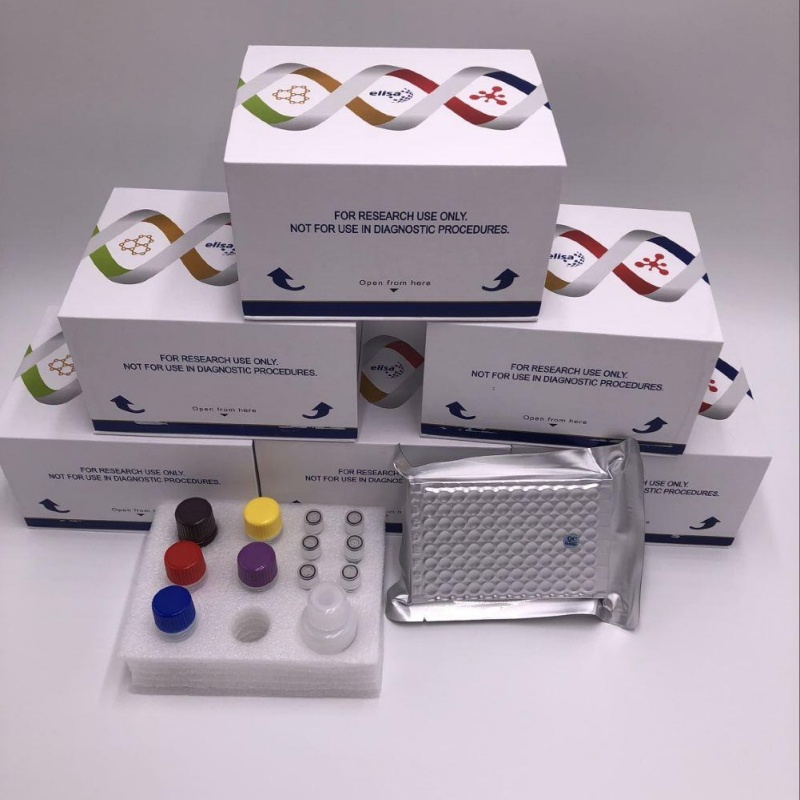
Summary:
ELISA kit pricing is highly flexible, influenced by factors such as target, species, brand, and performance. The best approach is to clarify your requirements and directly request quotes from multiple suppliers for comparison. If you seek an ELISA kit with stable performance and competitive pricing, please contact our sales team directly. We will promptly provide you with the optimal solution.