
The global in‑vitro diagnostics (IVD) market is expanding fast, and ELISA kits remain the backbone of serological testing, vaccine research, and immune monitoring. But taking a medical‑grade ELISA kit from a factory in China to a laboratory in the United States, Europe, Japan, or India isn’t as simple as dropping a parcel in the mail. Exporting requires navigating a dense web of medical device classifications, customs declarations, country‑specific registrations, and cold‑chain logistics. One misstep can mean rejected shipments, costly delays, or even product destruction at the border.
As a dedicated [elisa kit manufacturer] that ships to clients in over 40 countries, Yanda Bio has built a compliance‑first workflow that keeps your supply chain flowing. Whether you are a distributor sourcing from an [elisa diagnostic kit supplier in China] for the first time, or a research institute scaling up your immunoglobulin profiling projects with a bulk [Human ELISA test kit] order, this guide will walk you through every stage – from classifying your product to landing it safely on the bench.
1. Classify Your ELISA Kit Correctly Before Shipment
In China, ELISA kits intended for clinical use are regulated as medical devices by the National Medical Products Administration (NMPA). The classification determines which documents you must prepare for customs.
- Class II medical devices – most ELISA kits for general disease auxiliary diagnosis (e.g., thyroid function, common infectious markers). Required export documents include:
- Medical Device Production License
- Medical Device Registration Certificate
- Medical Device Business Operation License (for the exporting trading company)
- Export Sales Certificate for Medical Devices – issued by the local NMPA office; mandatory for almost all Class II ELISA kits.
- Class III medical devices – high‑risk ELISA kits used for blood screening (HIV, HCV, HBsAg), genetic disease detection, or cancer early screening. The same documents apply, but the regulatory scrutiny is more intense.
- Research‑Use‑Only (RUO) kits – if your ELISA kit is labeled “For Research Use Only, Not for Diagnostic Procedures” and will not be used in clinical decision‑making, it is not managed as a medical device and does not require registration or filing. This is a critical distinction that can save weeks of paperwork for academic customers.
Before you even think about freight, sit down with your quality team and your [elisa kit manufacturer] and confirm which pathway your product follows. Many of Yanda Bio’s bulk immunoglobulin kits, including our [IgG ELISA kit], [IgA ELISA kit], and [IgM ELISA kit], are available in both registered medical‑device and RUO formats, so you can pick the right SKU for your destination market.
2. Customs Clearance: The Special Item Declaration
Because ELISA kits contain biological materials (antibodies, antigens, enzyme conjugates), they fall under “special items” for export customs purposes. Here is the sequence you must follow:
- Apply for the Special Item Exit Approval through the local customs’ online “Entry‑Exit Special Item Health Quarantine Supervision System.” This is submitted to the customs office directly under the factory’s jurisdiction.
- Prepare the declaration dossier:
- Application Form for Entry‑Exit Special Item Health Quarantine Approval
- Descriptive materials: Chinese and English names, category, composition, source, intended use, main sales channels, target countries, and distributors.
- Sales certificate: If the kit is used for prevention, diagnosis, or treatment of human diseases, the NMPA‑issued sales certificate must be included.
- Inspection and quarantine:
- Apply for inspection at least 7 days before the planned shipping date, at the customs office where the factory is located.
- After passing inspection, customs will issue an electronic exit inspection and quarantine ledger.
- Supporting documents to present: foreign trade contract, letter of credit, invoice, packing list, and the manufacturer’s own inspection report or certificate.
Missing the 7‑day window or submitting an incomplete descriptive sheet is one of the most frequent causes of last‑minute shipment holds. Pro tip: have your [elisa diagnostic kit supplier in China] prepare a template dossier for repeat orders so you never scramble for data.
3. Country‑by‑Country Market Entry Requirements
A CE mark doesn’t automatically open the door in Tokyo, and a 510(k) clearance doesn’t mean you’re legal in Mumbai. Each region has its own rulebook.
United States – FDA
- ELISA kits are regulated as medical devices. The manufacturer must submit a premarket notification [510(k)] at least 90 days before marketing, demonstrating substantial equivalence to a predicate device.
- The dossier must include: methodology, analyte, specimen type, test type (qualitative/quantitative), performance data (accuracy, specificity, sensitivity, precision), labeling, and instructions for use.
- Manufacturers must register their establishment (FDA Form 2891) and list the device (FDA Form 2892). A Quality System Regulation (QSR, effectively GMP) must be in place.
- During public health emergencies, the Emergency Use Authorization (EUA) pathway can allow faster access. Under the EUA, devices can be distributed to CLIA‑certified labs while the application is under review.
European Union – CE Marking (IVDR)
- All in‑vitro diagnostic medical devices need CE marking. Under the In‑Vitro Diagnostic Medical Devices Regulation (IVDR 2017/746), the manufacturer must have a quality management system (ISO 13485) and compile technical documentation including design dossier, performance evaluation, and, for high‑risk devices, Common Technical Specifications (CTS) testing.
- Non‑EU manufacturers must appoint an Authorized Representative in the EU and register both the manufacturer and the device in the country where the representative is based.
Japan – MHLW
- ELISA kits are treated as medical products under the Pharmaceutical and Medical Device Act (PMD Act), supervised by the Ministry of Health, Labour and Welfare (MHLW).
- Products are classified as New Test Items (Class 1) or Existing Test Items (Class 2, further divided into 2‑A for high‑impact public health tests like infectious diseases and blood typing, and 2‑B for others).
- At customs, the importer must submit copies of the manufacturer’s Marketing Authorization and the Product Certificate/Notification.
South Korea – MFDS & KGMP
- Medical devices are classified into Classes I–IV. ELISA kits typically fall into Class II, III, or IV.
- Class I is a simple online notification; Classes II–IV require full review. An ISO 13485 certificate is the foundation. The Korean Good Manufacturing Practice (KGMP) audit is mandatory and closely mirrors ISO 13485 but must be conducted by an MFDS‑recognized auditor. On‑site audits take 3–5 days.
- Technical documentation must include product description, performance testing reports (many must be performed in Korean labs or internationally accredited labs), clinical evidence, and biocompatibility data.
Australia – TGA
- Australia’s Therapeutic Goods Administration (TGA) requires devices to be entered in the Australian Register of Therapeutic Goods (ARTG) before sale.
- Classification aligns closely with the EU system (Class I, Is & Im, IIa, IIb, III). If a product already carries a valid CE certificate, the TGA classification is often automatically recognized, although a separate TGA conformity assessment is still required for higher classes.
- The TGA operates a risk‑based approach: low‑risk devices may be self‑assessed, while high‑risk ones require TGA conformity assessment.
India – CDSCO (Additional Section)
India has rapidly tightened its medical device regulations. Since the Medical Devices Rules, 2017, and subsequent amendments, ELISA kits for diagnostic use are regulated by the Central Drugs Standard Control Organization (CDSCO) under the Ministry of Health and Family Welfare.
Key requirements for exporting ELISA kits to India:
- Device classification: IVDs are classified into Classes A (low risk), B (low‑moderate), C (moderate‑high), and D (high risk) based on the parameters listed in the First Schedule of the Rules. Most immunodiagnostic ELISA kits fall into Class B or C. The classification dictates the rigor of the conformity assessment.
- Import license: The Indian importer must hold a valid Import License for Medical Devices (Form MD‑42 for Class B, MD‑43 for Class C/D, as applicable) issued by the State Licensing Authority or CDSCO.
- Manufacturer registration: The foreign manufacturer must be registered with CDSCO through the Online System for Medical Devices. The registration application must include:
- ISO 13485 certificate (mandatory quality management system proof)
- CE certificate, FDA 510(k) clearance, or approval from a recognized regulatory authority (IMDRF member countries’ approvals are often accepted to demonstrate compliance with safety and performance principles)
- Free Sale Certificate or Certificate to Foreign Government from the competent authority of the country of origin
- Device Master File containing detailed design and performance specifications, stability data, and clinical evaluation report
- Labeling and IFU (Instructions for Use) compliant with Indian labeling rules
- Local testing and clinical investigation: For high‑risk Class C and D devices not previously approved in India, CDSCO may require clinical performance evaluation in Indian population, unless a justification for its omission is accepted. This can add significant time and budget to market entry.
- Import procedures: Once the manufacturer is registered and the product is listed, each consignment must be cleared through customs. The importer must file a Bill of Entry, provide the Import License and the Certificate of Registration, and, if required, obtain a Test License for initial batches before full commercial clearance.
- Practical tip: Working with a local Indian regulatory affairs consultant is strongly recommended. The process from dossier submission to product listing can take 6–12 months, so starting early is key. As a [elisa diagnostic kit supplier in China] looking to support Indian distributors, Yanda Bio pre‑compiles a comprehensive India‑specific technical file, including ISO 13485, CE or FDA reference approvals, and accelerated stability data, to expedite our partners’ registration.
(Note: The regulatory summaries above are for general guidance. Regulations change frequently; always verify with the latest official publications or consult a regulatory affairs professional before shipping.)
4. Cold‑Chain Logistics: How to Deliver ELISA Kits Damage‑Free
All the regulatory work is wasted if the kits arrive at 40°C, with crushed plates and denatured antibodies. International cold‑chain shipping of biological reagents demands military‑grade attention to packaging and timing.
Packaging that works:
- Use double‑layered polyethylene (PE) bags with absorbent material inside for any liquid components. Secure the bagged items inside a rigid cardboard box.
- For temperature‑sensitive kits (storage at 2‑8°C), thermal insulated containers with pre‑conditioned gel packs are the baseline. For long‑haul routes to the Middle East, India, or South America, dry ice in a validated shipper box maintains 2‑8°C for up to 12 days. Yanda Bio standardizes on this packaging for all international immunoglobulin ELISA kit orders, keeping the plates and reagents within specification even when flights are delayed.
- Conduct a 1‑meter drop test before finalizing your packaging design – this simple step eliminates 90% of courier‑handling damage.
Logistics strategy:
- Route through established hubs (e.g., Hong Kong, Incheon) that have dedicated cold‑chain inspection facilities.
- Use a freight forwarder that offers “double‑clearance door‑to‑door” (DDP) service for biological special goods. This means both export customs and import customs are handled by the forwarder, provided you supply the complete documentation (commercial invoice, packing list, SDS, COA, and the special goods approval).
- Plan buffer days: Customs clearance at the destination can take 3–5 days, and airports like Hong Kong occasionally experience cold‑storage congestion. Ship early enough that a 3‑day delay doesn’t derail your recipient’s experiment.
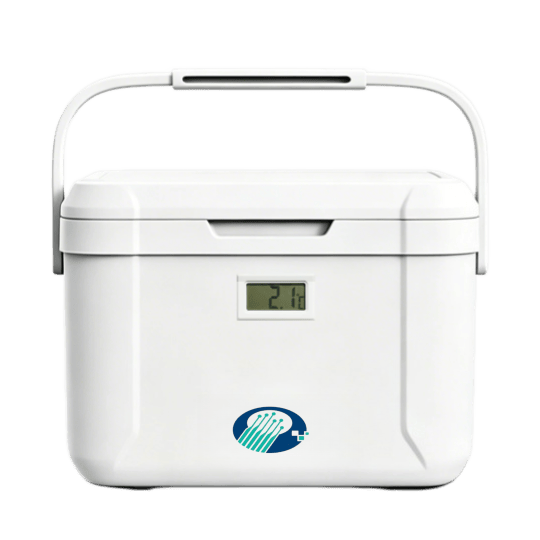
When you order our [IgG ELISA kit] or [IgM ELISA kit] in wholesale quantities, we include a full logistics consultation – recommended packaging configuration, documentation checklist, and a live tracking link – so you can watch your shipment move from our cleanroom to the final freezer.
5. Why Partner with Yanda Bio for Your Bulk ELISA Orders
Exporting ELISA kits will always require diligence, but the right manufacturer removes the friction. Here’s what you get when you choose Yanda Bio as your OEM or wholesale ELISA supplier:
- Price that scales: We manufacture in large batches with automated coating and liquid‑handling lines, which means our per‑plate cost is exceptionally competitive. Whether you need 50 kits or 5,000 kits per year, our wholesale pricing structure protects your margin.<How Much Is an ELISA Test Kit?>
- Accuracy you can trust: Every lot of our immunoglobulin ELISA kits – IgG, IgA, IgM – is validated against international reference standards, with CVs < 10% both intra‑ and inter‑assay. You’re not saving money at the expense of data quality.
- Regulatory support: We provide full ISO 13485‑certified documentation, CE technical files, and FDA registration support, dramatically cutting the time you spend on the exporter side of the process.
- Customization: Need a specific isotype panel in a different plate format or with biotin‑amplified detection for ultra‑sensitivity? Our R&D team builds bespoke sandwiches for your application.
Ready to expand your portfolio with a reliable [ELISA test kit] supply chain? Explore our [IgG ELISA kit], [IgA ELISA kit], and [IgM ELISA kit] product pages for detailed datasheets and volume pricing. Visit our [elisa kit manufacturer] profile to learn more about our quality systems and export certifications. If you have a specific destination market or regulatory question, reach out to our export team – we respond with a compliance roadmap, not just a quote.
Yanda Bio – Your partner in accurate, affordable, and export‑ready ELISA diagnostics.