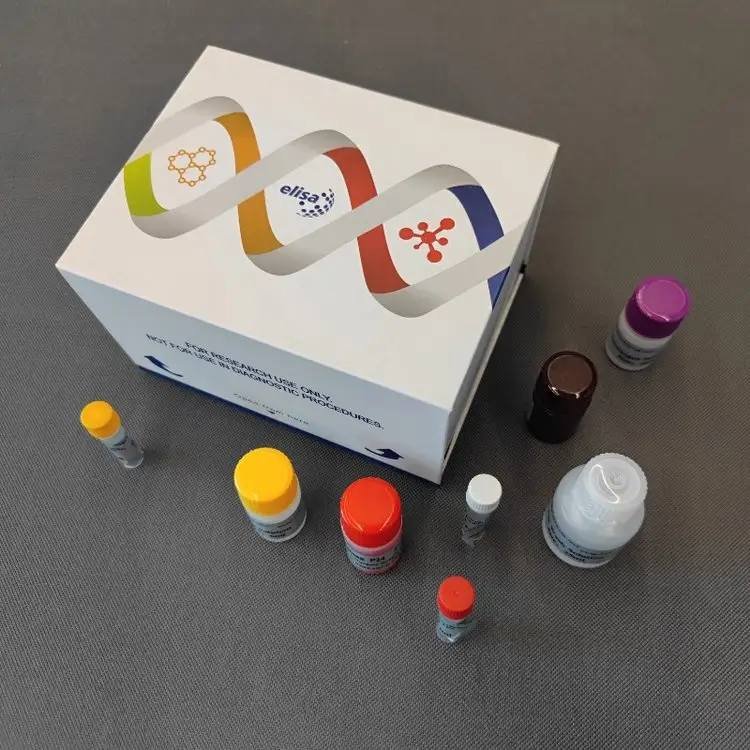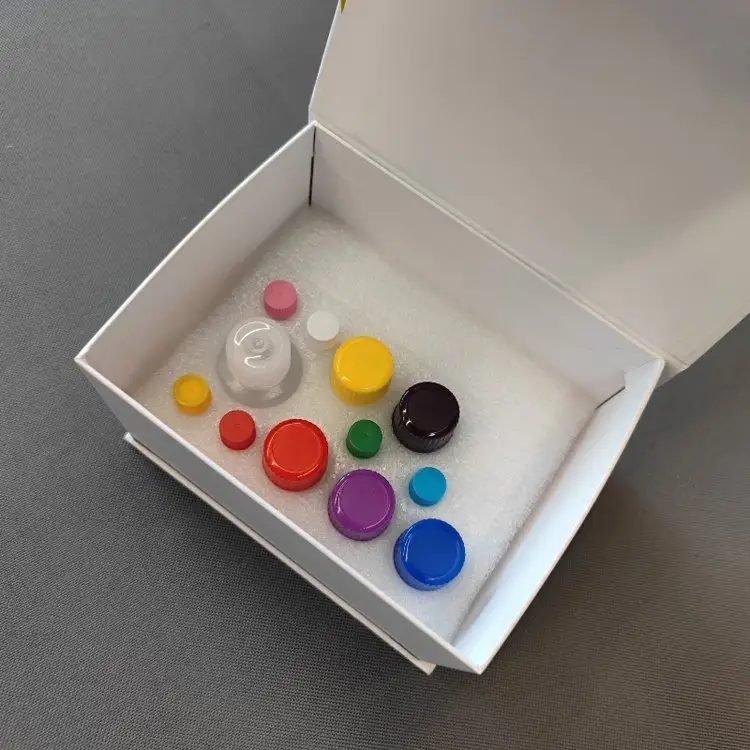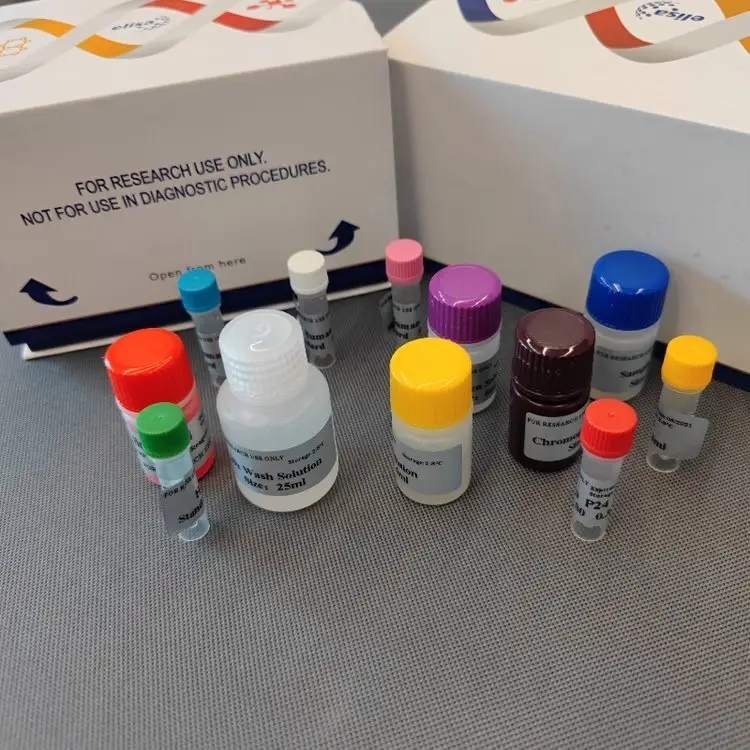

Product Overview: Understanding Type III Collagen in Research
Type III Collagen (Col-III) is a fibrillar collagen that constitutes a critical component of the extracellular matrix in extensible tissues such as skin, blood vessels, and internal organs. It plays an essential role in tissue integrity, wound healing, and fibrosis. Altered Col-III expression is associated with various pathological conditions, including tissue fibrosis, cardiovascular diseases, and connective tissue disorders. Accurate quantification of Rabbit Type III Collagen (Col-III) is therefore vital for research in fibrosis, tissue remodeling, wound healing, and cardiovascular pathology.
Yanda Bio’s Rabbit Type III Collagen (Col-III) ELISA Kit is meticulously developed to provide researchers with a reliable and sensitive tool for measuring this key extracellular matrix protein. As a professional ELISA kit manufacturer with a portfolio exceeding 6,000 detectable targets and established collaborations with over 60 universities across China, we are committed to delivering high-quality, research-grade immunoassays that support scientific discovery.
Assay Principle: Sandwich ELISA Technology
This kit employs a solid-phase sandwich enzyme-linked immunosorbent assay (ELISA) principle. A monoclonal antibody specific for Rabbit Type III Collagen (Col-III) is pre-coated onto the microplate. Standards and samples are pipetted into the wells, allowing Col-III to bind to the immobilized antibody. After washing to remove unbound substances, a Horseradish Peroxidase (HRP)-conjugated detection antibody is added, forming an antibody-antigen-antibody “sandwich” complex. Following a second wash step, TMB substrate is added. The HRP enzyme catalyzes the conversion of TMB to a blue product, which turns yellow upon acidification with the stop solution. The optical density (OD) measured at 450 nm is directly proportional to the concentration of Col-III in the sample.
Sample Collection & Preparation
Proper sample handling is critical for accurate results. Please follow these guidelines:
| Sample Type | Collection & Processing |
|---|---|
| Serum | Use pyrogen/endotoxin-free tubes. Avoid cell stimulation. Centrifuge at 3000 rpm for 10 minutes to separate serum from red blood cells. |
| Plasma | Collect using EDTA, citrate, or heparin anticoagulants. Centrifuge at 3000 rpm for 30 minutes and collect the supernatant. |
| Cell Supernatant | Centrifuge at 3000 rpm for 10 minutes to remove particles and polymers. |
| Tissue Homogenate | Homogenize tissue with an appropriate volume of physiological saline. Centrifuge at 3000 rpm for 10 minutes and collect the supernatant. |
| Storage | If samples are not tested immediately, aliquot and store at -20°C. Avoid repeated freeze-thaw cycles. Thaw at room temperature and ensure complete mixing before use. |
Materials Required But Not Provided
- Microplate reader capable of measuring absorbance at 450 nm
- Precision pipettes and tips (0.5-10 μL, 2-20 μL, 20-200 μL, 200-1000 μL)
- 37°C incubator or water bath
Important Notes for Assay Procedure
- Store the kit at 2-8°C. Allow all reagents to equilibrate to room temperature for 20 minutes before use. Concentrated wash buffer may crystallize; this is normal. Dissolve crystals by warming in a water bath.
- Return unused strips to the resealable bag with desiccant and store properly.
- The S0 standard (zero concentration) serves as a negative control/blank. Note that samples are pre-diluted 5-fold during the procedure; multiply results by 5 to obtain actual concentrations.
- Strictly adhere to the incubation times, volumes, and sequence specified in the protocol.
- Mix all liquid components thoroughly before use.
Reagent Preparation
20× Wash Buffer Dilution: Dilute 1 part 20× wash buffer with 19 parts distilled water to prepare 1× working wash buffer.
Washing Method
Manual Washing: Aspirate liquid from wells, fill each well with wash buffer, allow to stand for 1 minute, then aspirate. Invert plate and tap dry on absorbent paper. Repeat 5 times.
Automated Plate Washer: Inject 350 μL of wash buffer per well, allow to soak for 1 minute, and wash 5 times.
Assay Procedure
- Remove the required number of strips from the aluminum foil bag after 20 minutes of room temperature equilibration. Reseal unused strips and return to 4°C.
- Set up standard wells and sample wells. Add 50 μL of each standard concentration to the standard wells.
- For sample wells: Add 10 μL of test sample followed by 40 μL of sample diluent. Leave blank wells empty.
- Except for blank wells, add 100 μL of HRP-conjugated detection antibody to all standard and sample wells. Seal with a plate cover and incubate at 37°C for 60 minutes.
- Aspirate liquid, tap dry on absorbent paper, fill each well with wash buffer, let stand for 1 minute, aspirate, and tap dry. Repeat washing 5 times (automated washer acceptable).
- Add 50 μL of Substrate A and 50 μL of Substrate B to each well. Incubate at 37°C in the dark for 15 minutes.
- Add 50 μL of stop solution to each well. Measure the OD at 450 nm within 15 minutes.
Data Analysis
Create a standard curve by plotting the OD values (y-axis) against the standard concentrations (x-axis) in Excel or suitable software. A linear regression curve (R ≥ 0.9900) provides the best fit. Calculate sample concentrations from the curve equation, multiplying by the dilution factor (5×) as indicated.
Kit Performance Specifications
| Parameter | Performance |
|---|---|
| Accuracy | Standard curve linear regression coefficient (R) ≥ 0.9900 |
| Sensitivity | Minimum detectable concentration < 1.0 pg/mL |
| Detection Range | 1.0 – 40 pg/mL |
| Specificity | No significant cross-reactivity with other collagen types or soluble structural analogs |
| Intra-assay CV | < 15% |
| Inter-assay CV | < 15% |
| Storage | 2-8°C, protected from light and moisture |
| Shelf Life | 6 months |
Why Choose Yanda Bio?
- Comprehensive Portfolio: Access over 6,000 ELISA targets across multiple species, including a growing collection of rabbit-specific assays for both extracellular matrix and immunological research.
- Proven Quality: Our kits are developed with rigorous validation and are trusted by researchers at more than 60 universities nationwide.
- Reliable Support: Backed by a professional team committed to delivering high-quality products for reproducible research.
- Custom Solutions: For specialized research needs, we offer custom ELISA kit development services. Contact us to discuss your requirements.
Related Rabbit ELISA Kits:
- Rabbit ELISA Kits — Browse our complete rabbit product line
- Rabbit Interleukin 13 (IL-13) ELISA Kit — For Th2 cytokine quantification
Disclaimer
- This product is for research use only. It is not intended for clinical diagnosis or human use. The user assumes all responsibility for any consequences arising from misuse.
- Strict adherence to the protocol is required. Yanda Bio is not responsible for results obtained from deviations from the specified procedure.
Ordering & Contact Information
To order this Rabbit Type III Collagen (Col-III) ELISA Kit, or to inquire about volume discounts and custom services, please contact our sales team.