
Key Features
- Detects Natural & Recombinant IFN-γ R1: Quantifies both soluble (shed) receptor fragments in body fluids and total receptor in tissue/cell lysates after detergent extraction. Capture and detection antibodies bind epitopes within the extracellular domain.
- Overcomes IFN-γ Ligand Interference: High endogenous IFN-γ can mask receptor epitopes and cause under‑estimation. A simple dilution step using the provided Sample Diluent dissociates ligand‑receptor complexes and ensures accurate total receptor measurement.
- High Specificity within the Class II Cytokine Receptor Family: No significant cross‑reactivity with IFN-αR1, IFN-αR2, IL‑10R, IL‑20R, or other structurally related cytokine receptors.
- Ready‑to‑Use Liquid Standards: Six standards supplied (0, 50, 100, 200, 400, 800 pg/mL) in a eukaryotic recombinant format; no reconstitution required.
- Validated Sample Types: Human serum, EDTA/citrate/heparin plasma, cell culture supernatant, and tissue/cell lysates (RIPA or 1% Triton X‑100 extraction recommended for membrane‑bound receptor).
- Built‑in 5× Sample Dilution: 10 μL sample + 40 μL Sample Diluent in the well; multiply the interpolated result by 5 to obtain the actual concentration.
- One‑Step Sandwich ELISA: Co‑incubation of sample and HRP‑detection antibody; total assay time approximately 2 hours.
- Reliable Performance: Intra‑ and inter‑assay CV < 15%; standard curve linearity R ≥ 0.9900.
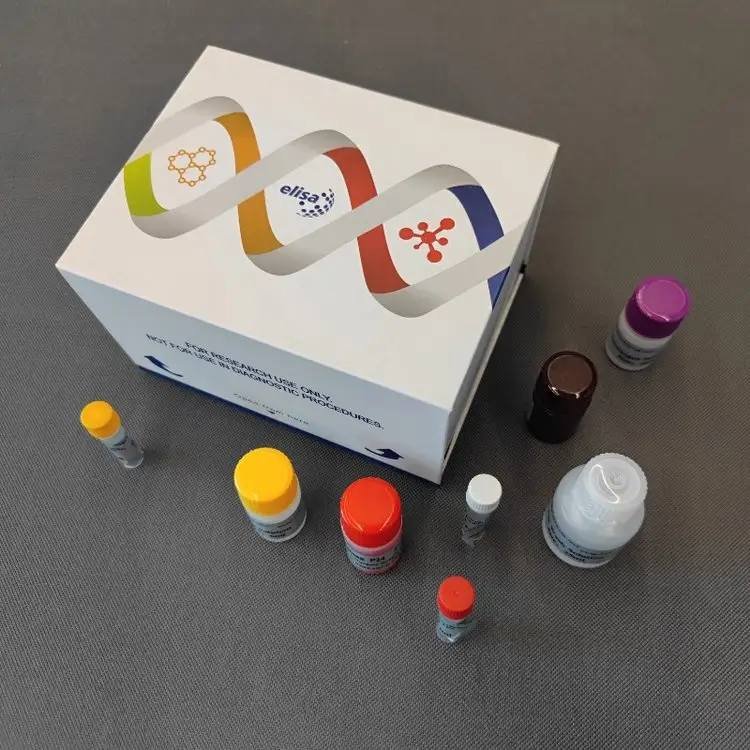
- Export‑Ready: Neutral white box (16 × 12.5 × 9.5 cm), cold‑chain shipping (2–8°C), 6‑month shelf life. MSDS available upon request.
Product Description
Interferon‑gamma receptor 1 (IFN‑γ R1, CD119) is the ligand‑binding α‑chain of the IFN‑γ receptor complex and belongs to the class II cytokine receptor family. Upon IFN‑γ binding, it oligomerizes with IFN‑γ R2 and activates the JAK‑STAT1 signaling cascade, which regulates innate and adaptive immunity, inflammation, and anti‑tumor responses. Soluble IFN‑γ R1, generated by proteolytic shedding or alternative splicing, can modulate IFN‑γ bioavailability and is a biomarker in autoimmune diseases, chronic infections, and immunodeficiencies.
The Yanda‑Human‑IFN‑γ R1 ELISA Kit employs a one‑step double‑antibody sandwich ELISA. A pre‑coated monoclonal recombinant antibody captures the extracellular domain of human IFN‑γ R1. Samples and standards are co‑incubated with an HRP‑conjugated polyclonal detection antibody. After washing, TMB substrate produces a signal directly proportional to the IFN‑γ R1 concentration, measured at 450 nm.
Sample Collection & Preparation
Recommended Sample Types
| Sample Type | Expected Form | Preparation |
|---|---|---|
| Serum / Plasma | Mainly soluble receptor | Collect as usual. If high IFN‑γ is suspected (e.g., acute infection), dilute 1:2 or more with Sample Diluent before assay to dissociate ligand‑receptor complexes. |
| Cell Culture Supernatant | Soluble receptor | Centrifuge at 3000 rpm for 10 min. Dilute if necessary. |
| Tissue / Cell Lysates | Membrane‑bound + intracellular | Use detergent‑based lysis buffer (RIPA or PBS + 1% Triton X‑100) with protease inhibitors. Homogenize, incubate on ice, centrifuge at 12,000 × g for 10 min at 4°C, and collect supernatant. Ensure detergent concentration after final dilution does not exceed 0.1% to avoid ELISA interference. |
General Storage & Stability
- Aliquot and store at -20°C or -80°C. Avoid repeated freeze‑thaw cycles.
- NaN₃ Prohibition: Sodium azide inhibits HRP. Do not use as a preservative.
Critical Dilution Factor & Ligand Interference
In‑Well Dilution
The assay uses a 5‑fold dilution in the well: 10 μL sample + 40 μL Sample Diluent. Multiply the interpolated concentration by 5 to obtain the value in the diluted sample. If you further pre‑diluted the sample to dissociate ligand or reduce matrix effects, multiply by that additional factor.
Overcoming IFN‑γ Interference
High levels of IFN‑γ in serum, plasma, or cell supernatant can occupy the receptor’s extracellular domain, blocking antibody binding. To ensure measurement of total IFN‑γ R1:
- Pre‑dilute the sample with the provided Sample Diluent (e.g., 1:2, 1:5, or as optimized). This dissociates non‑covalent ligand‑receptor complexes and restores epitope accessibility.
- For samples expected to contain extremely high IFN‑γ, a pilot dilution series is recommended.
Technical Specifications
| Parameter | Specification |
|---|---|
| Standard Concentrations (S0–S5) | 0, 50, 100, 200, 400, 800 pg/mL |
| Quantitative Range | 10 – 800 pg/mL |
| Analytical Sensitivity | < 10 pg/mL |
| Accuracy (Linearity) | Standard curve R ≥ 0.9900 |
| Precision | Intra‑assay CV < 15%; Inter‑assay CV < 15% |
| Specificity | Highly specific for human IFN‑γ R1. No cross‑reactivity with IFN‑αR1, IFN‑αR2, IL‑10R, IL‑20R, or other class II cytokine receptors. |
| Species Restriction | Validated for human samples only. Cross‑reactivity with other species has not been determined. |
| Sample Dilution Factor | 5× (in‑well); additional pre‑dilution recommended for ligand‑rich samples |
| Shelf Life | 6 months |
| Storage & Transport | 2–8°C, protected from light; cold‑chain shipping |
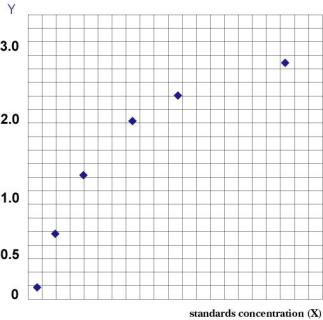
Representative Standard Curve
[Insert your standard curve image here. A typical 4‑parameter logistic fit gives R² ≥ 0.99.]
Representative validation data are available in the product instruction manual. Contact technical support for detailed performance data.
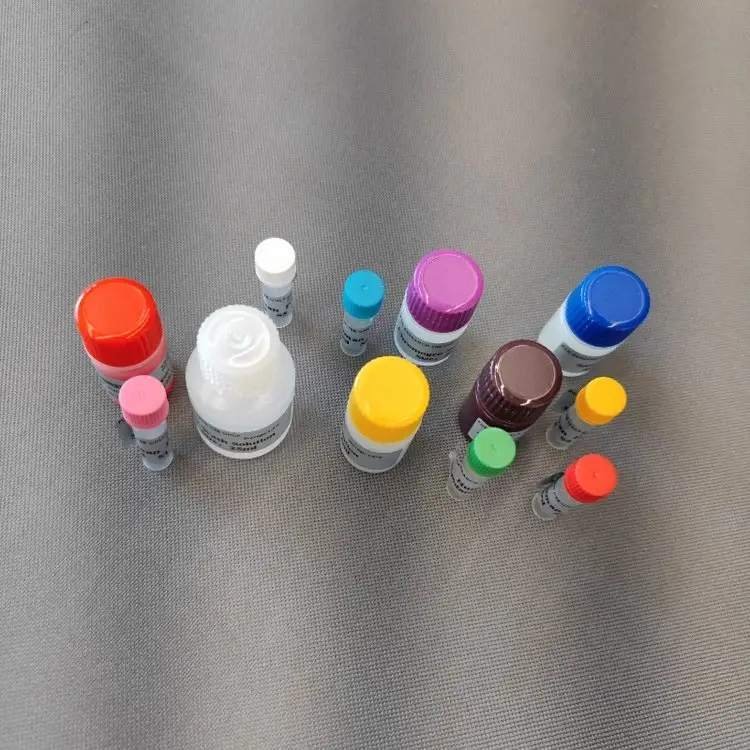
Kit Components
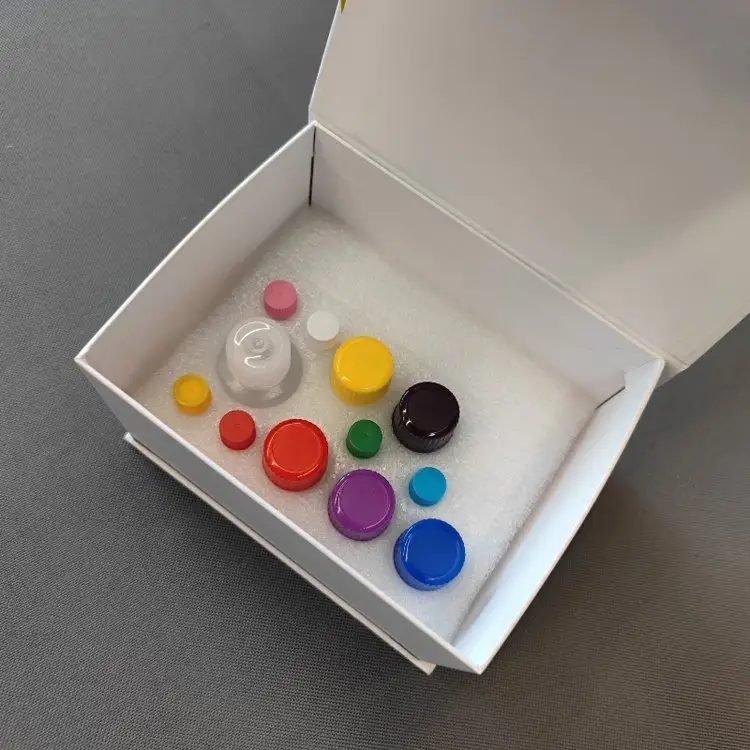
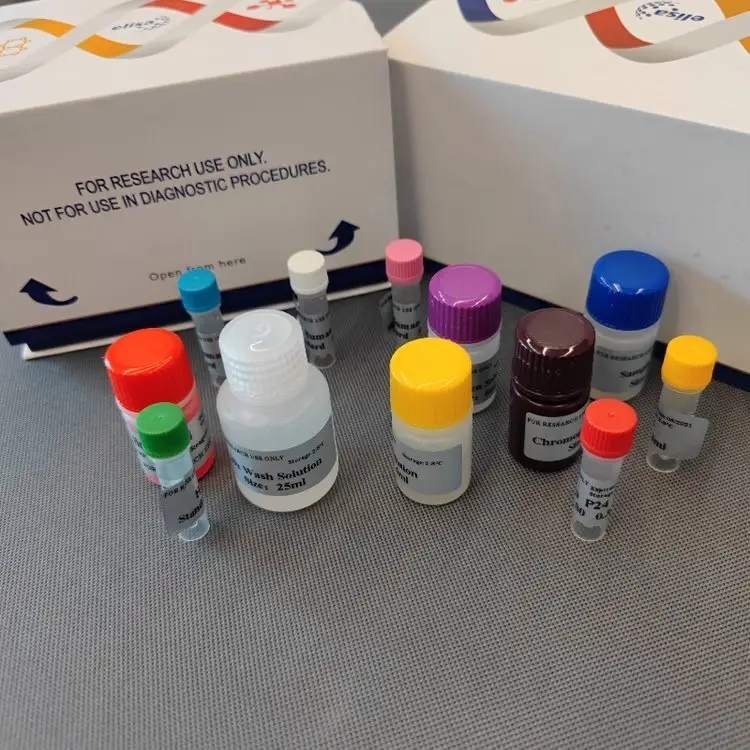
96‑Well Format
| Component | Quantity | Notes |
|---|---|---|
| Microelisa Stripplate | 12 strips × 8 wells | Pre‑coated with anti‑human IFN‑γ R1 monoclonal antibody |
| Standard (0.3 mL/vial) | 6 vials | Ready‑to‑use liquid, 0–800 pg/mL |
| Sample Diluent | 6 mL | – |
| HRP‑Conjugated Detection Antibody | 10 mL | Ready‑to‑use polyclonal antibody |
| 20× Wash Buffer | 25 mL | Dilute to 1× before use |
| Substrate A | 6 mL | – |
| Substrate B | 6 mL | – |
| Stop Solution | 6 mL | – |
| Plate Sealers | 2 sheets | – |
| Instruction Manual | 1 copy | – |
| Self‑sealing Bag | 1 piece | For storing unused strips |
48‑Well Format
| Component | Quantity | Notes |
|---|---|---|
| Microelisa Stripplate | 12 strips × 4 wells | Pre‑coated |
| Standard (0.3 mL/vial) | 6 vials | Ready‑to‑use |
| Sample Diluent | 3 mL | – |
| HRP‑Conjugated Detection Antibody | 5 mL | Ready‑to‑use |
| 20× Wash Buffer | 15 mL | Dilute to 1× |
| Substrate A | 3 mL | – |
| Substrate B | 3 mL | – |
| Stop Solution | 3 mL | – |
| Plate Sealers | 2 sheets | – |
| Instruction Manual | 1 copy | – |
| Self‑sealing Bag | 1 piece | – |
Crystallization of 20× Wash Buffer upon cold storage is normal; warm in a water bath until crystals dissolve.
Assay Procedure Summary
- Equilibrate: Warm the foil pouch to room temperature for 20 min. Remove required strips.
- Add Standards & Samples: 50 μL standards; 10 μL sample + 40 μL Sample Diluent. Blank: leave empty.
- Add HRP‑Antibody: 100 μL HRP‑detection antibody to all wells except blank. Incubate at 37°C for 60 min.
- Wash: Aspirate, wash with 1× Wash Buffer (soak 1 min), repeat 5 times.
- Substrate: 50 μL each of Substrate A and B, incubate dark at 37°C for 15 min.
- Stop & Read: 50 μL Stop Solution, read at 450 nm within 15 min.
Total hands‑on time: ~2 hours.
Materials Required but Not Supplied: Microplate reader (450 nm), pipettes (0.5–1000 μL), 37°C incubator, distilled water, wash bottle/automated washer. For membrane receptor extraction: RIPA buffer or PBS + 1% Triton X‑100, protease inhibitors.
Throughput
| Format | Max. Samples (Single Wells) |
|---|---|
| 48‑well | 39–40 |
| 96‑well | 85–88 |
Includes 6 standard wells and 1–2 blank wells. For duplicates, divide sample count accordingly.
Related Products
Expand your Inflammatory factor research with these complementary human ELISA kits (available from Yanda Bio):
- Human 1,5-AG ELISA Kit (0.1–48 mmol/L) | 1,5-Anhydroglucitol Assay | Yanda-Human-1,5-AG
- Human Interleukin 1α (IL-1α) ELISA Kit – High‑Sensitivity Sandwich Assay
- Human Immunoglobulin G (IgG) ELISA Kit – High‑Precision Sandwich Assay for Humoral Immunity Assessment
- Human Sphingosine-1-phosphate (S1P) ELISA Kit – Precision Analysis of a Critical Signaling Lipid
Frequently Asked Questions
Q: Does this kit measure soluble or membrane‑bound IFN‑γ R1?
A: Both. Serum, plasma, and culture supernatants primarily contain soluble receptor. Membrane‑bound receptor can be measured after detergent lysis (e.g., RIPA) of cells or tissues. The antibodies recognize the extracellular domain present on all forms.
Q: Can IFN‑γ in the sample interfere with measurement?
A: High concentrations of free IFN‑γ can mask receptor epitopes and lower the signal. Pre‑diluting the sample with the provided Sample Diluent dissociates the non‑covalent complex and allows accurate total receptor measurement.
Q: Does this kit cross‑react with other interferon receptors?
A: No significant cross‑reactivity with IFN‑αR1, IFN‑αR2, IL‑10R, or IL‑20R has been observed. The assay is specific for IFN‑γ R1.
Q: What is the recommended extraction method for tissue?
A: Homogenize tissue in RIPA buffer or PBS containing 1% Triton X‑100 and protease inhibitors. Centrifuge at 12,000 × g for 10 min at 4°C and collect the supernatant. Ensure the final detergent concentration after dilution does not exceed 0.1% to avoid inhibiting the ELISA.
Q: Can I use this kit for mouse or rat samples?
A: No. The kit has been validated for human IFN‑γ R1 only. Cross‑reactivity with rodent receptors has not been established; use species‑specific kits instead.
Q: How do I calculate the final concentration?
A: Final concentration (pg/mL) = In‑well interpolated value × 5 (in‑well dilution) × any additional pre‑dilution factor.
Q: Are MSDS and export documents available?
A: Yes. MSDS and Certificate of Composition are provided upon request and can accompany the shipment.
Ordering & Contact
| Item | Details |
|---|---|
| Catalog Number | Yanda‑Human‑IFN‑γ R1 |
| Formats | 48‑well / 96‑well |
| Package Dimensions | 16 cm × 12.5 cm × 9.5 cm (neutral white box) |
| Shipping | Cold‑chain (2–8°C), protected from light and moisture |
| Storage | 2–8°C; do not freeze |
| Shelf Life | 6 months |
WhatsApp: +86 198 3186 0669 | Email: songhawyble@gmail.com
Technical Documents & Support
- Instruction Manual – Download or request via email.
- MSDS & Certificate of Composition – Available upon request.
- Technical Support – For ligand interference, membrane extraction, or validation data, contact us via WhatsApp or email.
Disclaimer
For research use only. Not for clinical diagnosis or treatment. Users are responsible for validating assay performance in their own experimental conditions. The manufacturer assumes no liability for improper use or protocol deviations.