
Key Features
- Pan-CSF Detection via Common Epitope: Recognizes a shared epitope present on multiple rat colony-stimulating factor isoforms, enabling broad quantitative measurement without isoform-specific interference.
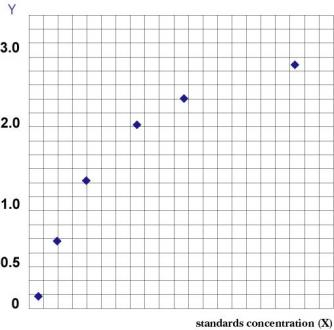
- Broad Quantitative Range: 1.0 – 240 ng/mL, supported by a six-point standard curve (0, 15, 30, 60, 120, 240 ng/mL).
- High Sensitivity: Minimum detectable concentration < 1.0 ng/mL.
- Validated Sample Matrices: Rat serum, EDTA/citrate/heparin plasma, cell culture supernatant, and tissue homogenates.
- Built-in 5× Sample Dilution: The assay protocol automatically dilutes samples 5-fold in the well; multiply the interpolated concentration by 5 to obtain the actual sample value.
- Excellent Reproducibility: Intra- and inter-assay CV < 15%; standard curve linearity R ≥ 0.9900.
- Ready-to-Use Liquid Standards: No reconstitution or serial dilution required – six calibrated concentrations supplied as liquids.
- Efficient Workflow: Pre-coated removable strips, total incubation time approximately 2 hours.
- Storage & Stability: 6-month shelf life at 2–8°C, protected from light and moisture.
Product Description
Colony-stimulating factors (CSFs) are hematopoietic growth factors that drive the proliferation, differentiation, and functional activation of myeloid progenitor cells. In rat models, CSF levels serve as critical biomarkers in studies of inflammation, innate immunity, bone marrow disorders, oncogenesis, and immunotoxicology.
The Yanda-RAT-CSF ELISA Kit employs a one-step double-antibody sandwich ELISA principle. The microplate is pre-coated with a capture antibody directed against a conserved epitope common to multiple rat CSF isoforms. Samples and standards are added together with an HRP-conjugated detection antibody in a single incubation step. After washing, TMB substrate produces a colorimetric signal proportional to the total CSF concentration. The absorbance at 450 nm is used to calculate results against the standard curve.
Validated Sample Types & Preparation
Sample Collection and Handling
- Serum: Collect blood without anticoagulant, let clot, centrifuge at 3000 rpm for 10 min. Separate serum promptly.
- Plasma: Use EDTA, citrate, or heparin as anticoagulant. Centrifuge at 3000 rpm for 30 min and collect supernatant.
- Cell Culture Supernatant: Centrifuge at 3000 rpm for 10 min to remove cells and debris.
- Tissue Homogenate: Homogenize tissue in normal saline, centrifuge at 3000 rpm for 10 min, and use the clarified supernatant.
Storage: If not assayed immediately, aliquot samples and store at -20°C. Avoid repeated freeze-thaw cycles. Thaw completely at room temperature and mix gently before use.
Critical Dilution Factor
The assay protocol incorporates an automatic 5-fold dilution (10 µL sample + 40 µL Sample Diluent). The concentration calculated from the standard curve represents the diluted value; multiply the result by 5 to obtain the actual concentration in the original sample. The S0 standard (0 ng/mL) serves as the blank/negative control.
Technical Specifications
| Parameter | Specification |
|---|---|
| Standard concentrations (S0–S5) | 0, 15, 30, 60, 120, 240 ng/mL |
| Quantitative range | 1.0 – 240 ng/mL |
| Analytical sensitivity | < 1.0 ng/mL |
| Accuracy (linearity) | Standard curve R ≥ 0.9900 |
| Precision | Intra-assay CV < 15%; Inter-assay CV < 15% |
| Specificity | Recognizes a common epitope; no cross-reactivity with other soluble structural analogues |
| Sample dilution factor | 5× (pre-diluted in well) |
| Shelf life | 6 months |
| Storage & transport | 2–8°C, protected from light and moisture; cold-chain shipping |
Representative Standard Curve
Kit Components
96-Well Format
| Component | Quantity | Notes |
|---|---|---|
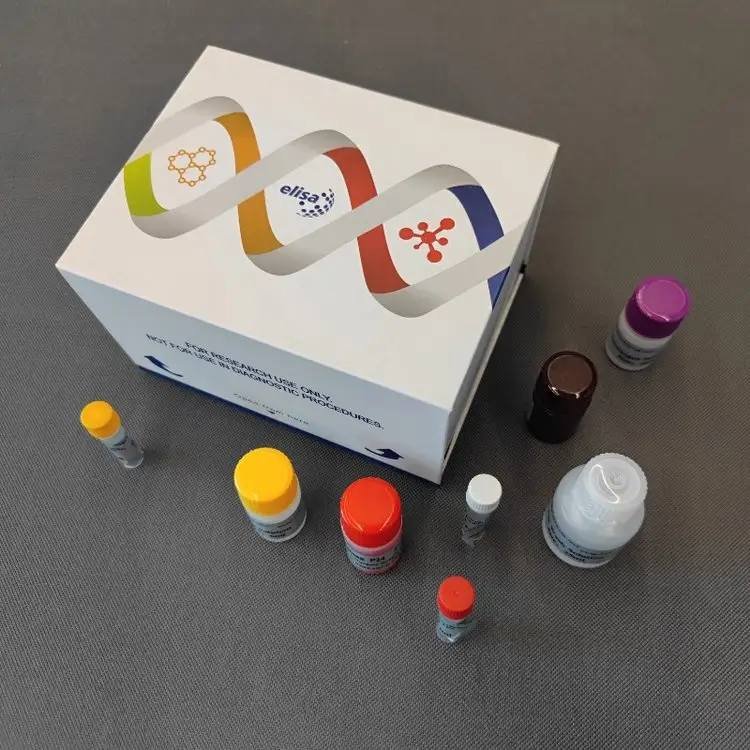
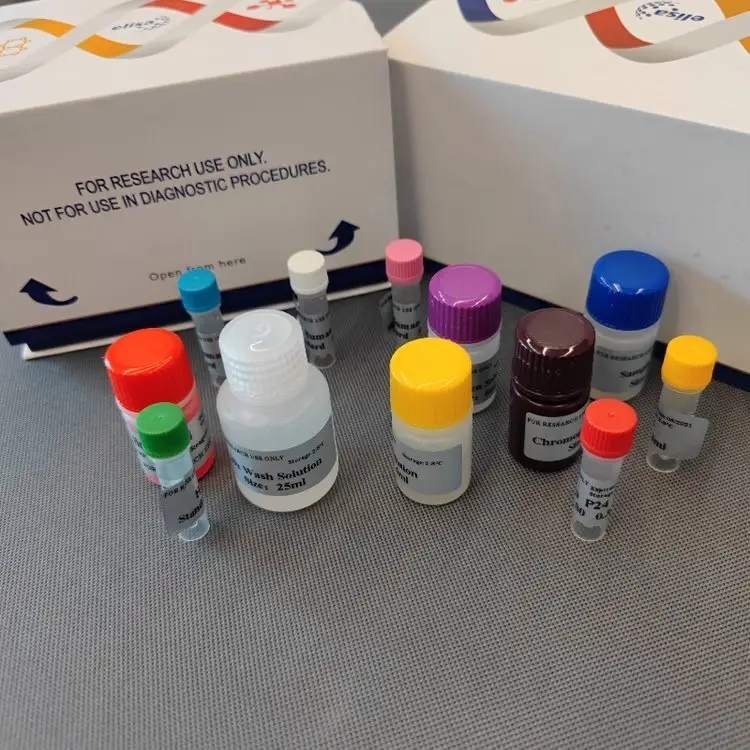
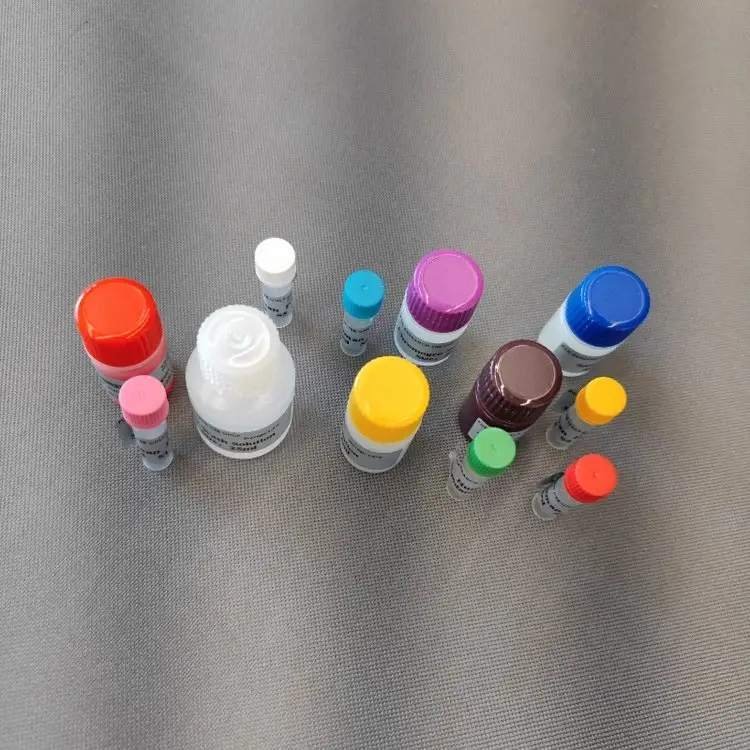
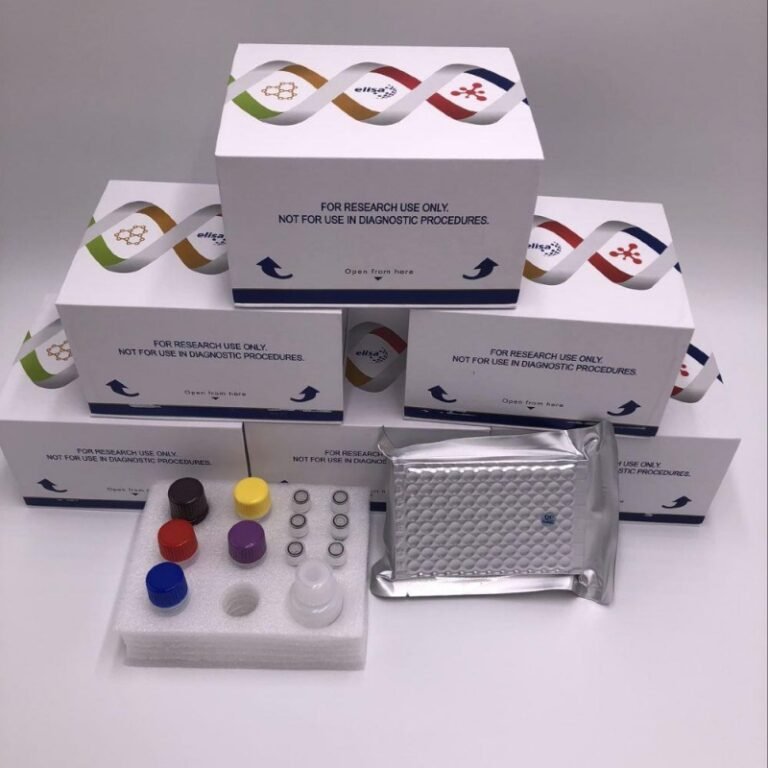
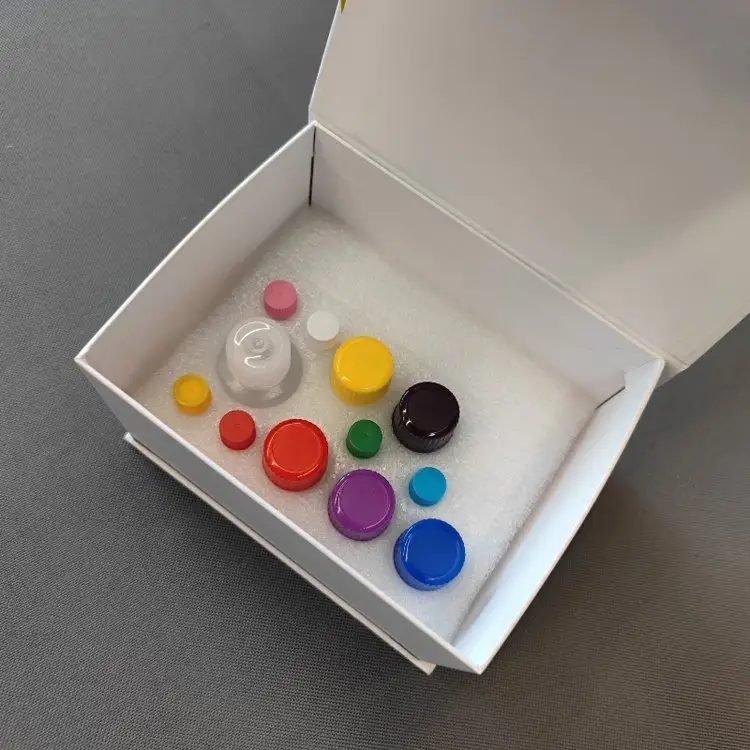
| Microelisa stripplate | 12 strips × 8 wells | Pre-coated, removable |
| Standard (0.3 mL/vial) | 6 vials | Ready-to-use liquid, 0–240 ng/mL |
| Sample Diluent | 6 mL | – |
| HRP-Conjugated Detection Antibody | 10 mL | Ready-to-use |
| 20× Wash Buffer | 25 mL | Dilute to 1× before use |
| Substrate A | 6 mL | – |
| Substrate B | 6 mL | – |
| Stop Solution | 6 mL | – |
| Plate Sealers | 2 sheets | – |
| Instruction Manual | 1 copy | – |
| Self-sealing Bag | 1 piece | For unused strip storage |
48-Well Format
| Component | Quantity | Notes |
|---|---|---|
| Microelisa stripplate | 12 strips × 4 wells | Pre-coated, removable |
| Standard (0.3 mL/vial) | 6 vials | Ready-to-use liquid |
| Sample Diluent | 3 mL | – |
| HRP-Conjugated Detection Antibody | 5 mL | Ready-to-use |
| 20× Wash Buffer | 15 mL | Dilute to 1× |
| Substrate A | 3 mL | – |
| Substrate B | 3 mL | – |
| Stop Solution | 3 mL | – |
| Plate Sealers | 2 sheets | – |
| Instruction Manual | 1 copy | – |
| Self-sealing Bag | 1 piece | – |
Note: The 20× Wash Buffer may form crystals at 2–8°C; this is normal. Warm to room temperature or in a water bath until crystals dissolve completely before use.
Assay Procedure
- Equilibrate: Let the sealed foil pouch warm to room temperature for 20 min. Remove required strips, reseal unused strips in the self-sealing bag, and store at 4°C.
- Add Standards: Pipette 50 µL of each standard into designated wells.
- Add Samples: Add 10 µL of sample to each well, followed by 40 µL of Sample Diluent. Leave the blank well(s) empty.
- Add Detection Antibody: Dispense 100 µL of HRP-conjugated detection antibody into all standard and sample wells (not blank). Cover with plate sealer and incubate at 37°C for 60 min.
- Wash: Aspirate the liquid, blot on absorbent paper, fill each well with 1× Wash Buffer, let stand for 1 min, and discard. Repeat for a total of 5 washes. An automated plate washer set to 350 µL/well with 1-min soaks may also be used.
- Substrate: Add 50 µL each of Substrate A and Substrate B. Incubate at 37°C in the dark for 15 min.
- Stop & Read: Add 50 µL Stop Solution. Measure absorbance at 450 nm within 15 min.
Required but not supplied: Microplate reader (450 nm), adjustable pipettes and tips (0.5–1000 µL), 37°C incubator or water bath, distilled water, absorbent paper, wash bottle or automated plate washer.
Sample Throughput
| Format | Maximum test samples (single well) |
|---|---|
| 48-well | 39–40 samples |
| 96-well | 85–88 samples |
Calculation accounts for 6 standard wells and 1–2 blank wells. For duplicate measurements, divide the number accordingly.
Pair with These Related Rat ELISA Kits
To build a comprehensive myeloid cell biology panel, combine this rat CSF ELISA kit with the following focused assays:
- Rat Macrophage Colony‑Stimulating Factor (M‑CSF/CSF‑1) ELISA Kit – specifically quantifies the master regulator of macrophage differentiation and survival.
- Rat Granulocyte‑Macrophage Colony‑Stimulating Factor (GM‑CSF/CSF‑2) ELISA Kit – measures the key cytokine driving granulocyte and macrophage proliferation in inflammation and immunity.
- Rat Neurofilament Protein Peptide (NFL) ELISA Kit-NFL resides primarily within neurons with minimal release into extracellular fluids; however, axonal injury, demyelination, or neurodegeneration triggers substantial NFL efflux into cerebrospinal fluid (CSF) and peripheral blood, establishing NFL as a well‑validated biomarker of neuronal damage.
- Rat Tumor Necrosis Factor Alpha (TNF-α) ELISA Kit
Explore our expanding catalog of rat cytokine, chemokine, and growth factor ELISA kits for multi‑analyte profiling in immunology, oncology, and hematology research.
Frequently Asked Questions
Q: Why must the result be multiplied by 5?
A: The protocol adds 10 µL of neat sample mixed with 40 µL of Sample Diluent in the well, creating a 1:5 dilution. The concentration read from the standard curve is therefore 5 times lower than the original sample concentration. Always multiply by 5 to obtain the actual value.
Q: Can I use samples with a different pre-dilution?
A: The kit is optimized for the built-in 5× dilution. If your samples are expected to read above 240 ng/mL after the 5× correction, you may pre-dilute them further with the provided Sample Diluent. Multiply the final result by the additional dilution factor.
Q: What if I see readings above the highest standard after applying the 5× factor?
A: Pre-dilute the sample further (e.g., an additional 1:2 or 1:5 dilution) in Sample Diluent, re-assay, and multiply the final result accordingly.
Q: Is this kit specific to one CSF subtype?
A: The antibodies target a common antigenic epitope conserved across multiple rat CSF isoforms. The kit therefore measures total CSF-like immunoreactivity. It does not cross-react with other structurally similar soluble proteins.
Q: How should tissue homogenates be treated to ensure accuracy?
A: Keep the homogenization process cold and add protease inhibitors if desired. Clarify by centrifugation. Since the matrix may differ from serum, running a spike-and-recovery pilot is recommended to confirm parallelism.
Ordering Information
| Item | Details |
|---|---|
| Catalog Number | Yanda-RAT-CSF |
| Available Formats | 48-well / 96-well |
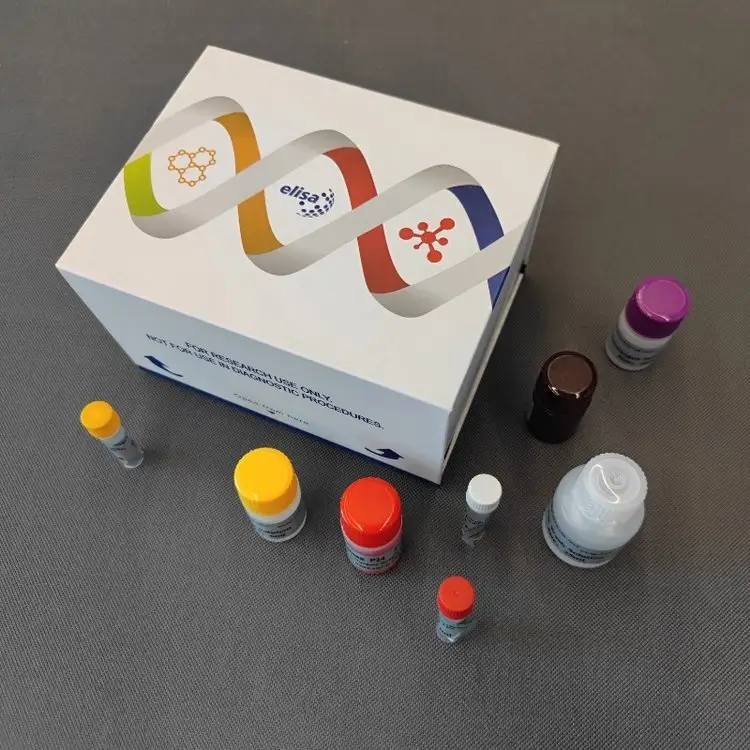
| Package Dimensions | 16 cm × 12.5 cm × 9.5 cm (neutral white box) |
| Shipping Conditions | Cold-chain (2–8°C), protected from light and moisture |
| Storage | 2–8°C; do not freeze |
| Shelf Life | 6 months |
| Intended Use | For research use only, not for diagnostic procedures |
For quotes, bulk orders, or availability inquiries, please contact our sales team.
Technical Documents & Support
- Instruction Manual – Download [insert link] or request from technical support.
- MSDS – Available upon request.
- Technical Support – For protocol optimization or troubleshooting, contact.
Disclaimer
This product is for laboratory research use only and is not approved for clinical diagnosis, treatment, or prognosis in humans or animals. The manufacturer shall not be held responsible for any consequences arising from misuse or deviation from the recommended protocol. Users assume full responsibility for data validation and regulatory compliance within their own jurisdictions.
Why Researchers Choose Yanda Bio
- Extensive target coverage: Over 6,000 validated ELISA kits across human, rat, mouse, and 12+ other species—enabling seamless translational and multi‑species studies.
- Proven quality: Kits are rigorously tested for reproducibility, specificity, and sensitivity, with custom sensitivity tuning available to meet specific experimental needs.
- Academic collaborations: Long‑standing partnerships with 60+ Chinese universities, providing responsive technical support and co‑development opportunities.
- Budget‑friendly policies: Free shipping on orders of any 3 kits, helping labs maximize their research funding.
- Complimentary elisa testing service: We run your assay, record the full process on video, and send you all the data—completely free of charge. This service is ideal for high‑volume studies or labs without dedicated ELISA workstations.
- Ultra‑sensitive options: NHS‑biotin‑amplified ELISA kits are available for detecting low‑abundance CSF in precious samples.
- Immunogenicity testing: Our immunogenicity ELISA testing services provide robust, well‑documented anti‑drug antibody assessments for preclinical drug and vaccine evaluation.
Disclaimer: This kit is for research use only. It is not intended for diagnostic or therapeutic applications. Follow the supplied protocol exactly; any deviation is the sole responsibility of the experimenter. Yanda Bio shall not be liable for consequences arising from improper use.
Yanda Bio – High‑performance rat ELISA kits, reliable elisa testing service, and specialized immunogenicity ELISA testing services to accelerate your immunology and oncology research.