
When choosing an ELISA test kit for your research, sensitivity is often the first metric you check. But what does sensitivity really mean, and how is it determined? More importantly, what other performance indicators should you evaluate to ensure you are getting a reliable product from a trustworthy elisa kit supplier China?
In this comprehensive guide, we explain how ELISA kit sensitivity is measured, and walk you through four other critical quality parameters: repeatability (precision), thermal stability, linearity, and specificity. Whether you are a first‑time buyer or an experienced researcher, understanding these metrics will help you select a high‑performance elisa diagnostic kit supplier and get reproducible results every time.
1: Sensitivity – The Detection Limit
What Is Sensitivity in ELISA?
Sensitivity, often reported as the limit of detection (LOD) , is the lowest concentration of an analyte that can be reliably distinguished from a blank (zero analyte) sample. In simple terms, it answers: “How little of my target can this kit detect?”
How Is Sensitivity Determined?
Manufacturers determine sensitivity using a standard curve prepared from serial dilutions of a purified standard. Here is the typical process:
- Run a full standard curve – usually 7–8 points, including a zero standard (blank).
- Measure the absorbance (OD) of each standard.
- Calculate the mean OD of the blank (zero standard) and its standard deviation (SD).
- Compute the LOD as: LOD = (mean OD of blank) + (3 × SD of blank)
- Read the concentration corresponding to this LOD OD value from the standard curve.
Real‑World Example
Consider a typical standard curve with the following data:
| Standard Concentration (pg/mL) | OD (450 nm) |
|---|---|
| 0 (blank) | 0.092 |
| 3.13 | 0.140 |
| 6.25 | 0.210 |
| 12.5 | 0.375 |
| 25 | 0.680 |
| 50 | 1.245 |
| 100 | 1.980 |
| 200 | 2.875 |
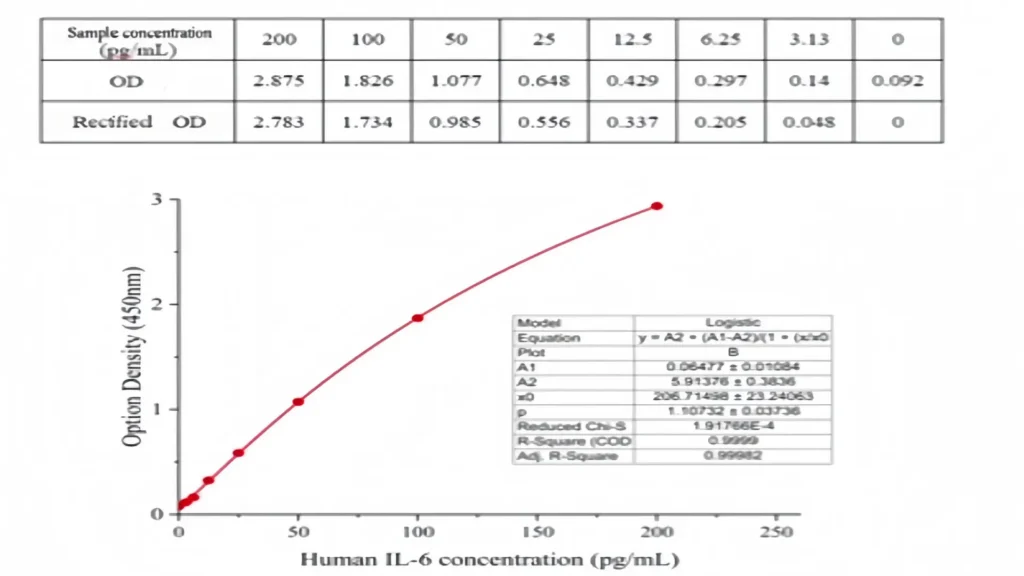
The blank OD is 0.092. If the SD of the blank is 0.010, then the LOD in OD terms is 0.092 + (3×0.010) = 0.122. Looking at the curve, the 3.13 pg/mL standard gives an OD of 0.140, which is above 0.122. Therefore, the kit can reliably detect as low as 3.13 pg/mL. If the 3.13 pg/mL point still clearly separates from the blank, the sensitivity is excellent.
Why this matters: A high‑sensitivity kit (low LOD) is essential for detecting low‑abundance cytokines, hormones, or biomarkers in healthy serum or cell culture supernatants. As a reliable elisa kit manufacturer, Yanda Bio routinely achieves LODs below 5 pg/mL for most targets.
2: Repeatability (Precision)
What Is Repeatability?
Repeatability, or precision, measures how close repeated measurements of the same sample are to each other. It is usually expressed as the coefficient of variation (CV) .
- Intra‑assay precision – same plate, same run.
- Inter‑assay precision – different plates, different days, different operators.
How to Evaluate Repeatability
- Run the same sample (preferably at low, medium, and high concentrations) in 5–10 replicates on one plate.
- Calculate the mean, SD, and CV = (SD / mean) × 100%.
- For inter‑assay, run the sample across three different days or kit lots.<How to determine inter-batch variation in ELISA kits>
Acceptable criteria:
- Intra‑assay CV ≤ 10%
- Inter‑assay CV ≤ 15%
Visual Assessment
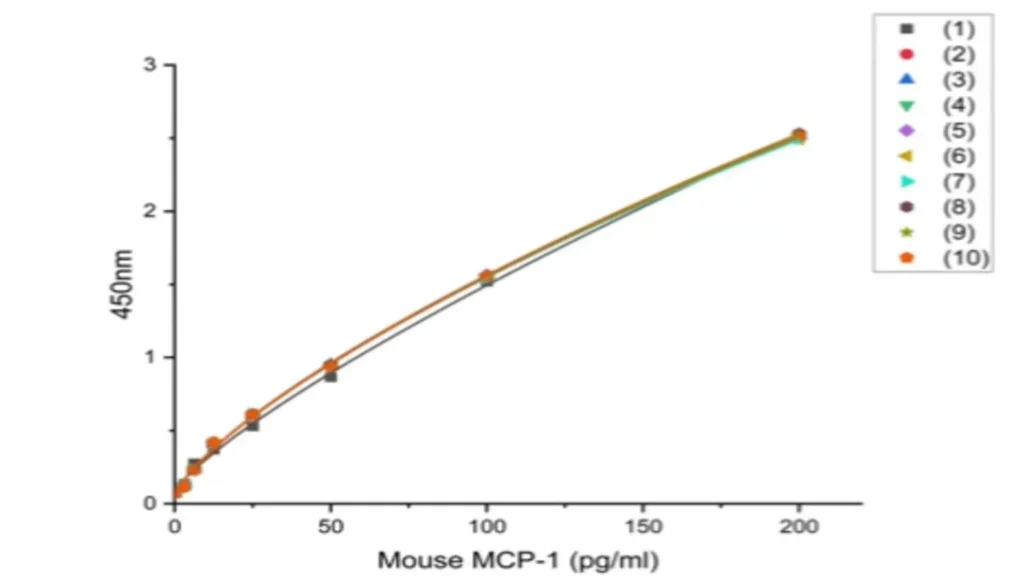
A practical way to judge repeatability is to overlay the standard curves from multiple runs. If the curves cluster tightly within a narrow band, the kit’s repeatability is good. If they spread widely, repeatability is poor. Even the best elisa kit supplier China cannot expect perfect overlap due to unavoidable experimental variations, but the curves should remain close.
3: Thermal Stability
What Is Thermal Stability?
Thermal stability reflects how well an ELISA kit retains its performance when exposed to elevated temperatures – a critical factor for shipping and storage, especially for international logistics.
How Is It Tested?
Manufacturers perform accelerated stability studies:
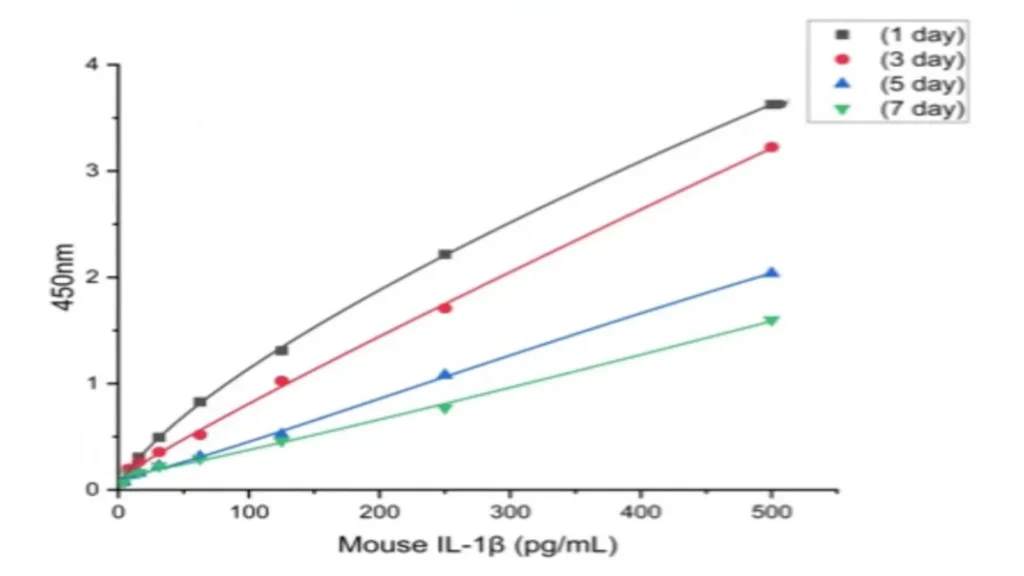
- Store the kit at 37°C (simulating stressed shipping conditions) and test performance at multiple time points (e.g., Day 1, Day 2, Day 5, Day 7).
- Compare the OD values of a high‑concentration standard or QC sample over time.
Typical Observation
A gradual decrease in OD is normal due to protein degradation. For example:
- Day 1: OD = 3.6
- Day 2: OD = 3.2
- Day 5: OD = 2.0
- Day 7: OD = 1.6
The key question: does the kit still produce accurate and precise results within its claimed shelf life? A robust ELISA test kit from a reputable elisa diagnostic kit supplier will maintain performance for the specified duration even after simulated transport. Yanda Bio kits are shipped with dry ice and insulated foam boxes to ensure stability for up to 20 days in transit.
4: Linearity (Dilutional Linearity)
What Is Linearity?
Linearity describes how well the measured concentration of a serially diluted sample follows the expected dilution factor. It tells you the dynamic range over which the kit gives accurate results.
How to Test Linearity
- Take a sample with high analyte concentration (natural or spiked).
- Perform serial 2‑fold or 4‑fold dilutions using the kit’s sample diluent.
- Run the diluted samples in the ELISA.
- Plot the measured concentration against the dilution factor.
- Perform linear regression; the R² (coefficient of determination) indicates linearity.
Acceptable standard: R² ≥ 0.99.
Why the Curve Is Usually S‑Shaped
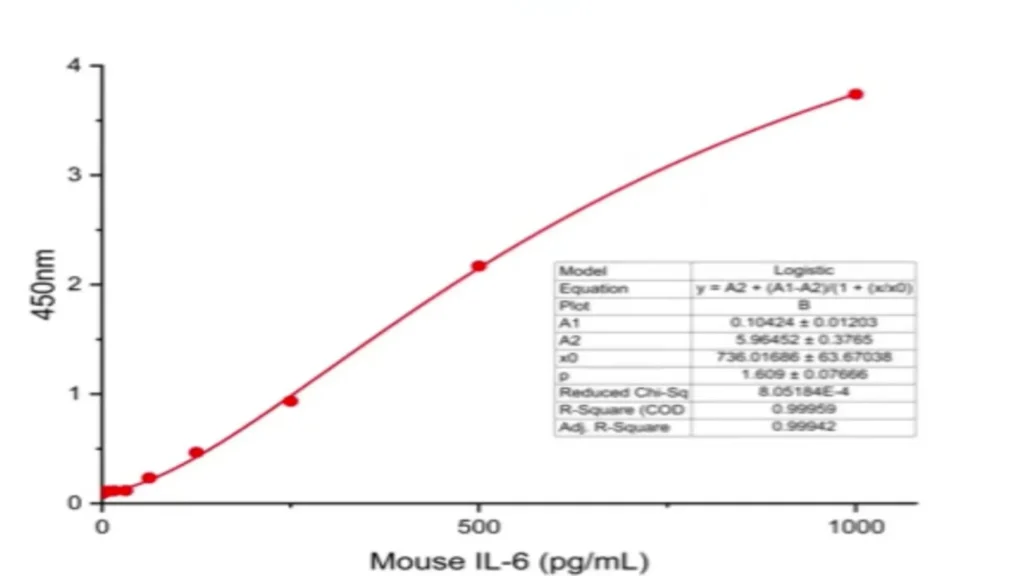
ELISA standard curves are typically sigmoidal (S‑shaped) , not perfectly linear. The central portion of the curve – between the lower and upper asymptotes – is nearly linear. A good kit provides a wide linear range so that you can fit most of your samples into that straight segment without excessive dilution. If the linear range is narrow, you may need to re‑run samples at different dilutions.
5: Specificity
What Is Specificity?
Specificity is the ability of an ELISA kit to detect only the intended target, without cross‑reactivity to structurally similar molecules (e.g., other interleukins, growth factors) or matrix components (e.g., hemoglobin, lipids).
How to Verify Specificity
Test the kit against:
- Related proteins (e.g., for a rabbit IL‑13 Elisa kit, test human IL‑6, mouse IL‑1β, TNF‑α, etc.)
- Heterologous species sera (e.g., mouse, rat, rabbit, goat, human)
- Common interferents (hemolyzed, icteric, or lipemic samples)
Example Data
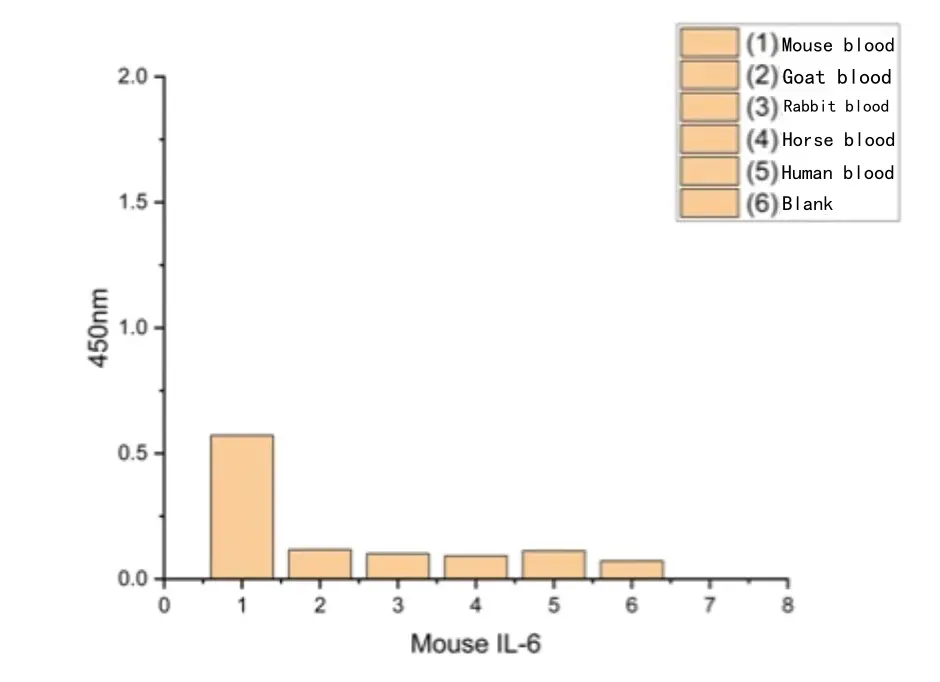
Using a mouse IL‑6 ELISA kit, you test serum samples from mouse, sheep, horse, rabbit, and human, all at the same dilution. Results:
- Mouse serum: high OD
- Other species: OD close to blank
This indicates excellent specificity – the kit only recognizes mouse IL‑6 and does not cross‑react with other species’ proteins.
A good elisa kit manufacturer provides a detailed cross‑reactivity table in the product manual. If you see significant signal from non‑target species or structurally similar molecules, the kit’s specificity is compromised.
Summary: How to Compare ELISA Kits
| Indicator | What It Measures | Acceptance Standard |
|---|---|---|
| Sensitivity (LOD) | Lowest detectable concentration | As low as possible; typically <5 pg/mL |
| Repeatability (CV) | Consistency within/between runs | Intra ≤10%, Inter ≤15% |
| Thermal stability | Performance after temperature stress | Stable through shipping and shelf life |
| Linearity | Dilutional proportionality | R² ≥ 0.99 |
| Specificity | No cross‑reactivity | <5% cross‑reactivity with related molecules |
Why Choose Yanda Bio as Your ELISA Kit Supplier?
At Yanda Bio, we are a leading elisa kit supplier China with decades of combined experience in immunoassay development. Our ELISA test kits are manufactured under ISO‑compliant conditions and undergo rigorous quality control – every lot is tested for sensitivity, precision, linearity, specificity, and thermal stability.
- Thousands of targets – from common cytokines to rare biomarkers, across human, mouse, rat, rabbit, and other species.
- Custom ELISA development – need a kit for a novel target or a unique species? We deliver custom kits in as little as 5–7 business days.
- Unbeatable reliability – intra‑assay CV ≤10%, inter‑assay CV ≤15%, LOD as low as 2 pg/mL.
- Affordable pricing – standard 96‑well kits start at just $120, with bulk discounts.
- Global shipping – dry ice insulation ensures stability for up to 20 days in transit.
Explore our [ELISA product catalog] to find the right kit for your research. For custom needs, visit our [custom ELISA development page]. If you are new to ELISA, check out our [ELISA troubleshooting guide] for more tips.
Final Thoughts
Determining ELISA kit sensitivity is more than reading a number off a datasheet – it requires understanding how that number is derived and how it performs in real samples. By evaluating sensitivity together with repeatability, thermal stability, linearity, and specificity, you can confidently choose an elisa diagnostic kit supplier that meets your experimental needs.
Yanda Bio is committed to transparency and quality. Every kit we ship comes with a lot‑specific Certificate of Analysis, so you can verify the performance yourself. Contact us today to experience the difference of working with a dedicated elisa kit manufacturer who puts your research first.