
Immunoglobulins (Igs) – the workhorse antibodies of the adaptive immune system – tell a detailed story about an individual’s exposure to pathogens, vaccine responses, and overall immune competence. Quantifying IgG, IgA, and IgM levels is a cornerstone of immunological research, veterinary diagnostics, and vaccine development. But how do you measure these large, multi-epitope proteins accurately, reproducibly, and at a scale that doesn’t break your budget? The answer lies in the sandwich ELISA, and choosing the right [ELISA test kit] makes all the difference. In this article, we’ll walk through the principle of detecting immunoglobulins by ELISA, why the method is so powerful, and what the results can tell you about the phase of an immune response.
Why a Sandwich ELISA for Immunoglobulins?
Immunoglobulins are relatively large glycoproteins with a Y-shaped structure. Because they carry multiple distinct epitopes, they are ideal targets for a sandwich ELISA – the format that uses two layers of antibodies to “capture” and “detect” the analyte. This double‑antibody recognition delivers exceptional specificity and sensitivity, even in complex samples like serum, plasma, or cell culture supernatant.
At Yanda Bio, an experienced [elisa kit manufacturer], we optimize each sandwich system to make sure that matrix effects are minimized and the signal window is wide enough for robust quantification. Here’s how it works.
Step‑by‑Step Principle of the Sandwich ELISA for Igs
- Coating with capture antibody
A capture antibody – raised against the immunoglobulin you want to measure – is pre‑coated onto the ELISA plate. This antibody is sometimes called the coated antibody, and its job is to specifically “catch” the immunoglobulin from your sample. - Sample incubation
When you add your diluted sample, the target immunoglobulin binds to the capture antibody, forming the first layer of the sandwich. - Detection antibody incubation
Next comes the detection antibody. This antibody also recognizes the immunoglobulin but binds to a different epitope. Why can one immunoglobulin be bound by two different antibodies? The answer lies in species distance. If you purify fish IgM and inject it into a mouse, the mouse immune system treats the fish antibody as a foreign antigen and generates mouse anti‑fish IgM antibodies. A capture antibody raised in rabbit, and a detection antibody raised in mouse, will bind different regions of the same immunoglobulin without competing. This species‑driven epitope independence is what makes the sandwich ELISA so specific. - Signal generation – two popular paths
- Direct HRP conjugation: Some ELISA kits directly label the detection antibody with horseradish peroxidase (HRP). After washing, you add TMB substrate, and the color develops in proportion to the amount of immunoglobulin captured.
- Biotin–Streptavidin‑HRP amplification: For samples with extremely low immunoglobulin concentrations, a biotinylated detection antibody is used instead. Because multiple biotin molecules can be attached to a single antibody, you get multiple streptavidin‑HRP complexes binding per detection antibody. This cascade amplifies the signal and significantly boosts sensitivity. When you are dealing with early‑infection samples where antibody titers are barely above baseline, this amplification system is a game‑changer.
As a leading [elisa diagnostic kit supplier in China], Yanda Bio offers both direct‑HRP and biotin‑amplified formats across our immunoglobulin ELISA product line, so you can choose the sensitivity level that matches your experimental needs without paying for unnecessary complexity.
The Dynamics of IgM, IgG, and IgA – Why You Should Measure All Three
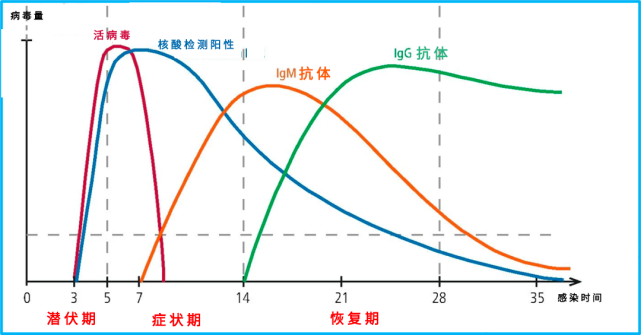
After the first encounter with a virus or vaccine, the immune system launches a primary response. Antigen‑specific B cells differentiate into plasma cells, and the first antibody isotype to appear is IgM. IgM levels rise quickly, usually within days, but they also decline relatively fast. As the response matures, class‑switching occurs, and IgG begins to dominate. IgG persists much longer and forms the backbone of humoral memory. IgA, on the other hand, is heavily produced at mucosal surfaces and frequently shows up in serum as well, often at concentrations higher than IgM and IgG in certain phases.
When you get a secondary exposure to the same antigen, memory B cells wake up and drive a faster, stronger IgG response – a hallmark of acquired immunity. But here’s the catch: the pattern of IgM, IgG, and IgA changes dynamically, and a single snapshot can give you a powerful, though not absolute, hint about the immune phase.
Interpreting an Immunoglobulin Panel
Imagine you draw a sample at an unknown time point during an infection or vaccination study and run it through three sandwich ELISA kits – our [IgG ELISA kit], [IgA ELISA kit], and [IgM ELISA kit]. What do the ratios tell you?
- Scenario 1: IgM > IgG and IgM > IgA
This pattern is commonly seen in the early stage of an infection. IgM is the fastest responder, so a high IgM level relative to the other isotypes suggests that the immune response is still in its initial phase. Caveat: an isolated high IgM could also occur in certain persistent infections, so it’s best to interpret it as “probable early phase” and corroborate with other data. - Scenario 2: IgG > IgA > IgM
As the response progresses, class‑switching kicks in. IgG climbs and eventually overtakes IgM. When you see IgG as the dominant isotype with IgA still moderate and IgM declining, the immune system has likely transitioned into a later or convalescent phase. This profile is typical of a mature humoral response or past exposure. - Scenario 3: IgG remains high, IgA follows, IgM low
Weeks after resolution, IgG often stays elevated while IgA may taper slowly. If you only looked at IgM, you would miss the long‑lived immunity signature written in IgG. This illustrates why a full three‑isotype panel is much more informative than a single‑parameter test.
Key takeaway: Measuring immunoglobulins helps you estimate a probable immune time window, but pinpointing the exact day of infection requires additional clinical information, antigen‑specific tests, or paired serology. Think of the Ig panel as a compass – it points you in the right direction and is indispensable for cohort screening, vaccine efficacy trials, and epidemiological surveillance.It should be noted that overexposure is more likely to occur in the ELISA tests for IgA, IgM and IgG. Before conducting the experiment, it is important to pay attention to the dilution concentration of the samples.
Why Yanda Bio’s Immunoglobulin ELISA Kits?
With the sheer volume of samples that large‑scale studies demand, you need immunoassays that are accurate, affordable, and easy to run in batch. Our IgG, IgA, and IgM ELISA kits are built around the sandwich principle described above and delivered with:
- Cost‑effective pricing – We manufacture at scale, allowing us to offer wholesale prices that are highly competitive. Whether you need a few plates or a few hundred, you’ll find our bulk pricing hard to beat.
- High accuracy and low inter‑plate CV – Consistent coating, optimized blocking, and ready‑to‑use liquid reagents ensure that your data are reproducible from run to run.
- Flexible formats – Standard direct‑HRP kits for routine quantitation, and biotin‑amplified versions when you need to push sensitivity for early IgM detection or low‑titer IgA samples.
- Species‑specific and multi‑species options – We know that the distance between fish and mouse matters just as much as the distance between chicken and rabbit. Our kits are available for a wide variety of host species.
When you source from a trusted [elisa diagnostic kit supplier in China] with in‑house R&D and ISO‑certified production, you close the gap between performance and budget. Yanda Bio has been supporting research institutes, diagnostic labs, and biotech companies globally with reliable ELISA solutions.
Ready to Map Immune Phases with Confidence?
Whether you are tracking a vaccination campaign, investigating an outbreak, or profiling immune development in animal models, the combination of IgG, IgA, and IgM ELISA gives you a quantitative window into the immune timeline. Equip your lab with the right [ELISA test kit] and let the data speak.
Explore our [Human IgG ELISA kit], [IgA ELISA kit], and [IgM ELISA kit] product pages for detailed datasheets and bulk pricing. If you have custom requirements or need a recommendation on which detection system fits your sensitivity goals, reach out to our team. Yanda Bio – your professional [elisa kit manufacturer] partner for high‑quality, affordable immunodiagnostic reagents.