
Every researcher who has ever run an ELISA knows the sinking feeling: you’ve pipetted your precious samples, waited through the incubations, added the stop solution — and the standard curve looks nothing like the datasheet. Were the antibodies unstable? Did the plate coating fail? Or was it a lot-to-lot consistency problem? When your experiment’s conclusions hinge on a few microliters of colorimetric readout, the quality of your ELISA test kit is everything.
At Yanda Bio, an innovative elisa kit manufacturer and elisa diagnostic kit supplier in China, we’ve built our reputation on answering those questions before a kit ever reaches your bench. We are a life-science and biotechnology company focused on developing premium ELISA reagents — and we partner with universities and research institutes to push the boundaries of immunodiagnostics. In this article, we’ll open the black box and show you the seven quantitative standards we use to judge every single kit we produce. These are the same standards you can use to evaluate any ELISA kit, whether it’s from us or another supplier.
Who Is Yanda Bio?
Yanda Bio is a China-based enterprise dedicated to the life sciences and biotechnology sector. We have established cooperative relationships with multiple universities and research institutions, providing products that are trusted for their consistency and supported by responsive technical service. Our catalog includes ready-to-use sandwich ELISA kits for immunoglobulins, cytokines, hormones, and neurological biomarkers such as NSE. We also offer custom ELISA kit development services — if your target isn’t in our catalog, our R&D team can build and validate an assay tailored to your specifications. And with our direct manufacturing scale, we deliver wholesale pricing that is exceptionally competitive, without compromising the accuracy your experiments demand.
But what exactly does “quality” mean for an ELISA test kit? Let’s walk through the metrics we measure on every lot.
1. Standard Curve Linearity (r > 0.99)
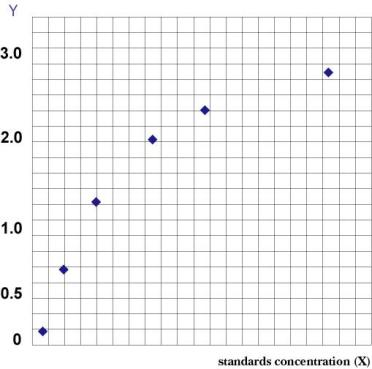
A quantitative ELISA kit must produce a standard curve that accurately back-calculates the concentration of unknown samples. The coefficient of correlation (r) across the standard range must exceed 0.99. This isn’t just a statistical nicety — it means the signal generated by the enzymatic reaction is truly proportional to analyte concentration, and you can trust the interpolated values for your unknowns.
For example, take our Human High molecular weight adiponectin (HMWADPN) ELISA Kit. A typical standard curve generates the following data (the table is representative):
| Concentration (ng/mL) | Average OD (450 nm) |
|---|---|
| 100 | 2.868 |
| 50 | 1.971 |
| 25 | 1.168 |
| 12.5 | 0.721 |
| 6.25 | 0.441 |
| 3.125 | 0.302 |
| 1.562 | 0.233 |
| 0 | 0.150 |
When plotted and fitted with a four-parameter logistic curve, the r value exceeds 0.99, and the back-calculated concentrations for standards fall within ±10% of their nominal values. This linearity is the foundation of every reliable ELISA test kit.
2. Dilution Linearity (Recovery 80–120%)
A kit might read its own standards beautifully, but what happens when you dilute a real biological sample? Dilution linearity tests whether the assay measures the analyte consistently across different dilutions of the same sample. Spiked samples are serially diluted in the appropriate matrix (serum, plasma, cell culture supernatant) and measured. The measured concentration at each dilution, multiplied by the dilution factor, should recover between 80% and 120% of the expected value.
For our Human Adiponectin (ADPN) ELISA Kit serum samples diluted 1:100, 1:200, 1:400, and 1:800, and cell culture supernatants diluted 1:2, 1:4, 1:8, and 1:16, all recovered within 80–120%. This confirms that the assay is not affected by matrix interference and that the antibody-antigen binding is robust across a wide concentration window.
3. Limit of Detection (Sensitivity)
Sensitivity is defined as the lowest concentration of analyte that can be reliably distinguished from zero. It is calculated by measuring the zero standard 20 times, determining the mean OD plus three standard deviations, and back-calculating this OD on the standard curve. The lower the detection limit, the more sensitive the kit. At Yanda Bio, we optimize our antibody pairs and blocking conditions to deliver high sensitivity with low background. This means you can confidently detect low-abundance biomarkers — even early-infection IgM or trace neurological proteins like NSE — without losing the signal in noise. Our NSE ELISA kit, for instance, routinely detects below 1 ng/mL, allowing researchers to capture subtle changes in neuronal damage models.
When you choose a [Human High molecular weight adiponectin (HMWADPN) ELISA Kit] from Yanda Bio, you get that level of sensitivity built in.
4. Precision: Intra-Assay CV < 7%, Inter-Assay CV < 10%
Precision reflects how reproducible the assay is, both within the same plate (intra-assay) and across different plates and lots (inter-assay). We test low, medium, and high concentration samples 20 times on one plate (intra-assay) and across three independent lots (inter-assay), then calculate the coefficient of variation (CV = SD/mean × 100%).
- Intra-assay CV: Our kits consistently deliver < 7%, and in many immunoglobulin panels, such as our [IgG ELISA kit], we see values within 5%.
- Inter-assay CV: Across lots, our CV targets < 10%. This is critical for longitudinal studies where you may use kits from different production batches months apart. (For more on judging lot-to-lot consistency, see our post on [how to evaluate ELISA kit batch variation].)
This high reproducibility is one reason why our products are described as stable and reliable — strict quality control ensures that your results are consistent today, tomorrow, and six months from now.
5. Recovery: 85–115%
Recovery measures how accurately the assay quantifies a known amount of analyte spiked into a natural sample matrix. We compare the measured concentration to the spiked amount and express it as a percentage. Recovery between 85% and 115% indicates that the kit is free from significant matrix interference and that the analyte is not being lost or masked during the assay procedure.
For our Rat Adiponectin ELISA Kit, typical recovery in serum is 92% (range 89–98%) and in EDTA plasma is 94% (range 88–102%). This high recovery confirms that the assay is accurate across common sample types.
6. Specificity: The Right Antibody, Every Time
Specificity is the ability of the assay to measure only the target analyte, without cross-reacting with closely related proteins, ligands, or receptors. Poor specificity can inflate your results and lead to biologically misleading conclusions. Yanda Bio uses highly specific antibodies that recognize unique antigenic epitopes on the target molecule. We screen for cross-reactivity against homologous proteins and common interferents, ensuring that the ELISA reads only what it’s supposed to.
This focus on epitope specificity is so central to our work that we’ve written a separate deep-dive: What Is an Antigenic Epitope? — it explains how epitope selection impacts your assay’s reliability.
7. Thermal Stability: Withstanding the Real World
ELISA kits travel through cargo holds, sit on loading docks, and sometimes endure temperature excursions before they reach your refrigerator. To ensure that our kits remain active, we conduct accelerated stability testing. Key reagents and coated plates are stored at 37°C for 7 days, then compared with counterparts stored at 4°C. The pass criterion is an OD change of ≤ 30%. For many of our kits, the signal drop is far less — some reagents even withstand 60°C stress testing, minimizing the risk of antibody or enzyme denaturation during long-distance shipping and storage.
This thermal resilience gives you confidence that the kit in your hand will perform as expected, whether it was shipped across town or across continents.
Natural Sample Validation
Beyond these seven metrics, every Yanda Bio ELISA kit is validated on natural (endogenous) samples — serum, plasma, cell culture supernatant, or tissue homogenate — depending on the target’s biology. We recommend using fresh samples, avoiding hemolysis and bacterial contamination, and minimizing freeze-thaw cycles. Our datasheets report the dilution ranges that produce results within the linear portion of the curve, so you can plan your experiment without guesswork.
The Yanda Bio Advantage: Sensitivity, Stability, Simplicity, and Service
When you order from Yanda Bio, you’re not just getting a box of reagents — you’re getting a promise:
- High Sensitivity: We push detection limits to capture low-abundance biomarkers, whether it’s a subtle cytokine shift or an early neurological marker like NSE.
- Stable and Reliable: Rigorous QC across all seven parameters ensures that your experiment won’t be derailed by kit variability.
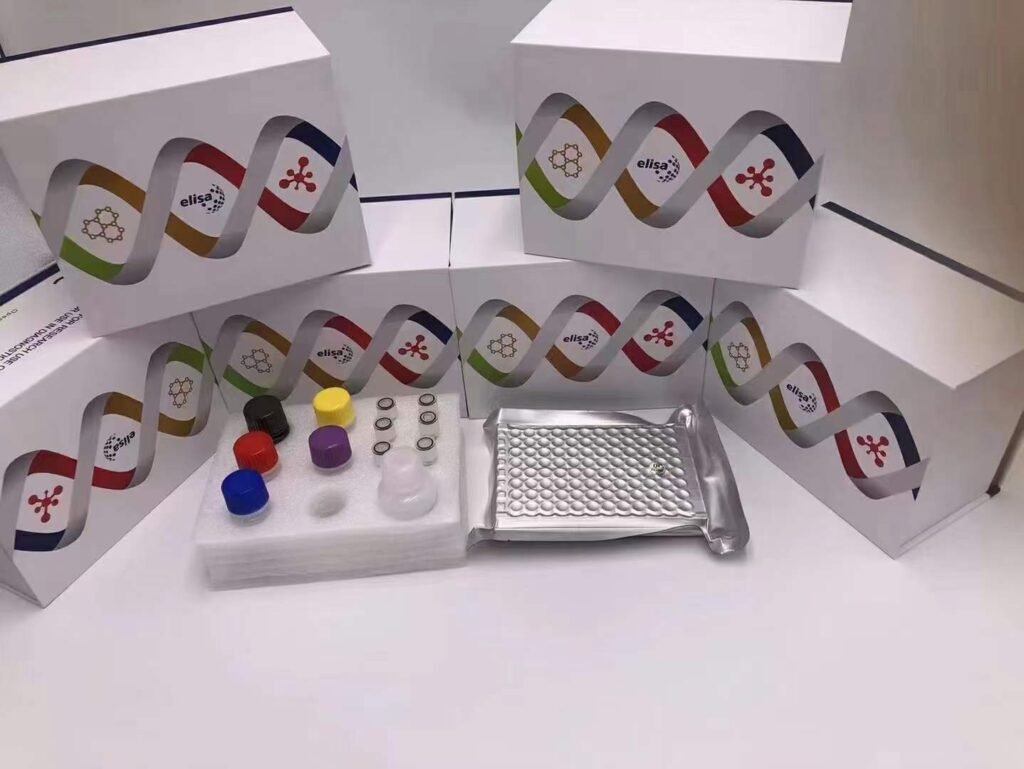
- Simple Operation: Our standardized, ready-to-use protocols make the experimental process faster and more convenient. All components are pre-titrated and color-coded where possible.
- Thoughtful Service: We provide free sample testing (yes, send us your samples and we’ll run them for you as a validation), responsive technical support, and worry-free after-sales service. Need a custom ELISA developed for a novel target? Our R&D team is ready to collaborate.
And because we are a direct [elisa diagnostic kit supplier in China] with in-house production, we eliminate markups. Our wholesale prices make large-scale experiments — whether you’re screening thousands of mouse sera or running a multi-center clinical study — financially feasible without sacrificing data quality.
Partner with a Quality-First ELISA Manufacturer
Whether you’re measuring immunoglobulins to map immune phases, tracking NSE in neurological injury models, or developing a new biomarker assay from scratch, the kit you choose will either amplify your signal or amplify your frustration. By selecting an [ELISA test kit] from a manufacturer that measures — and publishes — its quality metrics, you stack the odds in favor of publishable, reproducible data.
Explore our catalog and see the difference:
- [NSE ELISA kit] – high-sensitivity detection of neuron-specific enolase
- [IgG ELISA kit], [IgA ELISA kit], [IgM ELISA kit] – consistent immunoglobulin quantitation
- [ELISA test kit] – browse our complete range of validated, ready-to-use kits
- [elisa kit manufacturer] – learn more about our quality management systems and OEM/custom development capabilities
Have a question about a specific parameter, or want to discuss a custom ELISA project? Reach out to our team — we’re scientists first, and we’re happy to talk through your experimental design.
Yanda Bio — delivering precision, affordability, and partnership from our labs in China to yours around the world.