
Assay Principle — Competitive ELISA for a Small Glycolytic Intermediate
2,3-DPG (~266 Da) is too small for two antibodies to bind simultaneously. This kit employs a competitive inhibition enzyme immunoassay. A specific anti-2,3-DPG antibody is pre-coated on the microplate. Free 2,3-DPG in the sample competes with an enzyme-labeled 2,3-DPG conjugate for a limited number of antibody binding sites. The resulting OD signal is inversely proportional to the 2,3-DPG concentration — high 2,3-DPG yields low OD.
Note: Standard concentrations (0–2000 nmol/L) refer to in-well values. Multiply the interpolated result by the appropriate dilution factors to obtain the original sample concentration.
Key Features
- Competitive ELISA for 2,3-DPG: Designed to accurately measure this small glycolytic intermediate without interference from 3-PG, 2-PG, or 1,3-BPG.
- Optimized for Rat Erythrocytes: Rat red blood cells are smaller and have denser membranes than human RBCs. The protocol includes extended lysis incubation and an extra wash step to ensure complete hemolysis and removal of leukocyte/platelet contamination.
- Validated PCA Extraction & Neutralization: Perchloric acid precipitation is recommended to inactivate phosphatases. The extract must be neutralized to pH 7.2–7.4 with KOH before ELISA.
- Ultra-High Pre-Dilution Required: Normal rat erythrocyte 2,3-DPG is ~3–5 mmol/L, requiring pre-dilution of 1:2,000 to 1:10,000 to fall within the 10–2000 nmol/L quantitative range.
- Cross-Species Universality: 2,3-DPG is chemically identical across all mammals. Although validated primarily for rat, this kit can be used for mouse, human, rabbit, and other mammalian species.
- Parameter Differences from Human Version: The Rat kit has an upper limit of 2000 nmol/L (vs. 3200 nmol/L for Human) and sensitivity <10 nmol/L (vs. <1.0 nmol/L). These differences reflect independent product optimization for different physiological ranges.
- Ready-to-Use Liquid Standards: Six standards supplied (0, 125, 250, 500, 1000, 2000 nmol/L); no reconstitution required.
- Built-in 5× Sample Dilution: 10 μL sample + 40 μL Sample Diluent in-well; multiply the interpolated value by 5 and the pre-dilution factor.
- Excellent Precision: Intra- and inter-assay CV <15%; standard curve R ≥0.9900.
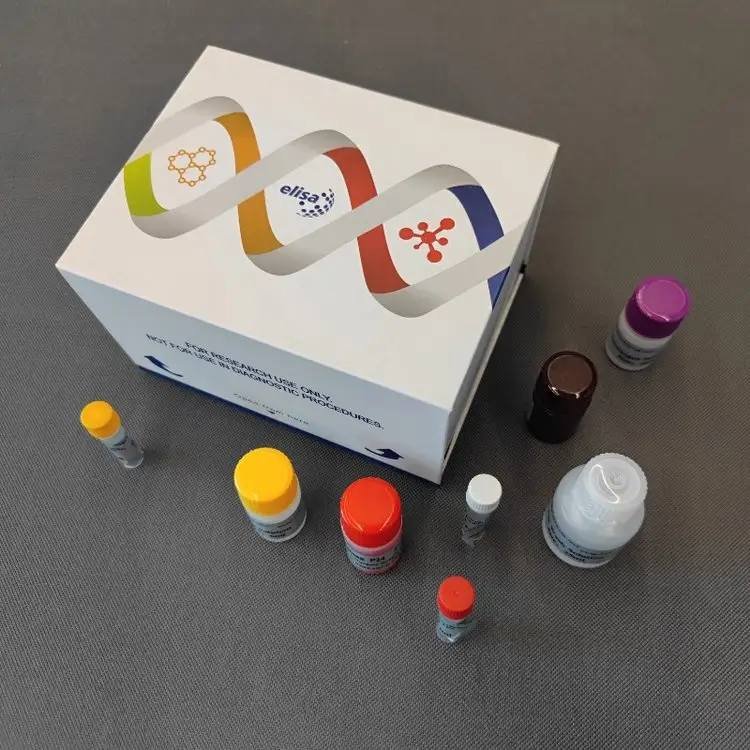
- Export-Ready: Neutral white box (16 × 12.5 × 9.5 cm), cold-chain shipping (2–8°C), 6-month shelf life. MSDS available upon request.
- ELISA Kit with affordable Price:Retail price: Below $90; Wholesale price: Below $90.
Product Description
2,3-Disphosphoglycerate (2,3-DPG) is a glycolytic intermediate uniquely concentrated in erythrocytes, where it binds to deoxyhemoglobin and reduces oxygen affinity, thereby facilitating O₂ delivery to tissues. In rat models, 2,3-DPG is a key biomarker in studies of hypoxia, anemia, high-altitude physiology, exercise performance, and blood storage. Its rapid ex vivo degradation necessitates careful sample handling and extraction.
The Yanda-Rat-2,3-DPG ELISA Kit provides a convenient competitive ELISA format for quantifying 2,3-DPG in erythrocyte lysates from rat and other mammalian species. It is intended exclusively for research use.
Sample Collection & Preparation
Sample Type Recommendation
- Erythrocyte lysate (strongly recommended) — 2,3-DPG is almost exclusively intracellular in red blood cells.
- Serum / Plasma — Not recommended; 2,3-DPG levels are negligible and not representative of total body stores.
- Tissue homogenate — May be used if erythrocytes are thoroughly removed by perfusion prior to tissue collection.
Blood Collection & Erythrocyte Preparation for Rat Samples
- Collect whole blood into ACD, CPD, EDTA, or heparin tubes.
- Centrifuge at 3000 rpm for 10 min at 4°C. Remove plasma and buffy coat carefully.
- Wash packed red blood cells 3 times with ice-cold saline (0.9% NaCl). Centrifuge and discard supernatant each time. Due to the smaller size and denser membranes of rat erythrocytes, ensure complete resuspension during each wash.
Perchloric Acid (PCA) Extraction (Recommended)
- Add an equal volume of ice-cold 1.5 M perchloric acid (PCA) to the washed erythrocyte pellet. Vortex thoroughly.
- Incubate on ice for 20–30 min (slightly longer for rat RBCs to ensure complete lysis). Vortex intermittently.
- Centrifuge at 12,000 × g for 10 min at 4°C. Collect the clear supernatant.
- Neutralize the supernatant with 2 M KOH (or 1 M Tris base) until pH 7.2–7.4. Check with pH paper.
- Centrifuge again to remove precipitated potassium perchlorate. Collect the neutralized supernatant for dilution and ELISA.
Hypo-Osmotic Lysis (Alternative)
If PCA is unavailable, lyse washed erythrocytes with 3 volumes of ice-cold deionized water or 10 mM Tris-HCl (pH 7.4). Incubate on ice for 20–30 min, vortexing periodically. Centrifuge at 12,000 × g for 10 min at 4°C, and use the supernatant. Add phosphatase inhibitors (NaF 10–20 mM) to reduce enzymatic degradation.
Critical Pre-Dilution for Erythrocyte Lysates
Normal rat erythrocyte 2,3-DPG is ~3–5 mmol/L (3,000,000–5,000,000 nmol/L). The standard 5× in-well dilution is entirely insufficient.
- Recommended pre-dilution range: 1:2,000 to 1:10,000 (e.g., 1 μL extract + 1999 μL Sample Diluent for 1:2000).
- Run a pilot gradient to identify the dilution that places the OD in the mid-range of the standard curve.
- Since the kit’s upper limit is 2000 nmol/L, rat samples typically require higher dilutions (1:2000–1:5000) than human samples (1:1000–1:2000) to fall within the detection window.
Sample Storage & Stability
- Process blood samples immediately after collection; 2,3-DPG declines rapidly ex vivo.
- PCA extracts can be stored at -20°C for several weeks.
- Avoid repeated freeze-thaw cycles.
- NaN₃ Prohibition: Sodium azide inhibits HRP. Do not use as a preservative.
Dilution & Calculation
In-Well Dilution
The assay uses a 5-fold dilution in the well: 10 μL sample + 40 μL Sample Diluent. Multiply the interpolated value by 5 to obtain the concentration in the diluted sample.
Pre-Dilution & Final Calculation
Final 2,3-DPG concentration (nmol/L) = In-well interpolated value × 5 (in-well dilution) × pre-dilution factor.
Example: A rat erythrocyte extract pre-diluted 1:3000 gives an interpolated reading of 600 nmol/L. Actual concentration = 600 × 5 × 3000 = 9,000,000 nmol/L = 9 mmol/L.
Data Fitting
Competitive curves are inverse. Use 4-parameter logistic (4PL) or log-logit fitting (e.g., GraphPad Prism, MyCurveFit) for accurate quantification.
Comparison with Human 2,3-DPG Kit
| Parameter | Rat Kit (Yanda-Rat-2,3-DPG) | Human Kit (Yanda-Human-2,3-DPG) |
|---|---|---|
| Standard Range (in-well) | 0–2000 nmol/L | 0–3200 nmol/L |
| Sensitivity | <10.0 nmol/L | <1.0 nmol/L |
| Quantitative Range | 10.0–2000 nmol/L | 1.0–3200 nmol/L |
| Recommended Pre-Dilution | 1:2000–1:10,000 | 1:1000–1:5000 |
Both kits can be used across mammalian species. The parameter differences reflect independent product optimizations, not inherent species limitations. Choose the kit whose detection window best matches your expected sample concentrations.
Technical Specifications
| Parameter | Specification |
|---|---|
| Standard Concentrations (S0–S5) | 0, 125, 250, 500, 1000, 2000 nmol/L (in-well) |
| Quantitative Range | 10.0 – 2000 nmol/L |
| Analytical Sensitivity | < 10.0 nmol/L |
| Accuracy (Linearity) | Standard curve R ≥0.9900 |
| Precision | Intra‑assay CV <15%; Inter‑assay CV <15% |
| Specificity | Highly specific for 2,3-DPG. No significant cross‑reactivity with 3-PG, 2-PG, 1,3-BPG, or other soluble structural analogues. |
| Species Reactivity | All mammals (rat, mouse, human, rabbit, canine, etc.) — 2,3-DPG is chemically identical across species. |
| Sample Dilution Factor | 5× (in-well); additional pre-dilution of 1:2000–1:10,000 required |
| Shelf Life | 6 months |
| Storage & Transport | 2–8°C, protected from light; cold-chain shipping |
Representative Standard Curve
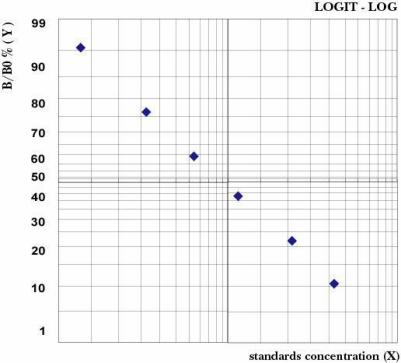
Detailed validation data (spike-recovery, dilution linearity) are available in the product instruction manual.
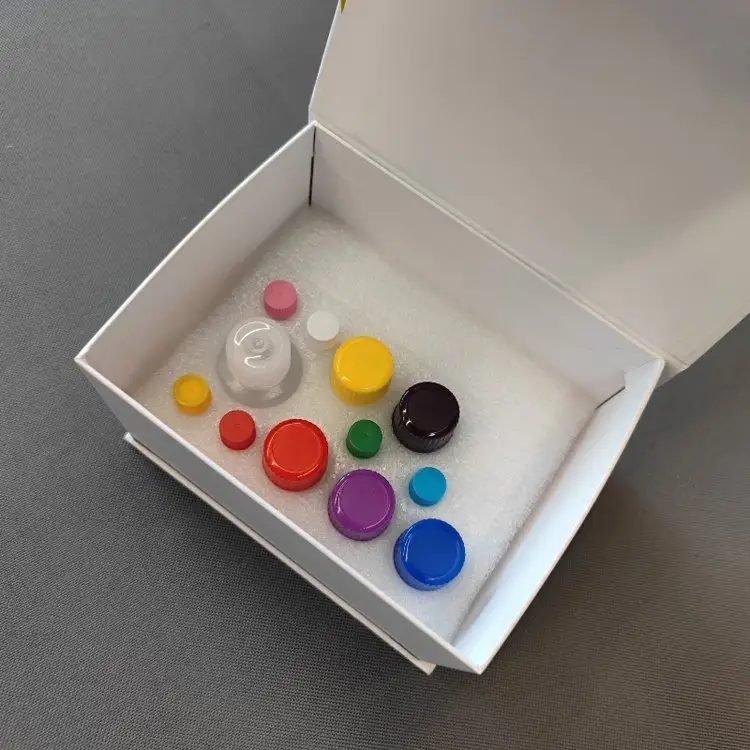
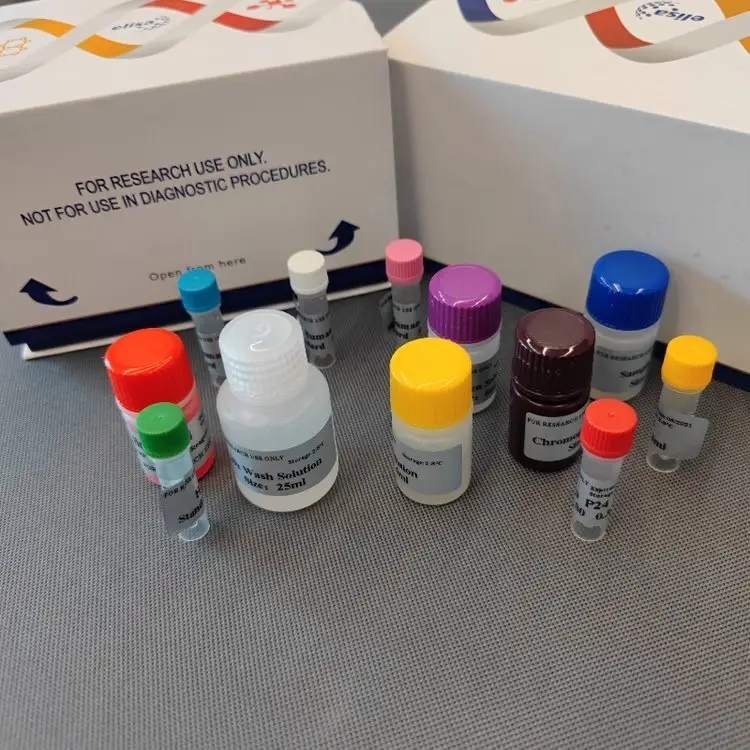
Kit Components
96-Well Format
| Component | Quantity | Notes |
|---|---|---|
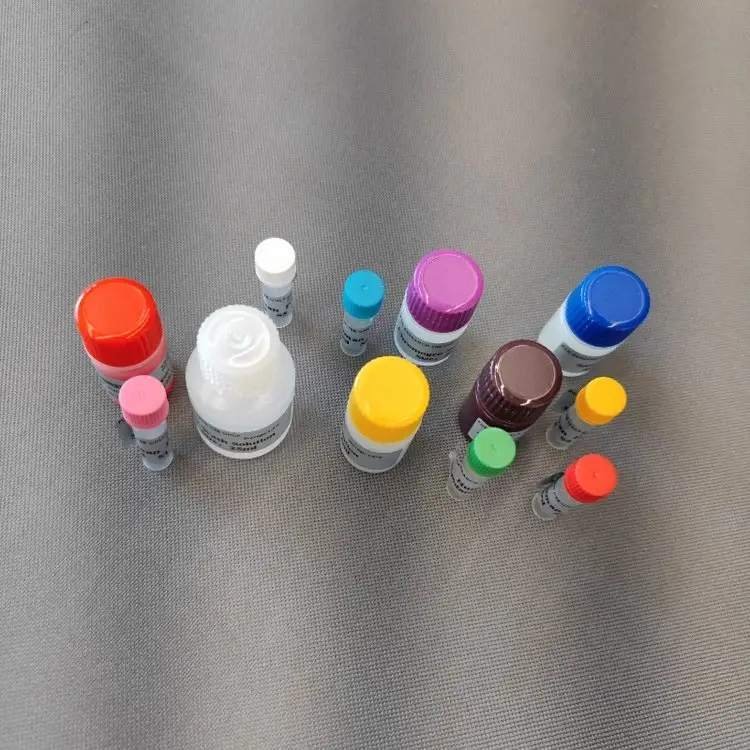
| Microelisa Stripplate | 12 strips × 8 wells | Pre-coated with anti-2,3-DPG antibody |
| Standard (0.3 mL/vial) | 6 vials | Ready-to-use liquid, 0–2000 nmol/L |
| Sample Diluent | 6 mL | – |
| HRP- or Biotin-Conjugated 2,3-DPG | 10 mL | Ready-to-use |
| 20× Wash Buffer | 25 mL | Dilute to 1× before use |
| Substrate A | 6 mL | – |
| Substrate B | 6 mL | – |
| Stop Solution | 6 mL | – |
| Plate Sealers | 2 sheets | – |
| Instruction Manual | 1 copy | – |
| Self-sealing Bag | 1 piece | For storing unused strips |
48-Well Format
| Component | Quantity | Notes |
|---|---|---|
| Microelisa Stripplate | 12 strips × 4 wells | Pre-coated |
| Standard (0.3 mL/vial) | 6 vials | Ready-to-use |
| Sample Diluent | 3 mL | – |
| HRP-/Biotin-2,3-DPG | 5 mL | Ready-to-use |
| 20× Wash Buffer | 15 mL | Dilute to 1× |
| Substrate A | 3 mL | – |
| Substrate B | 3 mL | – |
| Stop Solution | 3 mL | – |
| Plate Sealers | 2 sheets | – |
| Instruction Manual | 1 copy | – |
| Self-sealing Bag | 1 piece | – |
Crystallization of 20× Wash Buffer during cold storage is normal; warm in a water bath until crystals dissolve.
Assay Procedure Summary
- Equilibrate: Warm the foil pouch to room temperature for 20 min. Remove required strips.
- Add Standards & Samples: 50 μL standards; 10 μL sample + 40 μL Sample Diluent. Blank: leave empty.
- Add HRP-/Biotin-Conjugate: 100 μL to all wells except blank. Incubate at 37°C for 60 min.
- Wash: Aspirate, wash with 1× Wash Buffer (soak 1 min), repeat 5 times.
- Substrate: 50 μL each of Substrate A and B, incubate dark at 37°C for 15 min.
- Stop & Read: 50 μL Stop Solution, read at 450 nm within 15 min.
Total hands-on time: ~2 hours (excluding PCA extraction and neutralization).
Materials Required but Not Supplied: Microplate reader (450 nm), pipettes, 37°C incubator, distilled water, perchloric acid (1.5 M), KOH (2 M) or Tris base for neutralization, pH paper, ice, saline for RBC washing, phosphatase inhibitors (optional, for non-PCA lysis).
Throughput
| Format | Max. Samples (Single Wells) |
|---|---|
| 48-well | 39–40 |
| 96-well | 85–88 |
Includes 6 standard wells and 1–2 blank wells. For duplicates, divide sample count accordingly.
Related Products
- Human 2,3-Disphosphoglycerate (2,3-DPG) ELISA Kit (Competitive ELISA) – 2,3-Disphosphoglycerate (2,3-DPG) is a small metabolite (MW ~266 Da) that cannot accommodate two antibodies simultaneously.
- Rat 5-Hydroxytryptamine Receptors 2/3/4 (5-HT2/3/4R) ELISA Kit – Multi-Target Serotonin Receptor Detection
- Rat Adiponectin (ADPN) ELISA Kit – Adiponectin (ADPN) is an adipokine secreted exclusively by adipose tissue. It plays a central role in glucose homeostasis, lipid metabolism, and insulin sensitivity.
- Rat HMG-CoA Reductase (HMGCR) ELISA Kit – For the quantitative measurement of Rat HMG-CoA Reductase (HMGCR) concentration and activity in serum, plasma, tissue homogenates (e.g., liver), and cell lysates.
Frequently Asked Questions
Q: Is this a sandwich or competitive ELISA?
A: Competitive ELISA. 2,3-DPG (~266 Da) is too small for sandwich detection. Signal is inversely proportional to 2,3-DPG concentration.
Q: How is this kit different from the Human 2,3-DPG ELISA Kit?
A: The Rat kit has an upper limit of 2000 nmol/L and sensitivity <10 nmol/L, whereas the Human kit has 3200 nmol/L and <1.0 nmol/L, respectively. Rat samples typically require higher pre-dilution (1:2000–1:5000). Both kits are cross-species applicable.
Q: What sample type should I use?
A: Erythrocyte lysate is strongly recommended. Use PCA extraction and neutralize with KOH to pH 7.2–7.4 before assay.
Q: What pre-dilution is required for rat erythrocyte samples?
A: Normal rat RBC 2,3-DPG is ~3–5 mmol/L. Pre-dilute 1:2000 to 1:10,000 to bring readings within the 10–2000 nmol/L range. Run a pilot gradient experiment.
Q: Can this kit be used for mouse or human samples?
A: Yes. 2,3-DPG is chemically identical across all mammals. This kit is suitable for mouse, human, rabbit, and other mammalian species.
Q: How should I prepare rat erythrocytes differently from human?
A: Rat RBCs are smaller with denser membranes. Extend the hypotonic lysis incubation to 20–30 min and add an extra saline wash to ensure complete removal of leukocytes and platelets.
Q: How stable is 2,3-DPG after blood collection?
A: 2,3-DPG degrades rapidly ex vivo. Process samples immediately or use PCA extraction to stabilize. Avoid prolonged storage of whole blood at 4°C before processing.
Q: Are MSDS and export documents available?
A: Yes. MSDS and Certificate of Composition are provided upon request.
Ordering & Contact
| Item | Details |
|---|---|
| Catalog Number | Yanda-Rat-2,3-DPG |
| Formats | 48-well / 96-well |
| Package Dimensions | 16 cm × 12.5 cm × 9.5 cm (neutral white box) |
| Shipping | Cold-chain (2–8°C), protected from light and moisture |
| Storage | 2–8°C; do not freeze |
| Shelf Life | 6 months |
WhatsApp: +86 198 3186 0669 | Email: songhawyble@gmail.com
Technical Documents & Support
- Instruction Manual – Download or request via email.
- MSDS & Certificate of Composition – Available upon request.
- Technical Support – For PCA extraction, neutralization, dilution strategies, or cross-species applications, contact us via WhatsApp or email.
Disclaimer
For research use only. Not for clinical diagnosis or treatment. Users are responsible for validating assay performance in their own experimental conditions. The manufacturer assumes no liability for improper use or protocol deviations.