
Assay Principle — Competitive ELISA for a Small Glycolytic Intermediate
2,3-Disphosphoglycerate (2,3-DPG) is a small metabolite (MW ~266 Da) that cannot accommodate two antibodies simultaneously. This kit employs a competitive inhibition enzyme immunoassay. A specific anti-2,3-DPG antibody is pre-coated on the microplate. Free 2,3-DPG in the sample competes with a labeled 2,3-DPG conjugate (enzyme- or biotin-labeled) for antibody binding. The resulting OD signal is inversely proportional to the 2,3-DPG concentration — high 2,3-DPG yields low OD.
Important: Standard concentrations (0–3200 nmol/L) refer to in-well values. Multiply the interpolated result by the dilution factor to obtain the original sample concentration.
Key Features
- Competitive ELISA for 2,3-DPG: Overcomes the size limitation that prevents sandwich detection. No significant cross-reactivity with 3-PG, 2-PG, 1,3-BPG, or other glycolytic intermediates.
- Optimized Erythrocyte Sample Protocol: 2,3-DPG is almost exclusively present in red blood cells. A validated perchloric acid (PCA) extraction protocol is provided to inactivate phosphatases and release intracellular 2,3-DPG. Neutralization of the extract before ELISA is mandatory.
- Ultra-High Dilution for Physiological Levels: Normal erythrocyte 2,3-DPG is ~4–5 mmol/L (4,000,000–5,000,000 nmol/L), vastly exceeding the assay range. A pre-dilution of 1:1,000 to 1:5,000 is required; pilot gradient testing is recommended.
- Cross-Species Universality: 2,3-DPG is chemically identical across all mammals. This kit is suitable for human, mouse, rat, rabbit, canine, and other mammalian samples.
- Ready-to-Use Liquid Standards: Six standards supplied (0, 200, 400, 800, 1600, 3200 nmol/L); no reconstitution required.
- Built-in 5× Sample Dilution: 10 μL sample + 40 μL Sample Diluent in-well; multiply the interpolated value by 5 and any additional pre-dilution factor.
- High Sensitivity & Wide Range: Quantitative range 1.0–3200 nmol/L, sensitivity <1.0 nmol/L.
- Excellent Precision: Intra- and inter-assay CV <15%; standard curve R ≥0.9900.
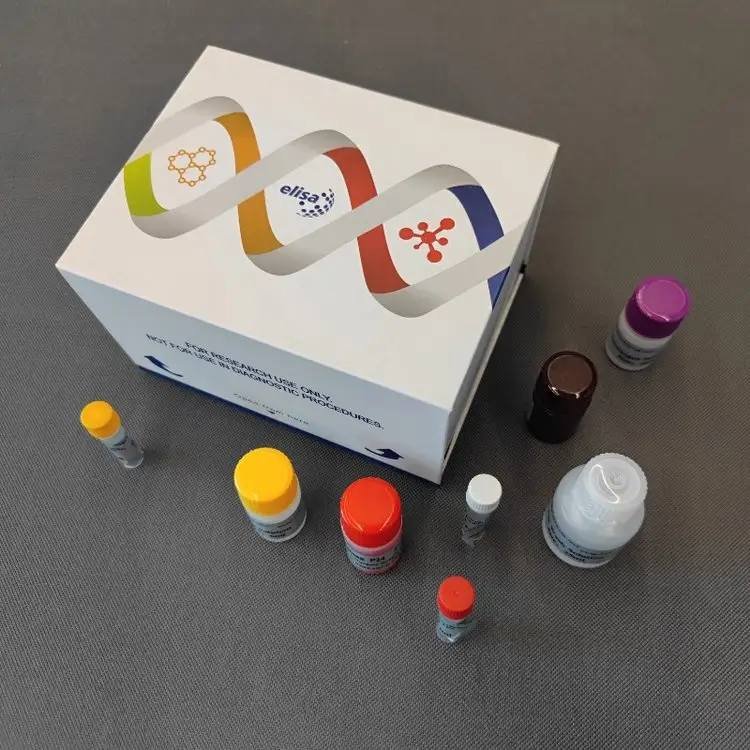
- Export-Ready: Neutral white box (16 × 12.5 × 9.5 cm), cold-chain shipping (2–8°C), 6-month shelf life. MSDS available upon request.
Product Description
2,3-Disphosphoglycerate (2,3-DPG) is a unique glycolytic intermediate in erythrocytes that regulates hemoglobin oxygen affinity. By binding to deoxyhemoglobin, it stabilizes the T-state and facilitates oxygen unloading in peripheral tissues. 2,3-DPG levels increase in hypoxia, anemia, and high-altitude adaptation, and decrease during blood storage, making it a critical biomarker in transfusion medicine, exercise physiology, and respiratory research.
The Yanda-Human-2,3-DPG ELISA Kit provides a convenient competitive ELISA method to quantify 2,3-DPG in erythrocyte lysates without the need for specialized enzymatic cycling assays. It is intended for research use only.
Sample Collection & Preparation
Sample Type Recommendation
- Erythrocyte lysate (strongly recommended) — 2,3-DPG is almost exclusively intracellular in red blood cells.
- Serum / Plasma — Not recommended; 2,3-DPG levels are extremely low and poorly reflective of total body stores.
- Tissue homogenate — May contain 2,3-DPG if red blood cells are present; perfuse tissues thoroughly to remove blood.
Blood Collection & Erythrocyte Preparation
- Collect whole blood into ACD, CPD, EDTA, or heparin tubes.
- Centrifuge at 3000 rpm for 10 min at 4°C. Remove plasma and buffy coat.
- Wash packed red blood cells 2–3 times with ice-cold saline (0.9% NaCl). Centrifuge and discard supernatant each time.
Perchloric Acid (PCA) Extraction (Recommended)
- Add an equal volume of ice-cold 1.5 M perchloric acid (PCA) to the washed erythrocyte pellet. Vortex thoroughly.
- Incubate on ice for 15 min to precipitate proteins and inactivate phosphatases.
- Centrifuge at 12,000 × g for 10 min at 4°C. Collect the clear supernatant.
- Neutralize the supernatant with 2 M KOH (or 1 M Tris base) until pH 7.2–7.4. Check with pH paper.
- Centrifuge again to remove precipitated potassium perchlorate. Collect the neutralized supernatant.
- The neutralized extract is now ready for dilution and ELISA.
Hypo-Osmotic Lysis (Alternative)
If PCA is not available, lyse washed erythrocytes with 3 volumes of ice-cold deionized water or 10 mM Tris-HCl (pH 7.4). Incubate on ice for 15 min, centrifuge at 12,000 × g for 10 min at 4°C, and use the supernatant. Add phosphatase inhibitors (NaF 10 mM) to reduce degradation.
Critical Pre-Dilution for Erythrocyte Lysates
Normal erythrocyte 2,3-DPG is ~4–5 mmol/L (4,000,000–5,000,000 nmol/L). After the standard 5× in-well dilution, the concentration is ~800,000–1,000,000 nmol/L, still >300-fold above the 3200 nmol/L upper limit. High pre-dilution is mandatory.
- Recommended pre-dilution range: 1:1,000 to 1:5,000 (e.g., 1 μL extract + 999 μL Sample Diluent for 1:1000).
- Run a pilot experiment with 1:1000, 1:2000, and 1:5000 to identify the optimal factor that places OD in the mid-range of the standard curve.
Sample Storage & Stability
- Process immediately after blood collection; 2,3-DPG declines rapidly ex vivo at 4°C (half-life ~6–12 hours in stored blood).
- PCA extracts can be stored at -20°C for several weeks.
- Avoid repeated freeze-thaw cycles.
- NaN₃ Prohibition: Sodium azide inhibits HRP. Do not use as a preservative.
Dilution & Calculation
In-Well Dilution
The assay uses a 5-fold dilution in the well: 10 μL sample + 40 μL Sample Diluent. Multiply the interpolated value by 5 to obtain the concentration in the diluted sample.
Pre-Dilution & Final Calculation
Final 2,3-DPG concentration (nmol/L) = In-well interpolated value × 5 (in-well dilution) × pre-dilution factor.
Example: An erythrocyte extract pre-diluted 1:2000 gives an interpolated reading of 800 nmol/L. Actual concentration = 800 × 5 × 2000 = 8,000,000 nmol/L = 8 mmol/L.
Data Fitting
Competitive curves are inverse. Use 4-parameter logistic (4PL) or log-logit fitting (e.g., GraphPad Prism, MyCurveFit) for accurate quantification.
Technical Specifications
| Parameter | Specification |
|---|---|
| Standard Concentrations (S0–S5) | 0, 200, 400, 800, 1600, 3200 nmol/L (in-well) |
| Quantitative Range | 1.0 – 3200 nmol/L |
| Analytical Sensitivity | < 1.0 nmol/L |
| Accuracy (Linearity) | Standard curve R ≥0.9900 |
| Precision | Intra‑assay CV <15%; Inter‑assay CV <15% |
| Specificity | Highly specific for 2,3-DPG. No significant cross‑reactivity with 3-PG, 2-PG, 1,3-BPG, or other soluble structural analogues. |
| Species Reactivity | All mammals (human, mouse, rat, rabbit, canine, etc.) — 2,3-DPG is chemically identical across species. |
| Sample Dilution Factor | 5× (in-well); additional pre-dilution of 1:1000–1:5000 required |
| Shelf Life | 6 months |
| Storage & Transport | 2–8°C, protected from light; cold-chain shipping |
Representative Standard Curve
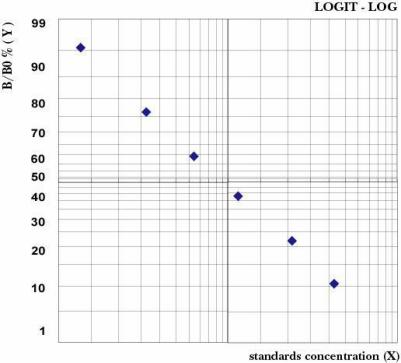
Detailed validation data (spike-recovery, dilution linearity) are available in the product instruction manual.
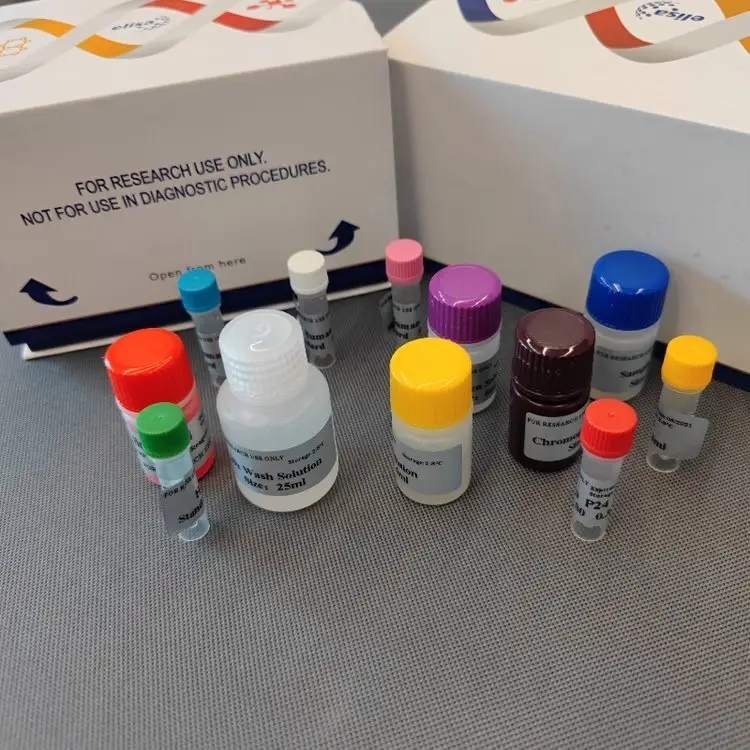
Kit Components
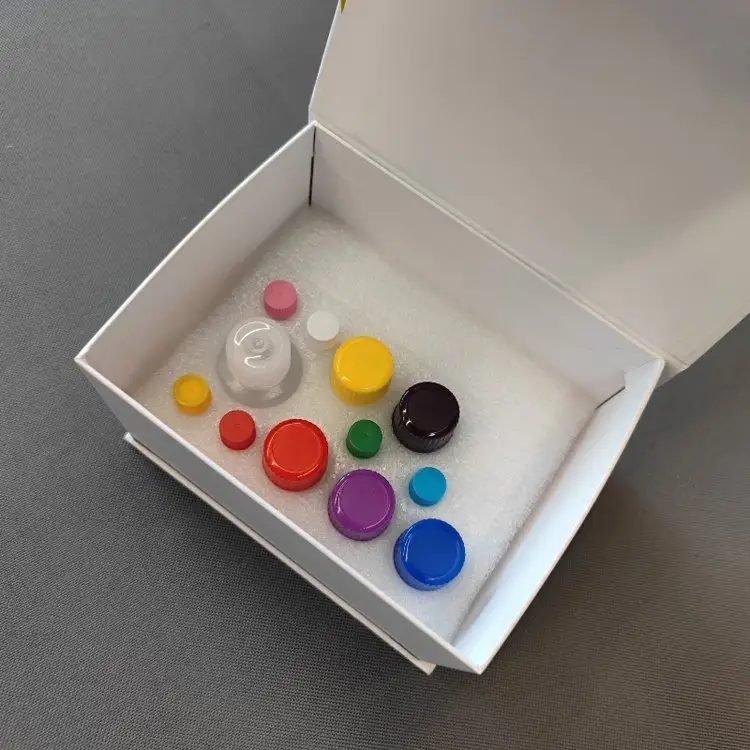
96-Well Format
| Component | Quantity | Notes |
|---|---|---|
| Microelisa Stripplate | 12 strips × 8 wells | Pre-coated with anti-2,3-DPG antibody |
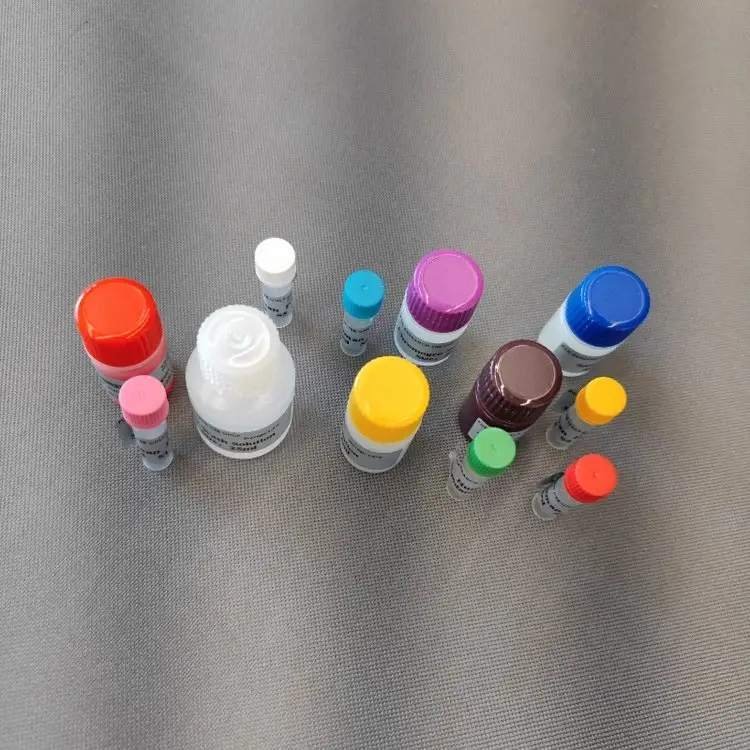
| Standard (0.3 mL/vial) | 6 vials | Ready-to-use liquid, 0–3200 nmol/L |
| Sample Diluent | 6 mL | – |
| HRP- or Biotin-Conjugated 2,3-DPG | 10 mL | Ready-to-use |
| 20× Wash Buffer | 25 mL | Dilute to 1× before use |
| Substrate A | 6 mL | – |
| Substrate B | 6 mL | – |
| Stop Solution | 6 mL | – |
| Plate Sealers | 2 sheets | – |
| Instruction Manual | 1 copy | – |
| Self-sealing Bag | 1 piece | For storing unused strips |
48-Well Format
| Component | Quantity | Notes |
|---|---|---|
| Microelisa Stripplate | 12 strips × 4 wells | Pre-coated |
| Standard (0.3 mL/vial) | 6 vials | Ready-to-use |
| Sample Diluent | 3 mL | – |
| HRP-/Biotin-2,3-DPG | 5 mL | Ready-to-use |
| 20× Wash Buffer | 15 mL | Dilute to 1× |
| Substrate A | 3 mL | – |
| Substrate B | 3 mL | – |
| Stop Solution | 3 mL | – |
| Plate Sealers | 2 sheets | – |
| Instruction Manual | 1 copy | – |
| Self-sealing Bag | 1 piece | – |
Crystallization of 20× Wash Buffer during cold storage is normal; warm in a water bath until crystals dissolve.
Assay Procedure Summary
- Equilibrate: Warm the foil pouch to room temperature for 20 min. Remove required strips.
- Add Standards & Samples: 50 μL standards; 10 μL sample + 40 μL Sample Diluent. Blank: leave empty.
- Add HRP-/Biotin-Conjugate: 100 μL to all wells except blank. Incubate at 37°C for 60 min.
- Wash: Aspirate, wash with 1× Wash Buffer (soak 1 min), repeat 5 times.
- Substrate: 50 μL each of Substrate A and B, incubate dark at 37°C for 15 min.
- Stop & Read: 50 μL Stop Solution, read at 450 nm within 15 min.
Total hands-on time: ~2 hours (excluding PCA extraction and neutralization).
Materials Required but Not Supplied: Microplate reader (450 nm), pipettes, 37°C incubator, distilled water, perchloric acid (1.5 M), KOH (2 M) or Tris base for neutralization, pH paper, ice, saline for RBC washing.
Throughput
| Format | Max. Samples (Single Wells) |
|---|---|
| 48-well | 39–40 |
| 96-well | 85–88 |
Includes 6 standard wells and 1–2 blank wells. For duplicates, divide sample count accordingly.
Related Products
- Human 1,5-Anhydroglucitol (1,5-AG) ELISA Kit-The Human 1,5-Anhydroglucitol (1,5-AG) ELISA Kit provides a sensitive quantitative measurement of 1,5-AG, a naturally occurring dietary polyol that serves as a validated short‑term glycemic marker.
- Human Hydroxymethylbilane Synthase (HMBS) ELISA Test Kit – This kit measures enzyme activity of human hydroxymethylbilane synthase (HMBS), also known as porphobilinogen deaminase (PBGD).
- 1-3-β-D-glucan QuickDetect (Human) ELISA Kit – For Invasive Fungal Biomarker Detection.
- Human Complement Fragment 3a (C3a) ELISA Kit – High‑Sensitivity Sandwich Assay for Anaphylatoxin Quantification
Ordering, Support & Partnership Opportunities
Pricing & Purchase Options
- Retail Purchase: $120 per kit. Ideal for individual researchers and pilot studies.
- Bulk/Wholesale Purchase: Contact for a quote below $100 per kit. Tailored for core facilities, large labs, and long-term projects.
- Custom Kit Development: Our expert team can modify the assay range, sensitivity, or compatibility for your unique application.
- Free Sample Testing Service: Validate the kit’s performance with your specific samples at no cost.
Our Commitment to Research
As a factory-direct manufacturer with proprietary laboratories, Yanda Bio controls every production step, ensuring quality and affordability. Our long-standing partnerships with over 70 academic institutions attest to the reliability and performance of our assays.We offer custom ELISA kits services .
You may also need to use the Human Apolipoprotein E (ApoE) ELISA Kit to assess the impact of apolipoproteins on the hemorheology and oxygen-carrying capacity of the blood in metabolic syndrome or cardiovascular diseases.Elevate your research on erythrocyte metabolism and oxygen transport. Contact us today to purchase, request a bulk quote, or initiate your free testing service.
Frequently Asked Questions
Q: Is this a sandwich or competitive ELISA?
A: Competitive ELISA. 2,3-DPG (~266 Da) is too small for two antibodies to bind simultaneously. Free 2,3-DPG competes with labeled 2,3-DPG for antibody binding; signal is inversely proportional to concentration.
Q: What sample type is recommended?
A: Erythrocyte (red blood cell) lysate is strongly recommended. 2,3-DPG is almost exclusively intracellular in RBCs. Serum or plasma levels are extremely low and not representative.
Q: How should I extract 2,3-DPG from erythrocytes?
A: Use perchloric acid (PCA) precipitation: add 1.5 M PCA to washed RBCs, incubate on ice, centrifuge, and neutralize the supernatant with KOH to pH 7.2–7.4 before ELISA.
Q: What pre-dilution is required for erythrocyte samples?
A: Normal RBC 2,3-DPG is ~4–5 mmol/L (4,000,000–5,000,000 nmol/L). A pre-dilution of 1:1,000 to 1:5,000 is necessary to bring readings within the 1–3200 nmol/L range.
Q: Does this kit cross-react with 3-PG or 2-PG?
A: No significant cross-reactivity with 3-PG, 2-PG, 1,3-BPG, or other glycolytic intermediates has been observed.
Q: Can I use this kit for animal samples?
A: Yes. 2,3-DPG is chemically identical across all mammals. This kit is suitable for mouse, rat, rabbit, canine, and other mammalian species.
Q: How stable is 2,3-DPG in blood samples?
A: 2,3-DPG declines rapidly ex vivo (half-life ~6–12 hours in stored blood at 4°C). Process samples immediately or use PCA extraction to stabilize.
Q: Are MSDS and export documents available?
A: Yes. MSDS and Certificate of Composition are provided upon request.
Ordering & Contact
| Item | Details |
|---|---|
| Catalog Number | Yanda-Human-2,3-DPG |
| Formats | 48-well / 96-well |
| Package Dimensions | 16 cm × 12.5 cm × 9.5 cm (neutral white box) |
| Shipping | Cold-chain (2–8°C), protected from light and moisture |
| Storage | 2–8°C; do not freeze |
| Shelf Life | 6 months |
WhatsApp: +86 198 3186 0669 | Email: songhawyble@gmail.com
Technical Documents & Support
- Instruction Manual – Download or request via email.
- MSDS & Certificate of Composition – Available upon request.
- Technical Support – For PCA extraction, neutralization protocols, or dilution strategies, contact us via WhatsApp or email.
Disclaimer
For research use only. Not for clinical diagnosis or treatment. Users are responsible for validating assay performance in their own experimental conditions. The manufacturer assumes no liability for improper use or protocol deviations.