
-ELISA-Kit-768x578.jpg)
Key Features
- Directly Measures MNA, a Reliable Indicator of NNMT Activity: MNA is the immediate catalytic product of nicotinamide N-methyltransferase (NNMT). Clinically validated as a serum biomarker for NNMT activity in obesity, diabetes, coronary artery disease, and pulmonary hypertension.
- High Specificity for MNA: No significant cross-reactivity with nicotinamide (NAM), nicotinamide mononucleotide (NMN), NAD+, or downstream metabolites 2-pyridone (2-Py) and N-methyl-2-pyridone-5-carboxamide (4-Py).
- Optimized Range for Physiological Levels: Quantitative range 1.0–80 ng/mL covers normal human plasma levels (mean ~18 ng/mL, reported range 6.2–116.7 ng/mL). Most healthy samples can be tested directly without pre-dilution or concentration.
- Built-in 5× Sample Dilution: 10 µL sample + 40 µL Sample Diluent in-well; multiply the interpolated result by 5.
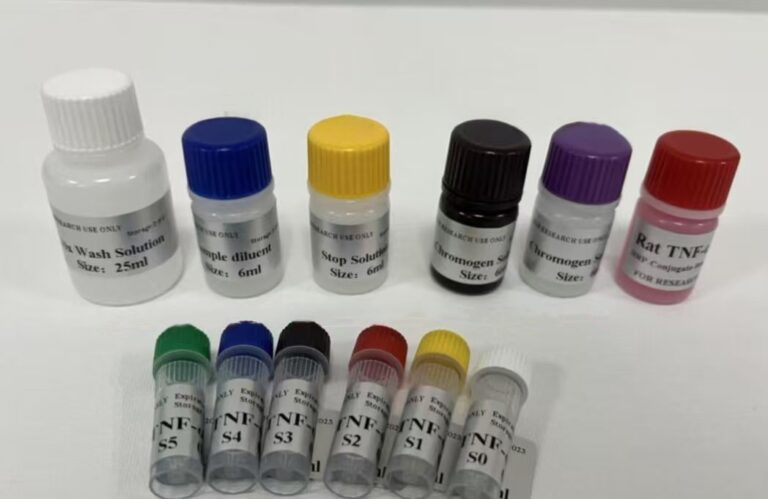
- Ready-to-Use Liquid Standards: Six calibrated standards (0, 5, 10, 20, 40, 80 ng/mL) produced in a eukaryotic expression system.
- Validated Sample Types: Human serum, EDTA/citrate/heparin plasma, cell culture supernatant, and tissue homogenates (liver strongly recommended for high MNA abundance).
- Simple Sample Preparation: MNA is water-soluble; no organic solvent extraction required. Standard PBS homogenization with protease inhibitors is sufficient for tissues.
- One-Step Sandwich ELISA: Simultaneous incubation of sample and HRP-detection antibody; total assay time ~2 hours.
- Reliable Precision: Intra- and inter-assay CV <15%; standard curve linearity R ≥0.9900.
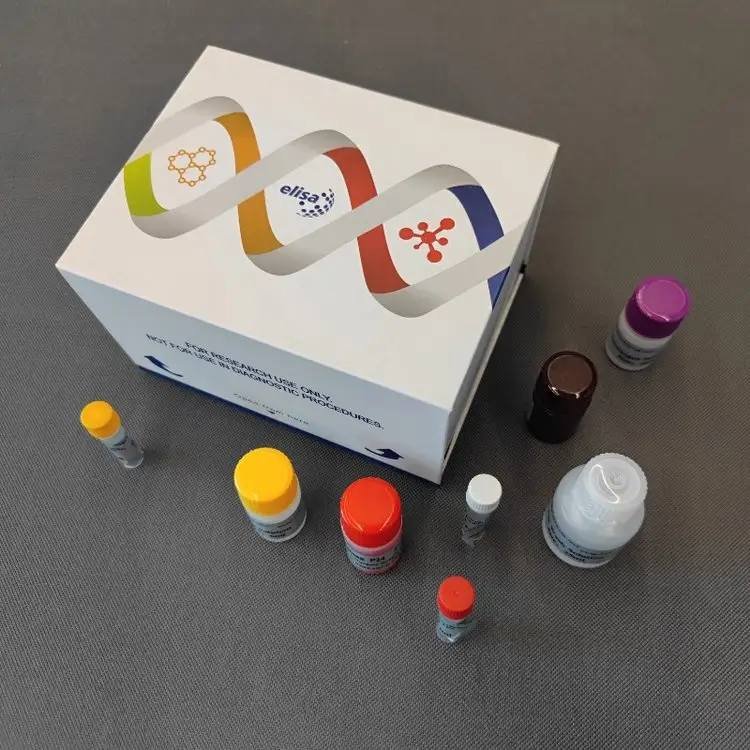
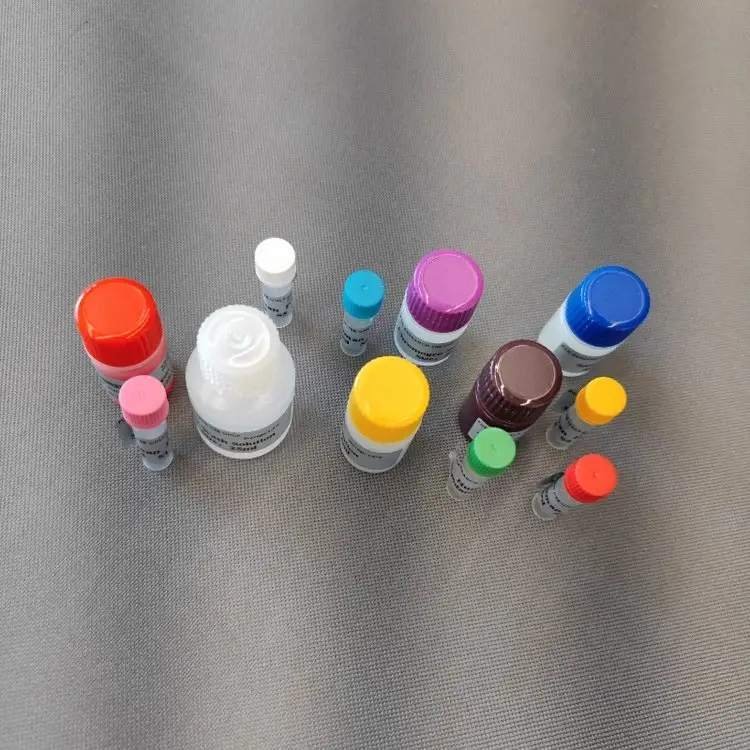
- Export-Ready: Neutral white box (16 × 12.5 × 9.5 cm), cold-chain shipping (2–8°C), 6-month shelf life. MSDS available upon request.
Product Description
1-Methylnicotinamide (MNA) is the primary metabolic product of nicotinamide N-methyltransferase (NNMT), an enzyme that catalyzes the transfer of a methyl group from S-adenosylmethionine (SAM) to nicotinamide. NNMT is overexpressed in multiple cancers and metabolic diseases, where it depletes methyl donors and alters epigenetic landscapes. Consequently, circulating and tissue MNA concentrations are widely used as a direct readout of NNMT activity in human studies of energy metabolism, insulin resistance, cardiovascular disease, and cancer cachexia.
The Yanda-Human-MNA ELISA Kit employs a one-step double-antibody sandwich ELISA. A capture antibody specific for MNA is pre-coated on the microplate. Samples and standards are co-incubated with an HRP-labeled detection antibody. After washing, TMB substrate produces a colorimetric signal proportional to the MNA concentration, measured at 450 nm.
Important: This Human ELISA kit is validated exclusively for human samples. For mouse or rat MNA, please inquire about species-specific options.
Sample Collection & Preparation
Liquid Samples
| Sample Type | Preparation |
|---|---|
| Serum | Collect in pyrogen/endotoxin-free tubes. Allow to clot, centrifuge at 3000 rpm for 10 min. Separate promptly. |
| Plasma | Use EDTA, citrate, or heparin. Centrifuge at 3000 rpm for 30 min; collect supernatant. |
| Cell Culture Supernatant | Centrifuge at 3000 rpm for 10 min to remove debris. |
Tissue Homogenates
MNA is a water-soluble metabolite; standard aqueous homogenization is sufficient. Organic solvent extraction is not required.
- Recommended Buffer: Ice-cold PBS (0.01 M, pH 7.4) with fresh protease inhibitors.
- Homogenization: Mince tissue, add PBS at 1:9 (w/v), homogenize on ice.
- Centrifugation: 5000 × g for 5–10 min at 4°C. Collect the clear supernatant.(Avoid using hemolyzed samples)
- Liver Tissue Note: Liver expresses high NNMT levels and contains abundant MNA. We strongly recommend performing a pilot experiment with gradient dilutions (e.g., 1:5, 1:10, 1:20) to ensure readings fall within the 1.0–80 ng/mL range.
Sample Storage
- Avoid repeated freeze-thaw cycles: Aliquot and store at -20°C or -80°C for long-term storage.
- NaN₃ Prohibition: Sodium azide inhibits HRP and must not be present in samples.
Critical Dilution Factor & Normal Level Guidance
The assay applies a 5-fold dilution in the well (10 µL sample + 40 µL Sample Diluent). Multiply the interpolated result by 5 to obtain the actual sample concentration.
Normal Human Plasma MNA Levels:
Reported mean MNA concentration in healthy individuals is approximately 18 ng/mL, with a range of 6.2–116.7 ng/mL. Most values fall within the kit’s direct detection window (1.0–80 ng/mL after 5× dilution). For routine healthy samples, no pre-dilution is typically needed.
Pathological Samples: In conditions such as cardiovascular disease or certain cancers, MNA may exceed 80 ng/mL. Perform a pilot dilution experiment to determine the appropriate additional dilution factor.
Technical Specifications
| Parameter | Specification |
|---|---|
| Standard Concentrations (S0–S5) | 0, 5, 10, 20, 40, 80 ng/mL |
| Quantitative Range | 1.0 – 80 ng/mL |
| Analytical Sensitivity | < 1.0 ng/mL |
| Accuracy (Linearity) | Standard curve R ≥ 0.9900 |
| Precision | Intra-assay CV < 15%; Inter-assay CV < 15% |
| Specificity | Highly specific for human 1-methylnicotinamide (MNA). No significant cross-reactivity with NAM, NMN, NAD+, 2-Py, or 4-Py. |
| Species Restriction | Validated for human samples only. |
| Sample Dilution Factor | 5× (in-well); additional pre-dilution required for high pathological samples |
| Shelf Life | 6 months |
| Storage & Transport | 2–8°C, protected from light and moisture; cold-chain shipping |
Representative Standard Curve
-ELISA-Kit-standard-curve.png)
For detailed validation data, refer to the product instruction manual or contact technical support.
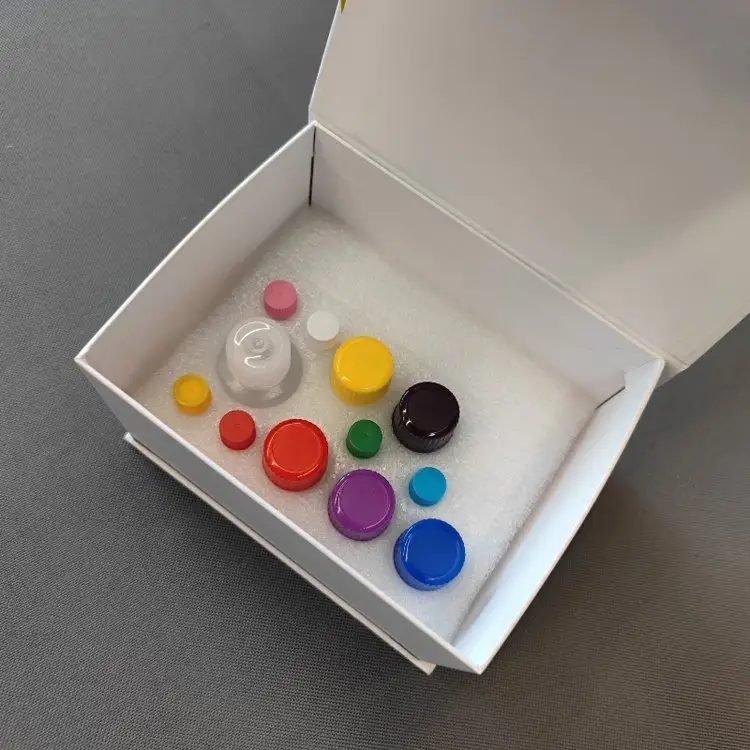
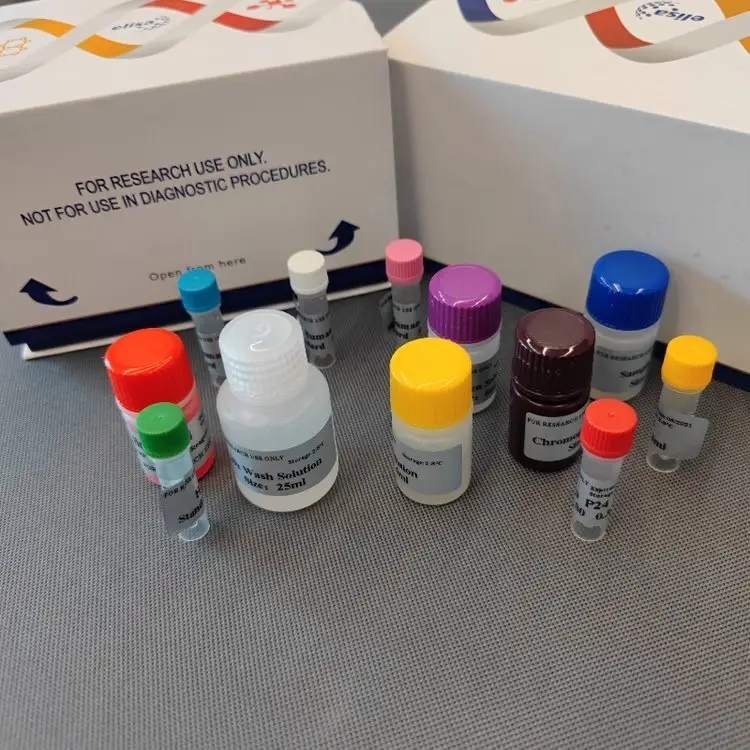
Kit Components
96-Well Format
| Component | Quantity | Notes |
|---|---|---|
| Microelisa Stripplate | 12 strips × 8 wells | Pre-coated with anti-MNA antibody |
| Standard (0.3 mL/vial) | 6 vials | Ready-to-use liquid, 0–80 ng/mL |
| Sample Diluent | 6 mL | – |
| HRP-Conjugated Detection Antibody | 10 mL | Ready-to-use |
| 20× Wash Buffer | 25 mL | Dilute to 1× before use |
| Substrate A | 6 mL | – |
| Substrate B | 6 mL | – |
| Stop Solution | 6 mL | – |
| Plate Sealers | 2 sheets | – |
| Instruction Manual | 1 copy | – |
| Self-sealing Bag | 1 piece | For unused strip storage |
48-Well Format
| Component | Quantity | Notes |
|---|---|---|
| Microelisa Stripplate | 12 strips × 4 wells | Pre-coated |
| Standard (0.3 mL/vial) | 6 vials | Ready-to-use liquid |
| Sample Diluent | 3 mL | – |
| HRP-Conjugated Detection Antibody | 5 mL | Ready-to-use |
| 20× Wash Buffer | 15 mL | Dilute to 1× |
| Substrate A | 3 mL | – |
| Substrate B | 3 mL | – |
| Stop Solution | 3 mL | – |
| Plate Sealers | 2 sheets | – |
| Instruction Manual | 1 copy | – |
| Self-sealing Bag | 1 piece | – |
Crystallization of 20× Wash Buffer upon cold storage is normal; warm in a water bath until crystals dissolve before dilution.
Assay Procedure Summary
- Equilibrate: Warm the foil pouch to room temperature for 20 min. Remove required strips.
- Add Standards & Samples: 50 µL standards; 10 µL sample + 40 µL Sample Diluent.
- Add HRP-Antibody: 100 µL to all wells except blank. Incubate at 37°C for 60 min.
- Wash: Aspirate, wash with 1× Wash Buffer, soak 1 min, repeat 5 times.
- Substrate: 50 µL each of Substrate A and B, incubate in dark at 37°C for 15 min.
- Stop & Read: 50 µL Stop Solution, read at 450 nm within 15 min.
Total hands-on time: ~2 hours.
Throughput
| Format | Max. Samples (Single Wells) |
|---|---|
| 48-well | 39–40 |
| 96-well | 85–88 |
Related Products
- Human Adiponectin (ADPN) ELISA Kit—High‑Sensitivity Sandwich Assay.
- Human Complement Fragment 3a (C3a) ELISA Kit – High‑Sensitivity Sandwich Assay for Anaphylatoxin Quantification.
- Human Interferon gamma receptor 1 ELISA Kit – For the precise quantitative measurement of soluble Interferon-gamma Receptor 1 in human serum, plasma, cell culture supernatants, and other biological fluids.
- Human Hydroxymethylbilane Synthase (HMBS) ELISA Kit
Frequently Asked Questions
Q: Does MNA reliably reflect NNMT activity?
A: Yes. MNA is the direct catalytic product of NNMT, and multiple clinical studies define serum/plasma MNA as an indicator of NNMT activity. It has been used to evaluate NNMT pathway dysregulation in obesity, diabetes, coronary artery disease, and pulmonary hypertension.
Q: Does this kit cross-react with NAM, NMN, or NAD+?
A: No. The kit is highly specific for MNA and shows no significant cross-reactivity with NAM, NMN, NAD+, or MNA metabolites 2-Py and 4-Py.
Q: Can I measure MNA directly in normal human serum?
A: Yes. Normal plasma MNA averages ~18 ng/mL and typically falls within the kit’s detection range. Pre-dilution is usually unnecessary for healthy samples.
Q: What if my sample is from a disease model with elevated MNA?
A: In pathological conditions, MNA may exceed the 80 ng/mL upper limit. Run a pilot dilution experiment (e.g., 1:2, 1:4, 1:8) to determine the appropriate additional dilution factor.
Q: How should I prepare tissue homogenates?
A: Use standard PBS homogenization with protease inhibitors. No organic solvent extraction is required. For liver tissue, perform pilot dilutions (1:5, 1:10, 1:20) due to high NNMT activity.
Q: Do I need special storage conditions for MNA samples?
A: MNA is relatively stable. No acidification or antioxidants are needed. Simply aliquot and freeze at -20°C or -80°C, and avoid repeated freeze-thaw cycles.
Q: Can I use this kit for mouse or rat MNA?
A: No. The kit is strictly validated for human samples. Species-specific MNA kits may be available upon request.
Ordering & Contact
| Item | Details |
|---|---|
| Catalog Number | Yanda-Human-MNA |
| Formats | 48-well / 96-well |
| Package Dimensions | 16 cm × 12.5 cm × 9.5 cm (neutral white box) |
| Shipping | Cold-chain (2–8°C), protected from light and moisture |
| Storage | 2–8°C; do not freeze |
| Shelf Life | 6 months |
WhatsApp: +86 198 3186 0669 | Email: songhawyble@gmail.com
Technical Documents & Support
- Instruction Manual – Download or request via email.
- MSDS & Certificate of Composition – Available upon request.
- Technical Support – For dilution optimization, NNMT activity questions, or validation data, contact us via WhatsApp or email.
Disclaimer
For research use only. Not for clinical diagnosis or treatment. Users are responsible for validating assay performance in their own experimental conditions. The manufacturer assumes no liability for improper use or protocol deviations.