
Important: Competitive ELISA Design for a Small Molecule
Taurine (2-aminoethanesulfonic acid) has a molecular weight of only 125 Da — far too small for a traditional sandwich ELISA. This kit employs a competitive inhibition enzyme immunoassay. The microplate is pre-coated with an anti-taurine antibody. In the reaction, free taurine in the sample competes with an enzyme-labeled taurine conjugate for binding to the solid-phase antibody. The resulting color intensity is inversely proportional to the taurine concentration in the sample: higher taurine levels produce lower OD values.
Key Features
- Detects Taurine Directly via Competitive ELISA: Enables measurement of this small-molecule amino acid without derivatization or organic extraction.
- Outstanding Specificity and low price: No significant cross-reactivity with hypotaurine, β-alanine, L-cysteine, methionine, or other structurally related sulfur-containing amino acids.The wholesale price of this ELISA kit is no more than 85 dollars.
- Cross-Species Universality: Taurine is chemically identical across all mammals. This kit can be used for human, mouse, rat, and other mammalian samples without species restriction.
- Optimized Pre-Dilution Protocol for Serum/Plasma: Normal circulating taurine levels (6–25 μg/mL) far exceed the assay range. A pre-dilution of 1:50 to 1:100 is required; deproteinization via ultrafiltration (10K MWCO) is recommended to reduce matrix interference.
- High-Abundance Tissue Guidance: Skeletal muscle, heart, and brain store large amounts of taurine. Tissue homogenates typically require 1:500 to 1:1,000 pre-dilution after deproteinization.
- Ready-to-Use Liquid Standards: Six concentrations (0, 50, 100, 200, 400, 800 ng/mL) supplied in liquid form.
- Reproducible Performance: Intra- and inter-assay CV <15%; standard curve R ≥0.9900.
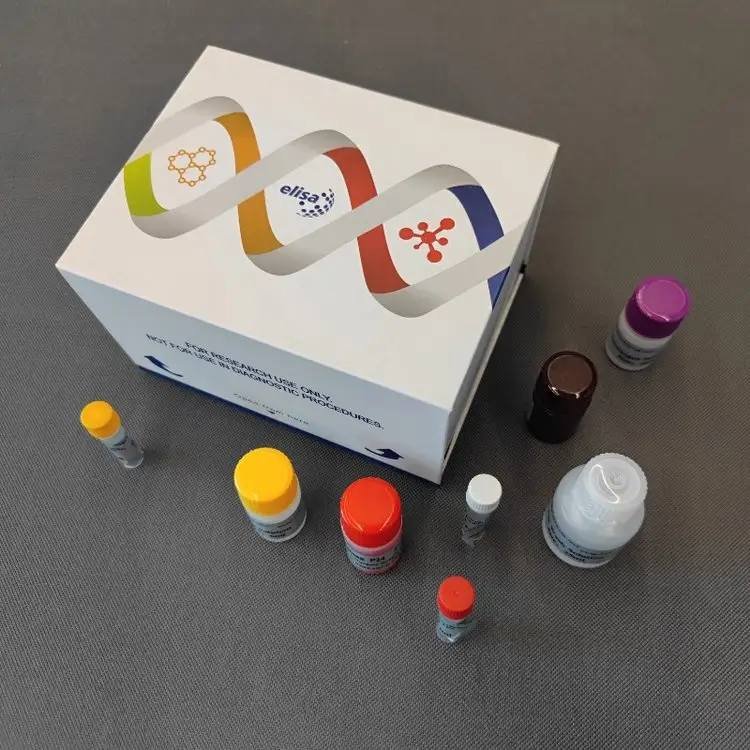
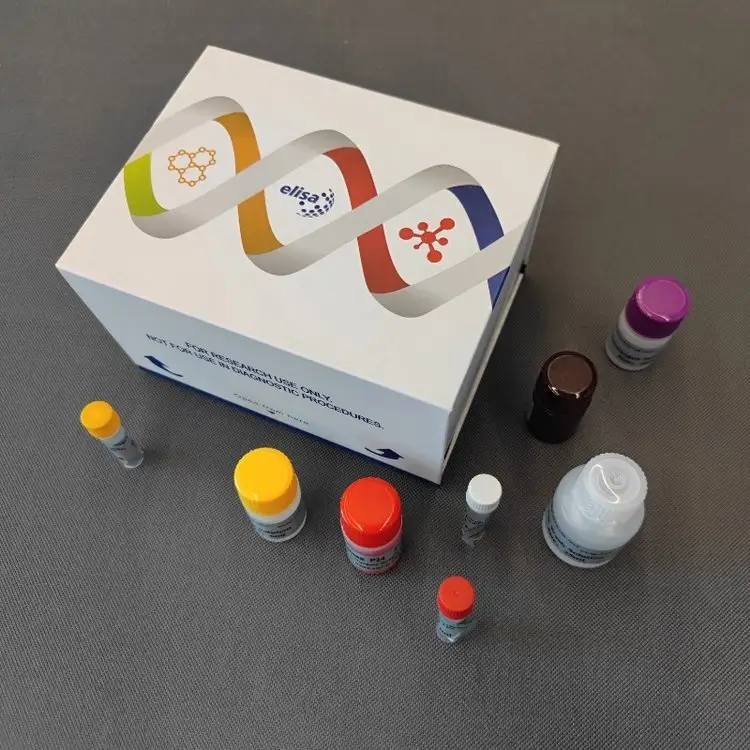
- Export-Ready: Neutral white box (16 × 12.5 × 9.5 cm), cold-chain shipping (2–8°C), 6-month shelf life. MSDS available upon request.
Product Description
Taurine is a sulfur-containing β-amino acid that is the most abundant free amino acid in human tissues, particularly in skeletal muscle, heart, brain, and retina. It plays essential roles in osmoregulation, bile acid conjugation, calcium handling, antioxidant defense, and neuromodulation. Clinically, taurine has been implicated in cardiovascular health, diabetes, exercise performance, and neuroprotection. Accurate measurement of taurine in biological fluids and tissues is critical for metabolism, nutrition, and disease research.
The Yanda-Human-Taurine ELISA Kit uses a competitive enzyme immunoassay format. An anti-taurine antibody is pre-coated on the microplate. Samples and standards are incubated with an HRP-labeled taurine conjugate, followed by washing and TMB substrate addition. The OD at 450 nm is inversely related to the taurine concentration in the original sample.
Sample Collection & Preparation
General Sample Types
- Serum: Collect without anticoagulant, centrifuge at 3000 rpm for 10 min.
- Plasma: EDTA, citrate, or heparin; centrifuge at 3000 rpm for 30 min.
- Cell Culture Supernatant: Centrifuge at 3000 rpm for 10 min.
- Tissue Homogenate: Homogenize tissue in PBS (1:9 w/v) with protease inhibitors on ice. Centrifuge at 5000 × g for 10 min at 4°C. Collect supernatant.
Deproteinization Recommended
Serum, plasma, and tissue extracts contain proteins that may interfere with the competitive reaction. Ultrafiltration through a 10K MWCO centrifugal filter (10,000 × g, 10 min) or high-speed centrifugation (10,000 × g, 15 min) is strongly advised. Use the filtrate or clear supernatant for subsequent dilution and assay.
Critical Pre-Dilution for Serum/Plasma
Normal taurine levels are 6–25 μg/mL (6,000–25,000 ng/mL), vastly exceeding the kit’s 800 ng/mL upper limit.
- Recommended pre-dilution: 1:50 to 1:100 (e.g., 2 μL serum + 98 μL Sample Diluent for 1:50).
- Tissue homogenates: Because muscle, heart, and brain contain even higher taurine levels, start with a 1:500 to 1:1,000 dilution after homogenization and deproteinization.
- Pilot experiment: Test a dilution series to identify the factor that places OD values in the mid-range of the standard curve (approximately 50–400 ng/mL after dilution).
Storage
Aliquot and freeze at -20°C or -80°C. Avoid repeated freeze-thaw cycles. Do not use NaN₃, as it inhibits HRP.
Dilution & Calculation
- Assay procedure: Mix 10 μL of pre-diluted, deproteinized sample with 40 μL of Sample Diluent in the well (total 5-fold in-well dilution).
- Standard curve: Constructed using the same buffer conditions. The interpolated concentration corresponds to the diluted sample in the well.
- Final concentration (ng/mL) = Interpolated value × 5 × additional pre-dilution factor.
Example: A serum sample pre-diluted 1:100 gives an interpolated reading of 120 ng/mL. Actual taurine = 120 × 5 × 100 = 60,000 ng/mL = 60 μg/mL.
Note: The competitive curve is inverse; use log-logit or 4-parameter logistic (4PL) fitting for accurate calculation.
Technical Specifications
| Parameter | Specification |
|---|---|
| Standard Concentrations (S0–S5) | 0, 50, 100, 200, 400, 800 ng/mL |
| Quantitative Range | 5.0 – 800 ng/mL |
| Analytical Sensitivity | < 5.0 ng/mL |
| Accuracy (Linearity) | Standard curve R ≥0.9900 |
| Precision | Intra-assay CV <15%; Inter-assay CV <15% |
| Specificity | Highly specific for taurine. No significant cross-reactivity with hypotaurine, β-alanine, L-cysteine, methionine, or other soluble structural analogues. |
| Species Reactivity | All mammals. Taurine is chemically identical across species. |
| Sample Dilution Factor | 5× (in-well); additional pre-dilution required |
| Shelf Life | 6 months |
| Storage & Transport | 2–8°C, protected from light; cold-chain shipping |
Representative Standard Curve
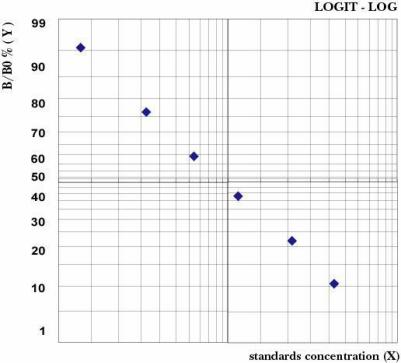
Detailed validation data are available in the product instruction manual.
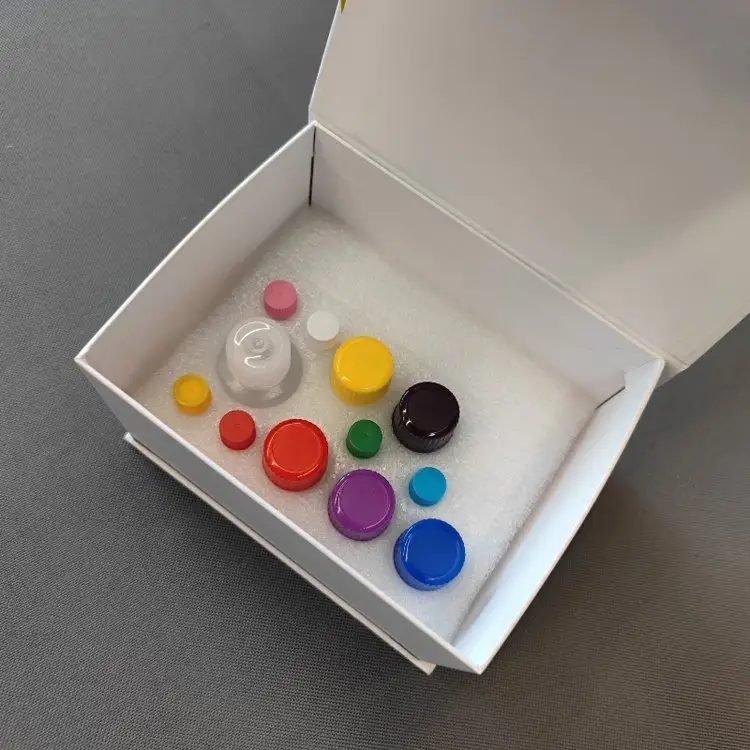
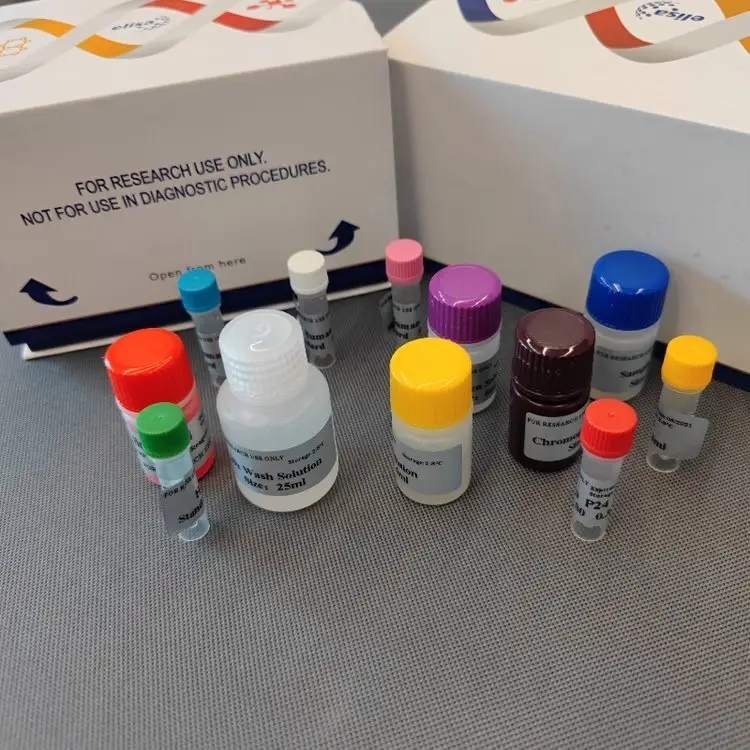
Kit Components
96-Well Format
| Component | Quantity | Notes |
|---|---|---|
| Microelisa Stripplate | 12 strips × 8 wells | Pre-coated with anti-taurine antibody |
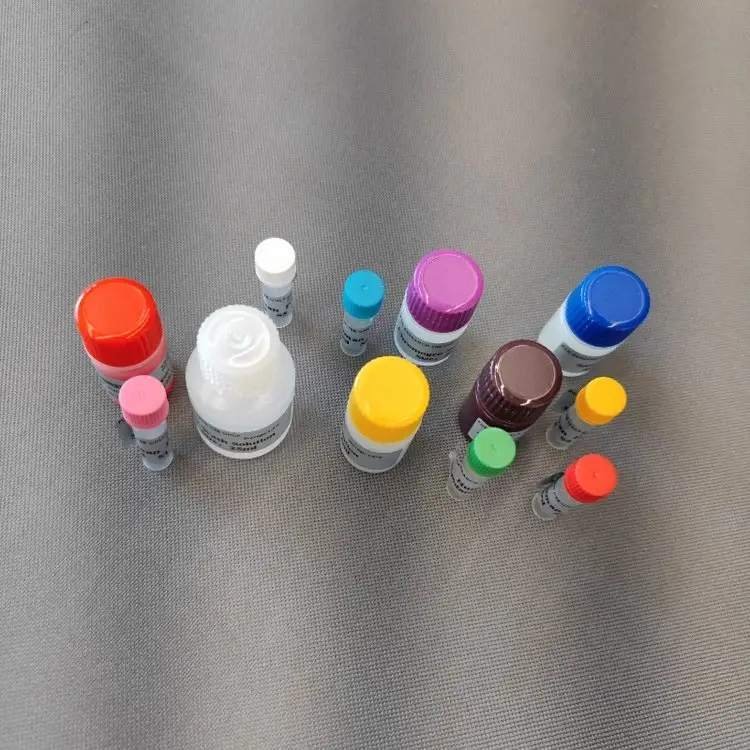
| Standard (0.3 mL/vial) | 6 vials | Ready-to-use liquid, 0–800 ng/mL |
| Sample Diluent | 6 mL | – |
| HRP-Conjugated Taurine (Competitive Antigen) | 10 mL | Ready-to-use |
| 20× Wash Buffer | 25 mL | Dilute to 1× before use |
| Substrate A | 6 mL | – |
| Substrate B | 6 mL | – |
| Stop Solution | 6 mL | – |
| Plate Sealers | 2 sheets | – |
| Instruction Manual | 1 copy | – |
| Self-sealing Bag | 1 piece | – |
48-Well Format
| Component | Quantity | Notes |
|---|---|---|
| Microelisa Stripplate | 12 strips × 4 wells | Pre-coated |
| Standard (0.3 mL/vial) | 6 vials | Ready-to-use liquid |
| Sample Diluent | 3 mL | – |
| HRP-Conjugated Taurine | 5 mL | Ready-to-use |
| 20× Wash Buffer | 15 mL | Dilute to 1× |
| Substrate A | 3 mL | – |
| Substrate B | 3 mL | – |
| Stop Solution | 3 mL | – |
| Plate Sealers | 2 sheets | – |
| Instruction Manual | 1 copy | – |
| Self-sealing Bag | 1 piece | – |
Crystallization of 20× Wash Buffer is normal; warm in a water bath before dilution.
Assay Procedure Summary
- Equilibrate: Bring the foil pouch to room temperature for 20 min. Remove required strips.
- Add Standards & Samples: 50 μL standards or 10 μL sample + 40 μL Sample Diluent.
- Add HRP-Taurine: 100 μL HRP-conjugated taurine to all wells except blank. Incubate at 37°C for 60 min.
- Wash: Aspirate, wash with 1× Wash Buffer (soak 1 min), repeat 5 times.
- Substrate: 50 μL each of Substrate A and B, incubate in dark at 37°C for 15 min.
- Stop & Read: 50 μL Stop Solution, read at 450 nm within 15 min.
Total assay time: ~2 hours.
Throughput
| Format | Max. Samples (Single Wells) |
|---|---|
| 48-well | 39–40 |
| 96-well | 85–88 |
Related Products (Recommended)
For researchers studying neuroactive pathways, we recommend:
- Human Mu‑type Opioid Receptor (OPRM1) ELISA Kit – a Sandwich ELISA Kit for quantifying the primary receptor for endogenous opioids and morphine (link to be added manually)
- Human Adiponectin (ADPN) ELISA Kit—High‑Sensitivity Sandwich Assay
- Human 1-Methylnicotinamide (MNA) ELISA Kit – 1-Methylnicotinamide (MNA) is the primary metabolic product of nicotinamide N-methyltransferase (NNMT)
- Human Hydroxymethylbilane Synthase (HMBS) ELISA Kit
Our growing portfolio of cross‑species kits also includes assays for other amino acids, neurotransmitters, and receptors – all using high‑binding plate technology for superior performance.
Frequently Asked Questions
Q: Is this a sandwich or competitive ELISA?
A: Competitive ELISA. Taurine is too small (125 Da) for sandwich detection. The assay measures the competition between sample taurine and an HRP-labeled taurine conjugate for antibody binding.
Q: Can I use this kit for mouse or rat samples?
A: Yes. Taurine is chemically identical across all mammals. This kit is suitable for human, mouse, rat, and other mammalian species.
Q: What pre-dilution should I use for human serum?
A: Normal serum taurine is 6–25 μg/mL (6,000–25,000 ng/mL). Pre-dilute 1:50 to 1:100 after deproteinization. A pilot experiment with several dilutions is recommended.
Q: How should I prepare tissue samples?
A: Homogenize in PBS, centrifuge, then deproteinize by ultrafiltration. Dilute tissue extracts 1:500 to 1:1,000 before assay, especially for muscle, heart, and brain.
Q: Does this kit cross-react with hypotaurine or cysteine?
A: No significant cross-reactivity with hypotaurine, β-alanine, L-cysteine, or other structural analogues.
Q: Why is deproteinization recommended?
A: Serum and tissue proteins can interfere with the competitive reaction. Ultrafiltration removes high-molecular-weight proteins and improves accuracy.
Q: How do I calculate the result from the inverse standard curve?
A: Use log-logit or 4PL fitting software (e.g., GraphPad Prism, MyCurveFit). Multiply the interpolated value by 5 (in-well dilution) and by the pre-dilution factor.
Q: Can I use hemolyzed samples?
A: Hemolysis releases intracellular taurine, falsely elevating levels. Avoid hemolyzed samples. If unavoidable, note the condition in results.
Q: Are MSDS and composition documents available for export?
A: Yes. Provided upon request or included with shipment.
Ordering & Contact
| Item | Details |
|---|---|
| Catalog Number | Yanda-Human-Taurine |
| Formats | 48-well / 96-well |
| Package Dimensions | 16 cm × 12.5 cm × 9.5 cm (neutral white box) |
| Shipping | Cold-chain (2–8°C), protected from light and moisture |
| Storage | 2–8°C; do not freeze |
| Shelf Life | 6 months |
WhatsApp: +86 198 3186 0669 | Email: songhawyble@gmail.com
Technical Documents & Support
- Instruction Manual – Download or request via email.
- MSDS & Certificate of Composition – Available upon request.
- Technical Support – For dilution strategies, deproteinization protocols, or curve fitting, contact us via WhatsApp or email.
Disclaimer
For research use only. Not for clinical diagnosis or treatment. Users are responsible for validating assay performance in their own experimental conditions. The manufacturer assumes no liability for improper use or protocol deviations.Cannot be used together with antibodies from other manufacturers